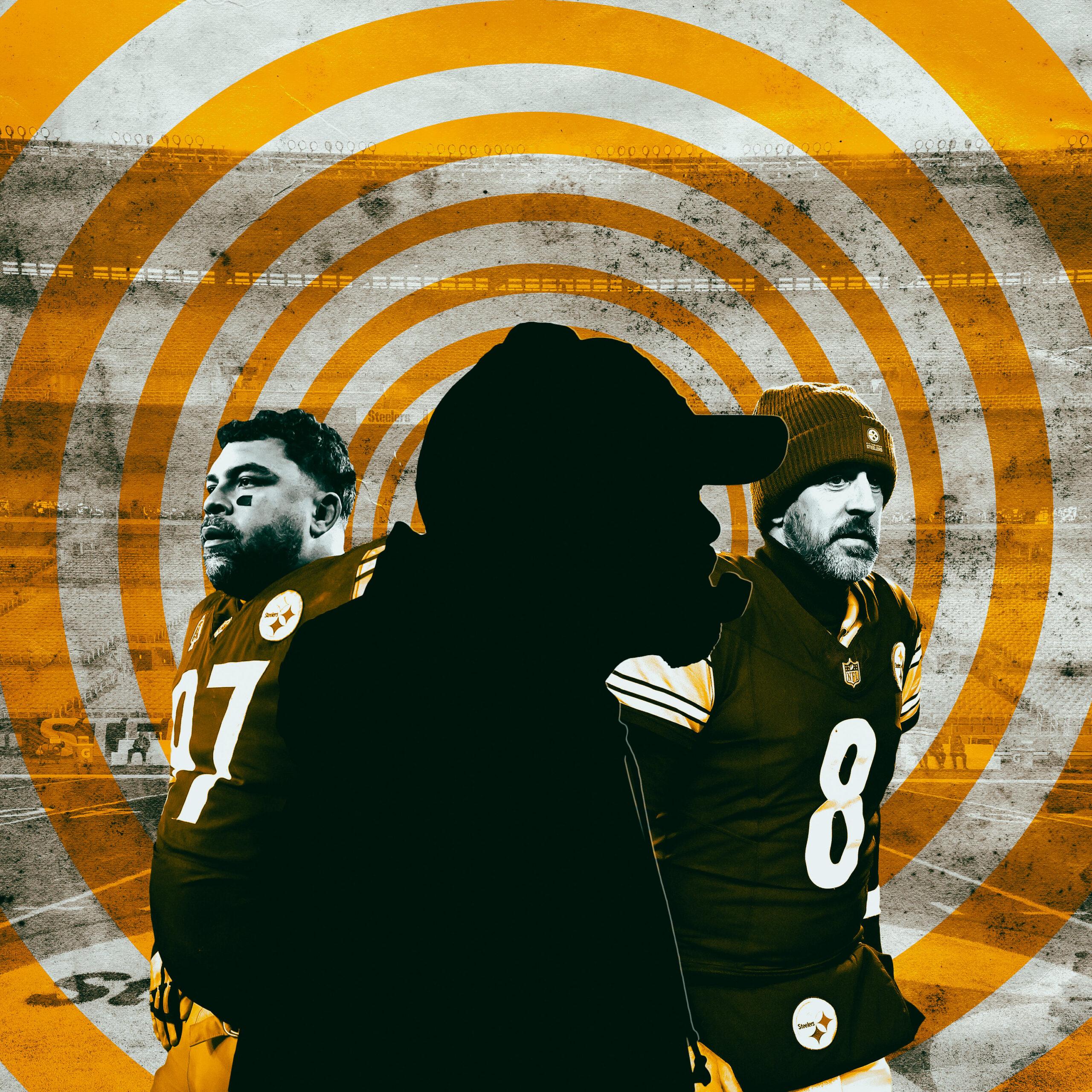

Of all Mike Tomlin’s famous quips and one-liners, “The standard is the standard” is perhaps the most famous. This Tomlin-ism set the standard for all Tomlin-isms—his way of expressing the unwavering expectation in Pittsburgh that the Steelers be not just winners, but a franchise set apart from the rest of the league. And if that truly is the standard, Tomlin seems to have finally accepted that he hadn’t met that mark in quite some time.
Tuesday’s news that Tomlin has decided to step down after 18 seasons as the Steelers’ head coach was yet another jolt to the NFL’s coaching carousel, but it shouldn’t have been a shock. This day has been coming for a while. Things had gone stale in Pittsburgh, and the season ended in the most predictable fashion: a blowout loss to the Houston Texans in the wild-card round of the NFL playoffs on Monday night. Tomlin’s Steelers once again squeaked into the playoffs, but even with 42-year-old quarterback Aaron Rodgers, they were a mile away from being a contender.
Tomlin did the franchise a favor by stepping down. The Steelers were able to avoid a messy breakup with the coach, who has never had a losing record. And because Tomlin relinquished the position instead of retiring, the Steelers retain his contract rights and could request compensation from another team that tries to hire him. The idea of a Tomlin trade will make for interesting fodder in the coming month, but a more likely outcome is that he’ll be spewing his Tomlin-isms from a television studio next season.


Now it’s time for Pittsburgh’s old-school organization to step into a brand-new world. This team has made only three head coaching hires since 1969, and this is the first time owner and president Art Rooney II will get to choose a coach to lead this team into its next era. It’s the first chance for this organization to truly reset in decades. Rooney, the new head coach, and the general manager, Omar Khan, who has been with the team since 2001, will have to decide whether to stick with the way the franchise has always done business or evolve to keep up with the modern NFL.
This franchise rarely trades its premium picks to move around the draft board, and it typically doesn’t use the modern-day accounting tricks other teams do to manufacture cap space on a year-to-year basis, either. If you check the Steelers’ page on Over the Cap, you won’t see deals with complicated bonus structures or void years tacked on at the end of a contract to spread out cap hits. In almost every way, Pittsburgh has been playing by an old set of rules and hoping to keep pace with the ways of a new world.


The Steelers are not the only team in search of fresh energy for their head coaching vacancy, and they may not find themselves at the front of the line to hire a young, up-and-coming coach—like Tomlin was when he was brought on in 2007. Not every candidate will be the right fit to fill Tomlin’s shoes. For decades, Steelers coaches have been tough and self-assured, dead serious in their temperament. It’s hard to picture someone like Kliff Kingsbury or Mike McDaniel in a Steelers hat, even if this team clearly needs a new offensive strategy. What Rooney can offer head coaching candidates is a stability and prestige that they won’t find in many other current openings, which could be a draw for younger candidates like Chargers defensive coordinator Jesse Minter or former Dolphins defensive coordinator Anthony Weaver who are looking for a long-term home. But the promise of stability alone may not be enough to secure the right new coach for this franchise.
Prospective candidates keenly understand that success requires the right owners, the right front office, and the right quarterback. At minimum, the Steelers will need to show coaching candidates that they have a plan to acquire and develop a passer. It’s a credit to Tomlin’s coaching and leadership that his teams won a lot of regular-season games in spite of mediocre play from quarterbacks like Mason Rudolph, Duck Hodges, Kenny Pickett, Russell Wilson, Justin Fields, and Rodgers. Each of those QBs pushed the Steelers further away from a long-term answer at the position without pulling the team any closer to a title.
But because Tomlin’s teams never bottomed out in the regular season, Pittsburgh has never drafted high enough to get an elite quarterback prospect to build around. And the Steelers won’t pick until no. 21 in April’s draft, so they could find themselves looking at yet another season with a veteran to serve as a bridge until they can select a rookie in 2027. The Steelers could make an aggressive move and package their picks to move up in this year’s draft, but a more prudent plan (for a historically prudent organization) is probably to wait until next year.


An aggressive rebuild is easier to manage than trying to make the perfect trade in the draft, but that’d be uncharted territory for this organization. It’s easy for a fan to say that they’d rather see the team hit rock bottom and force a reset than suffer through more years of mediocrity under Tomlin, but the next era could be very uncomfortable for a fan base and ownership group unfamiliar with large-scale losing. This team hasn’t been consistently bad since the late ’60s, and the pursuit of a quarterback can often turn into a multiyear project that churns through multiple coach-quarterback pairings. While I doubt that we’d ever see a full teardown of a team run by the Rooneys, a roster pivot is overdue and could be jump-started if the Steelers move on from defensive tackle Cam Heyward (who could retire) and fellow defensive starters Patrick Queen or Alex Highsmith. Just a small step back on defense should be enough to get this team back to drafting in the top 10 next season, which could help the Steelers secure their next franchise quarterback.
Pittsburgh has no viable quarterback, no young stars to speed up an overdue roster pivot, and a bunch of veterans whose best football is probably behind them. Who could possibly be the right coach to take on this gig, and will the combination of this situation and Pittsburgh’s archaic approach affect its standing in the coaching market? A retread head coach almost feels inevitable, and I have two specific guys in mind: former Browns head coach Kevin Stefanski and current 49ers defensive coordinator Robert Saleh. Both have the right kind of demeanor for this gig, both have enough of a coaching network to build a legitimate staff on day one, and both have experience that will help them work through rebuilds and get more out of a less talented roster. But whether the next coach is a retread or a fresh face, any replacement for Tomlin has to push Steelers ownership to embrace a new approach, one where hanging around the middle of the pack is unacceptable.
If the Steelers want to stay in the business of winning—to quote one of my favorite Tomlin-isms—it’s past time for the Rooneys to set new standards for this organization.