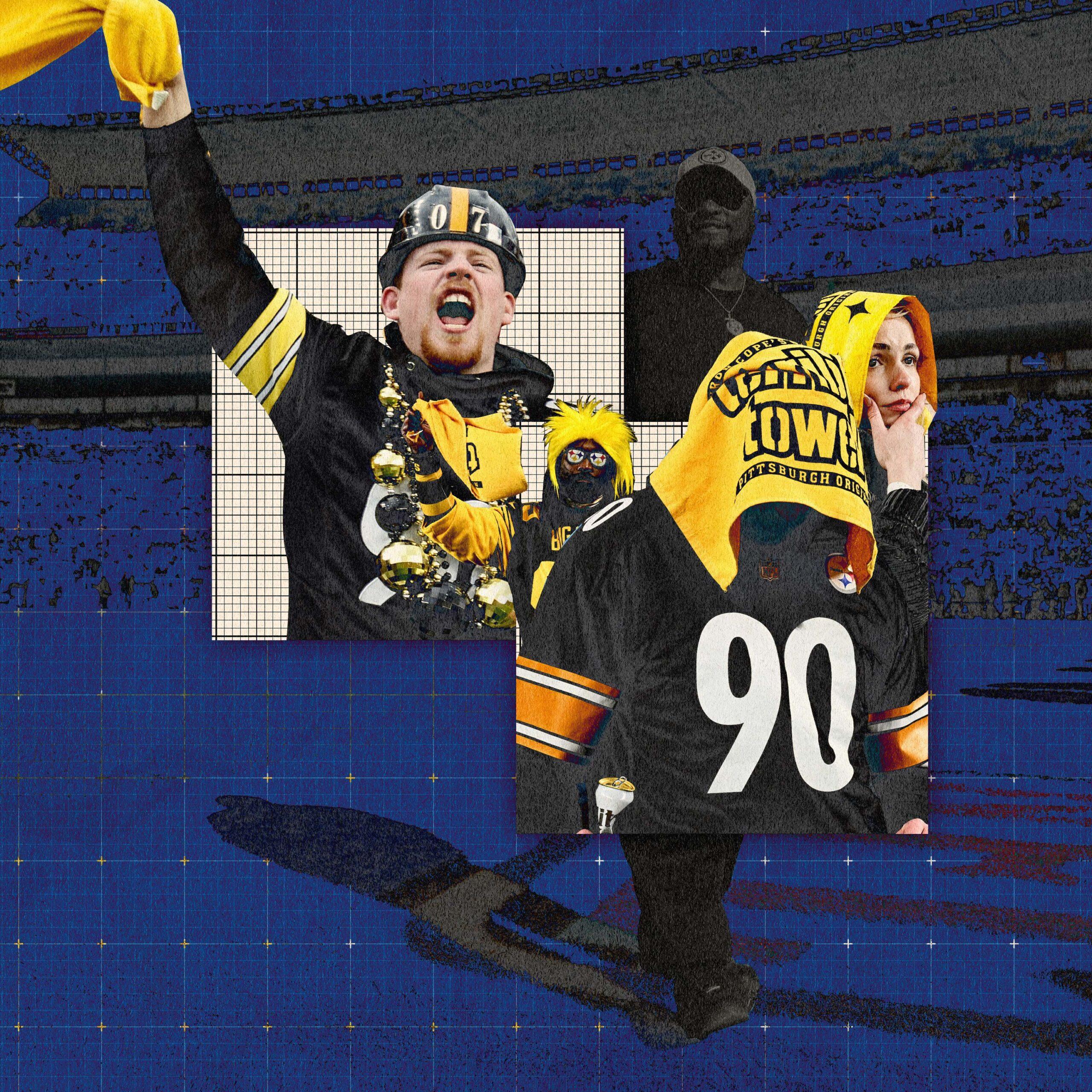

A Pittsburgh Steelers coaching search feels something like a papal conclave, except papal conclaves are more frequent. I was born in 1994, and prior to this year the Steelers had been without a head coach for 17 days in my entire life. That was the gap between Bill Cowher’s resignation at the end of the 2006 season and the white smoke emerging from the smokestacks signifying that Mike Tomlin had been named his successor. Since Chuck Noll was hired in 1969, there have been three different Steelers head coaches and six different popes.
That explains the thudding, surreal feeling in Pittsburgh on Tuesday when news broke of Tomlin’s resignation. On the one hand, this wasn’t a shock; a day earlier, Tomlin had tied a lousy NFL record with his seventh straight postseason loss, a 30-6 blowout against the Texans in the wild-card round. On the other hand, Tomlin’s exit wasn’t a foregone conclusion to even the most plugged-in insiders, and it sent shockwaves through a league and city that had treated his tenure as one of the sport’s lone constants.


Tomlin’s exit brings a close to an undeniably distinguished 19-season run that’s somehow better than his hallmark no-losing-seasons streak would indicate. He won Super Bowl XLIII. He stewarded the careers of present and future Hall of Famers. He was in the winning business, and just seven head coaches (only Andy Reid among active ones) are further north of the career .500 mark than Tomlin, at 79 games. As a Pittsburgh native and Steelers fan, I’ll remember Tomlin’s reign not just for the wins but for the relevance. Tomlin coached exactly one game in Pittsburgh with the Steelers already eliminated from playoff contention. The games always mattered.
That was the problem, though. Tomlin was such a beacon of competence that over the past decade, he kept the franchise stuck in a familiar but frustrating cycle, with the team winning eight to 10 games and never resembling a Super Bowl contender. He overcame the limitations of rosters and staffs he put together as a de facto co–general manager. (Not a single assistant coach Tomlin discovered went on to become a head coach elsewhere.) Steelers fans did not mutiny, because how could we abandon consistently competitive squads? But locals wanted more, and thousands would call into the radio station 93.7 The Fan to plead for a change. It could always be worse, but it could always be better too.
National media members often made our fan grievances seem like entitlement. After all, wasn’t Tomlin doing more with less? This trend continued into this week, as ESPN’s Mike Greenberg posted Tuesday: “If you are a Steelers fan and you wanted change, I get it. All I’ll say, though, as someone who has seen how badly this can go, is be careful what you wish for.” Longtime NFL reporter and author Mike Freeman offered similar messaging: “You people wanted Tomlin gone. Okay. You got your wish. Now let’s see how it goes.”
Indeed, let’s see how it goes. One grand psychological experiment in Steelers fandom is ending. Another is about to begin.
No other team in NFL history has had a nine-year stretch like the one the Steelers just completed. Every franchise that has finished .500 or better for nine straight seasons has made at least one conference championship game during that span. None has failed to notch a single playoff victory within that window. Marty Schottenheimer’s Chiefs of the 1990s are perhaps the closest comparison, but even they won three playoff games between 1989 and 1997 and reached the AFC title game after the ’93 campaign. Marvin Lewis’s Bengals lost seven straight playoff games from the 2005 to ’15 seasons, but they dropped below .500 three times in those years, falling to 4-11-1 in 2008 and 4-12 in 2010. The Steelers being stuck in good, but not great purgatory to this extent is legitimately unprecedented.
That the Steelers were in many of these games at all is a testament to Tomlin being one of the league’s better coaches. It’s not like fans didn’t know this. Pittsburgh’s lack of access to a high draft pick that could yield Ben Roethlisberger’s long-term successor at quarterback became an obvious problem by the time Kenny Pickett, a 2022 first-rounder, was jettisoned at the end of his second season. Tomlin’s ability to eke out wins while going from washed-up Big Ben to some combination of Mason Rudolph, Duck Hodges, Pickett, Mitchell Trubisky, Justin Fields, and past-their-prime Russell Wilson and Aaron Rodgers was incredibly impressive, albeit unsustainable. The pattern just grew tired. And so continued an all but choreographed routine, with Steelers fans voicing that it was time for Tomlin to go and fans of other teams acting like that opinion ranged from misguided to deranged.
The implication that life as an NFL fan offers no greater punishment than the risk of a truly awful season—hell, even two or three—has never scanned. Sure, none of us Steelers fans would trade our plight for that of the Jets or the Cardinals. But Pittsburgh’s last objectively bad season, a 6-10 effort behind quarterback Tommy Maddox in 2003, yielded the no. 11 draft pick that was used to take Roethlisberger. The team’s last losing season before that, another 6-10 campaign in 1999, produced the no. 8 pick that became wide receiver Plaxico Burress. Competent organizations do not stay awful for more than a few years in a league that prioritizes parity, with the draft and salary cap designed to pull everyone toward the middle. It’d represent a colossal shift for the Steelers to enter a full rebuild for the first time since the late 1980s, but I’d argue that many in Pittsburgh would embrace the organization taking the long view. A lot of Steelers fans are also Pirates fans, and I’m confident we can handle anything the Steelers throw at us.
Pittsburgh was a fitting sports city to have such a long-tenured head coach. The Steelers’ stability is unmatched in major pro sports, but the whole city has proved to be exceedingly loyal to its biggest sports figures. The Penguins have had the same three star teammates on their roster for 20 seasons and counting, longer than any other trio in NHL, NBA, NFL, or MLB history. The Pirates, who suck, have done a good bit of fan service in re-signing the beloved Andrew McCutchen the last few years. Pitt coach Pat Narduzzi is now the eighth-longest-tenured in major college football. And Roethlisberger was allowed to play until his arm was barely functional. This is not a city where it feels unusual to keep familiar faces in place for an unusually long time.
No one can tread water forever, though. It was clear before this season that 2025 had to be the last year of the Steelers’ middling act. Either Pittsburgh would finally win another playoff game or the organization would chart a new path. Another wild-card ouster would not suffice.
In the end, it didn’t. Whoever the Steelers get next, whether it’s a retread coach (like Kevin Stefanski or Robert Saleh) or an up-and-comer (like Jesse Minter or Chris Shula), is unlikely to have as good a run as Tomlin had. But that’s not the point. It’s OK for things to run their course. Eagles fans do not feel bad that their team fired Andy Reid after the 2012 season; Reid went on to build a dynasty with Patrick Mahomes, but Philadelphia won two Super Bowls with Doug Pederson and Nick Sirianni. Arsenal supporters don’t regret calling for the job of manager Arsène Wenger, who, like Tomlin, was a champion early in his tenure and then provided plenty of contention but little greatness for more than a decade. Red Sox fans don’t mind that their team fired Terry Francona in 2011 and won two more World Series with other managers on the top step of the dugout. When things are over, they’re over. There is substantial risk in firing a proven winner. There is just as much in assuming that past performance will equal future returns.
I bet that Tomlin would agree. Two years ago, as fans called for the job of an offensive coordinator (Matt Canada) Tomlin hadn’t yet fired, the head coach offered a window into his thinking. “This is the sport entertainment business,” Tomlin said. “It is our job to win and thus entertain them. And so, we don’t begrudge them for that. We want them to be fat and sassy and spoiled.”
Over the long sweep of history, few fan bases have been fatter and more spoiled than ours. But the steady drip of mediocrity since the mid-2010s didn’t spoil anyone. In fact, it represented the inverse of the relationship that Tomlin had outlined. Steelers fans were expected to be content with seasons that were the equivalent of decent side dishes and appetizers. It was no wonder that a group seeking a feast demanded more.
To get it, we may have to put up with disastrous football the likes of which Tomlin never would have tolerated. That will be the telling part of the next psychological experiment for a fan base that has been perennially stuck in the sport’s upper middle class. Personally, I’d be delighted with a 4-13 season that gives the Steelers a shot to select Arch Manning or whichever quarterback prospect is deemed better than him in 2027. I’d be willing to reclaim some time in the fall for a year, even two. One consequence of the Steelers never being out of the postseason picture in December is that mediocre teams have sucked up a lot of my time.
Other Steelers fans need to get comfortable with this notion, too—if not because bottoming out is likely before the team finds its next franchise QB, because we don’t want to look like goobers for agitating for the removal of a coach whose best asset was that his teams never stunk. The Steelers will be bad soon enough. Their 2026 quarterback situation is a black hole; their 2025 defense was both expensive and underwhelming (it ranked 18th in EPA, per Stathead); their leader, defensive tackle Cam Heyward, will turn 37 in the spring; their highest-paid player, edge rusher T.J. Watt, is oft-injured and has begun to decline.
Bad days are coming, and when they do, the Steelers will no longer be exceptional, not even as the franchise that never falls on its face. But a new era is here. It is time for the fan base to walk into the breach and prove that it’s built for the one thing Tomlin was always able to avoid.