The Hot Priest Taxonomy
‘Wake Up Dead Man’ upholds a righteous film tradition: that of lusting after a man of God when you really shouldn’t be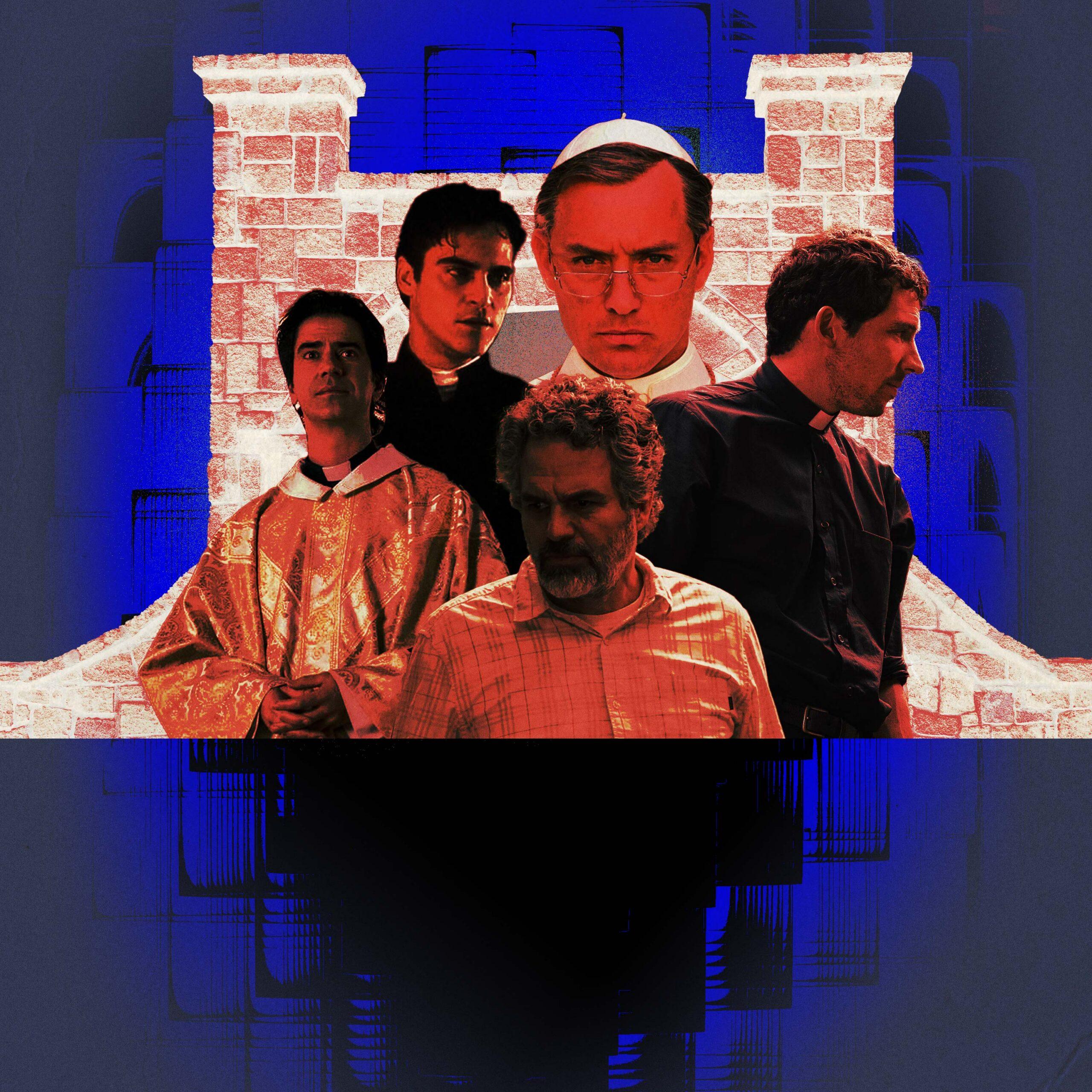

A priest’s job is to direct a human desire to God, not to themselves. But sometimes, they just can’t help it. A hot priest—no offense—rarely exists in real life. But every few years, one appears in a buzzy film or television show. Conceptually, the hot priest is unsettling because a man of God should not provoke thirst, and in turn an actor who provokes thirst should not be cast as a priest. Yet it is that feeling of unease and the forbidden that makes the hot priest so compelling.
The hot priest is a priest who drinks, who fucks, who delivers unhinged homilies that move the plot and provide character development, who begrudgingly seduces brunette ladies. Played most frequently by European men with dark eyes who turn in interior performances praised for their subtlety, the hot priest lets temptation consume him, pursues forbidden relationships, commits acts of violence, and/or crosses other moral lines. Some resist temptation entirely, defying realism with a devotion so absolute that it becomes performance art. Some are played by actors whose presence dominates the frame, and some are hot purely because I say so. They are a lens for exploring contradiction, desire, and the limits of human behavior.
Ultimately, the hot priest exists to prove that morality is complicated, desire is inevitable, and sometimes, the most fascinating men in fiction are the ones who shouldn’t be interesting at all.
Although officially credited as the Priest, Andrew Scott in the second season of Fleabag is the official genesis of this moniker, even though the archetype has slutted it up throughout film history. Catholic priests have forever been occupying this strange intersection of power, restraint, and forbidden desire in pop culture. The hot priest dates back as far as Hollywood’s golden age, portrayed by actors like Montgomery Clift and Gregory Peck, and has persisted all the way up to Ewan McGregor and Josh O’Connor. The thrill comes from restriction. Priests are forbidden from acting on their impulses, and the audience’s attraction to them feels equally forbidden. It’s the tension that makes it hotter.
But I need a full accounting of these priests, I’m sure you’re thinking to yourself (we can discuss it later, during confession). And that’s where I can help. This taxonomy consists strictly of Catholic priests—no preachers, no reverends, no theological stand-ins. Only characters explicitly wearing a collar and serving the church. Within that framework, I’ll explore and separate hot priests by their behaviors: which ones give in to temptation, which ones stubbornly uphold their vows, and which ones are simply played by hot actors.
Please now choose a pew: These are the men who took vows of celibacy and somehow became objects of obsession anyway.
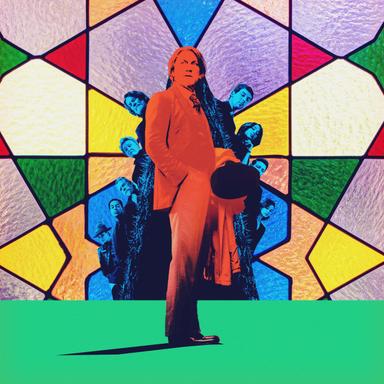
What Is Going On With His Career?
It’s possible that these priests—womanizers, boozers, overall nightmares—chose the wrong path.
Examples: Andrew Scott in Fleabag, Montgomery Clift in I Confess, Joaquin Phoenix in Quills, Christopher Reeve in Monsignor, Ewan McGregor in The Birthday Cake, Edward Norton in Keeping the Faith, Heath Ledger in The Order, Mike Colter in Evil
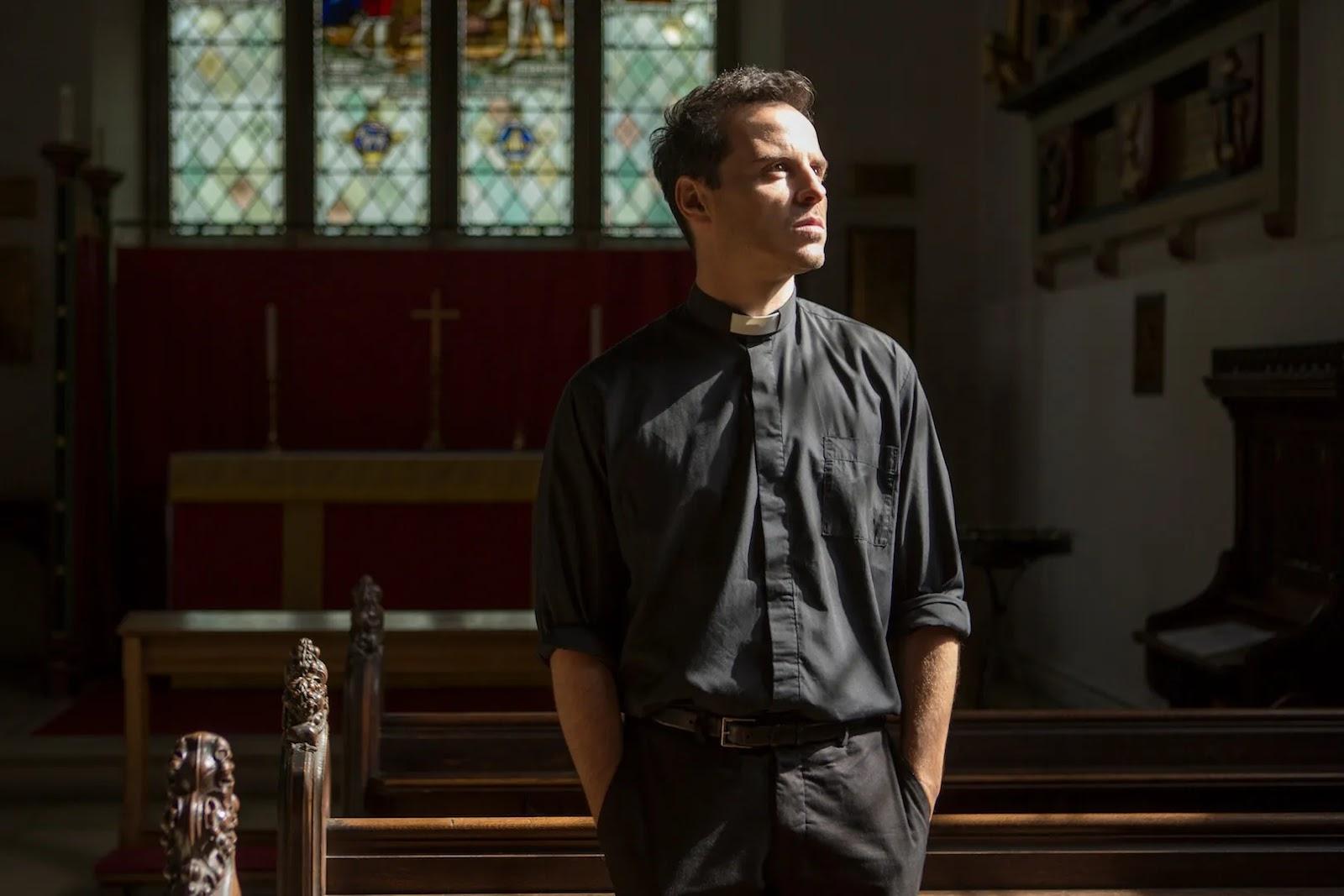
Titillating and likely to be led into temptation, these priests are what most think of when they think about hot priests. They are portrayed by conventionally attractive actors, most often in their 30s to 40s. Characterized by their severe eyes and long stares, these priests are more likely to kiss you than hear your confession. In Alfred Hitchcock’s I Confess, Montgomery Clift plays Father Logan, a priest who is a suspect in a murder case. In a scene on a ferry, Father Logan, wearing a slim black cassock, walks up to Anne Baxter. He insists that they cannot be seen speaking together, but he continues the conversation anyway and stares so deeply into her eyes that he penetrates her soul. Clift makes Father Logan into a force, one with a dangerous edge.
What separates this type of hot priest from other hot priests—beyond their sins and very broken vows—is that they are cool. (Or, at least in the case of Edward Norton in Keeping the Faith, they desperately try to be cool.) Their homilies include pop culture and/or literary references and cursing, and they are likely to booze during working hours (which, I suppose, are all hours for a priest) and nonworking hours. But they are most defined by their desire to cheat on God, whether that manifests itself physically or in their dreams.


Lead Us Not Into Temptation
Too hot, too devoted. The morally corrupt hot priests.
Examples: Ewan McGregor in Angels & Demons, Tim McInnerny in Outlander, Joseph Fiennes in American Horror Story: Asylum, François Arnaud in The Borgias, Timothy Simons in Yes, God, Yes, Hamish Linklater in Midnight Mass, Jude Law in The Young Pope, Josh Brolin in Wake Up Dead Man
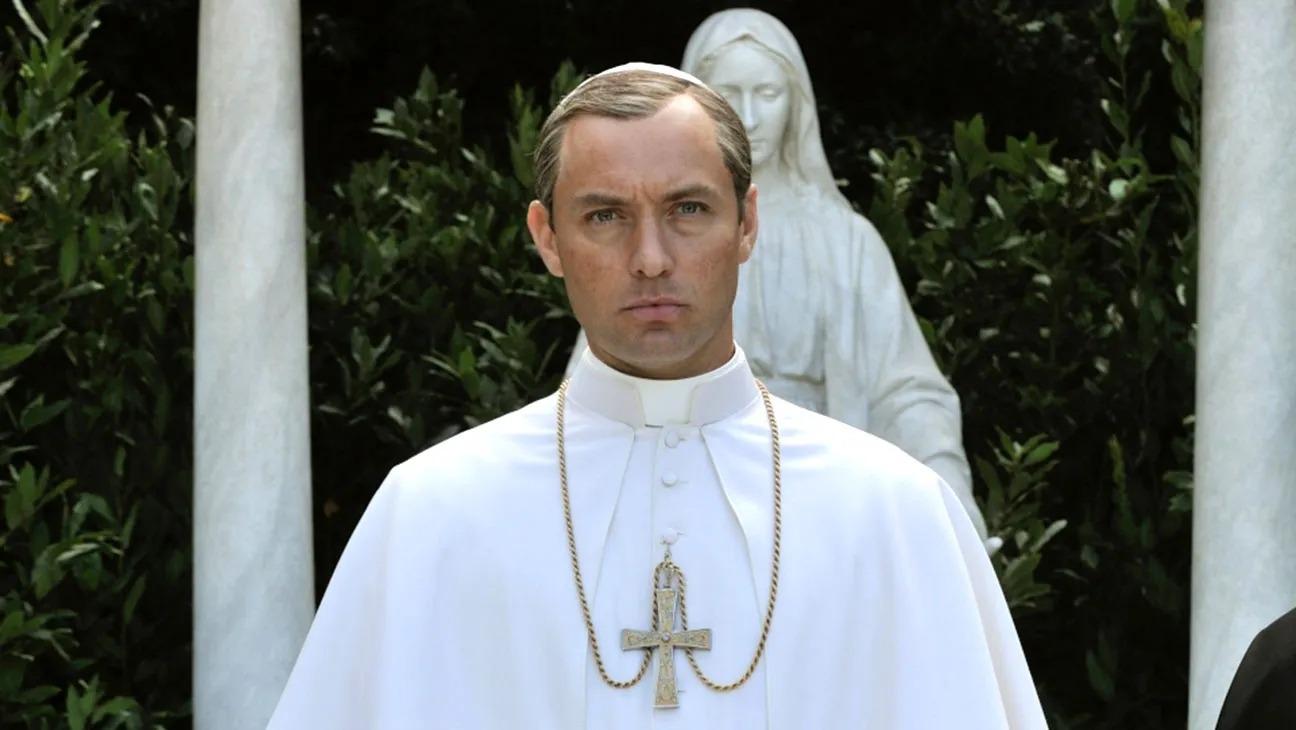
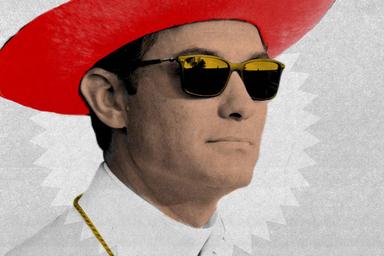
As menacing as they are dashing, these hot priests are more likely to murder—or, in Timothy Simons’s case, watch porn on his work computer—than offer spiritual guidance. They don’t seem dangerous: They are dangerous. But not in an overtly sexual way, just in a weird way that might make some audiences feel oddly aroused. In The Borgias, François Arnaud plays Cesare Borgia. Forced into the priesthood by his father (Jeremy Irons), he uses violence, including but not limited to fratricide, to advance his personal agenda as well as the wealth and status of his family. In Angels & Demons, Ewan McGregor's Father Patrick McKenna murders the pope to push an anti-science, pro-creation agenda. He screams words like "blasphemy," and his hair is slicked back with what appears to be an entire container of hair gel. And if anyone was born to play a hot, corrupt priest, it is the dark-eyed, dark-eye-lashed Joseph Fiennes. In American Horror Story: Asylum, his Monsignor Timothy Howard will do anything—such as turning a blind eye to botched medical experiments—to rise within the ranks of the Catholic Church. In The Young Pope, Cardinal Lenny Belardo unexpectedly becomes the first American pope, simply because it’s believed he can be used as a puppet. Instead, the relentless Belardo uses his power to take the church in a more conservative direction. Jude Law’s portrayal of the menacing but charismatic new pope-–with eyes as green and skin as golden as Dickie Greenleaf’s—makes it hard to root against him.
Honk If You’re Horny (for Jesus)
These priests are hot—some of the hottest on offer—yet they are fully committed to their careers, even in the face of some plot-driven temptation. Maybe God chose the wrong faces for them?
Examples: Rene Gube in Crazy Ex-Girlfriend, Antonio Banderas in The Body, Linus Roache in Priest, Robert De Niro in True Confessions, Mads Mikkelsen in At Eternity’s Gate, Dan Stevens in The Ritual
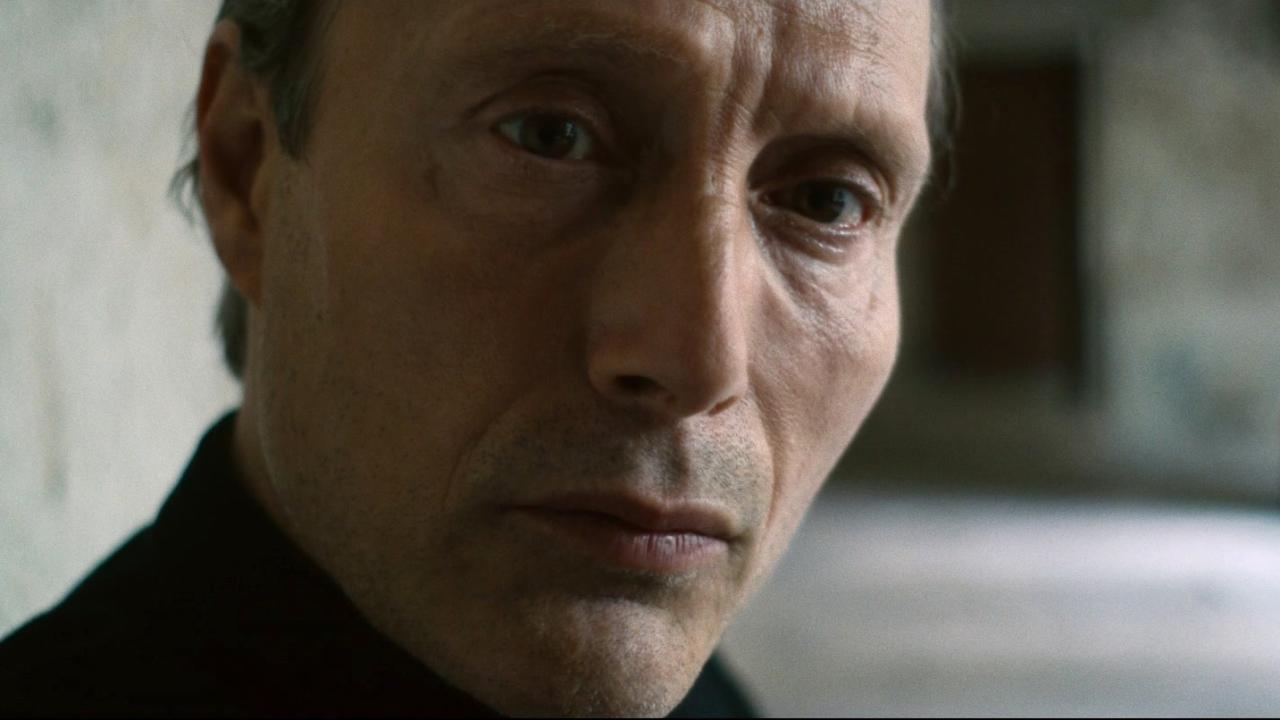
No crisis of faith. No unraveling. These faces were designed for sin and being sat on, but unfortunately, their hearts and heads are committed to Jesus and a vow of lifelong celibacy. In The Body, Antonio Banderas knows that he is too sensual for the collar, but he commits anyway, which, in a way, makes it worse. Rene Gube’s Father Brah on Crazy Ex-Girlfriend is hot because he’s emotionally competent and spiritually stable. Then there’s the European contingent: Mads Mikkelsen in At Eternity’s Gate, suffering behind his piercing eyes and sculptural bone structure, and Dan Stevens in The Ritual, hot in a deeply unsafe, haunted way. These are priests who will not stray and will not stop making it everyone else’s problem.
Hot and Unbothered
These films and shows insist that they are about faith, history, or politics, but they accidentally cast extremely hot men (not a complaint, by the way).
Examples: The cast of Silence, Richard Burton in Exorcist II: The Heretic, the cast of Conclave, Gregory Peck in The Keys of the Kingdom, Gabriel Byrne in Stigmata, Jeremy Irons in The Mission
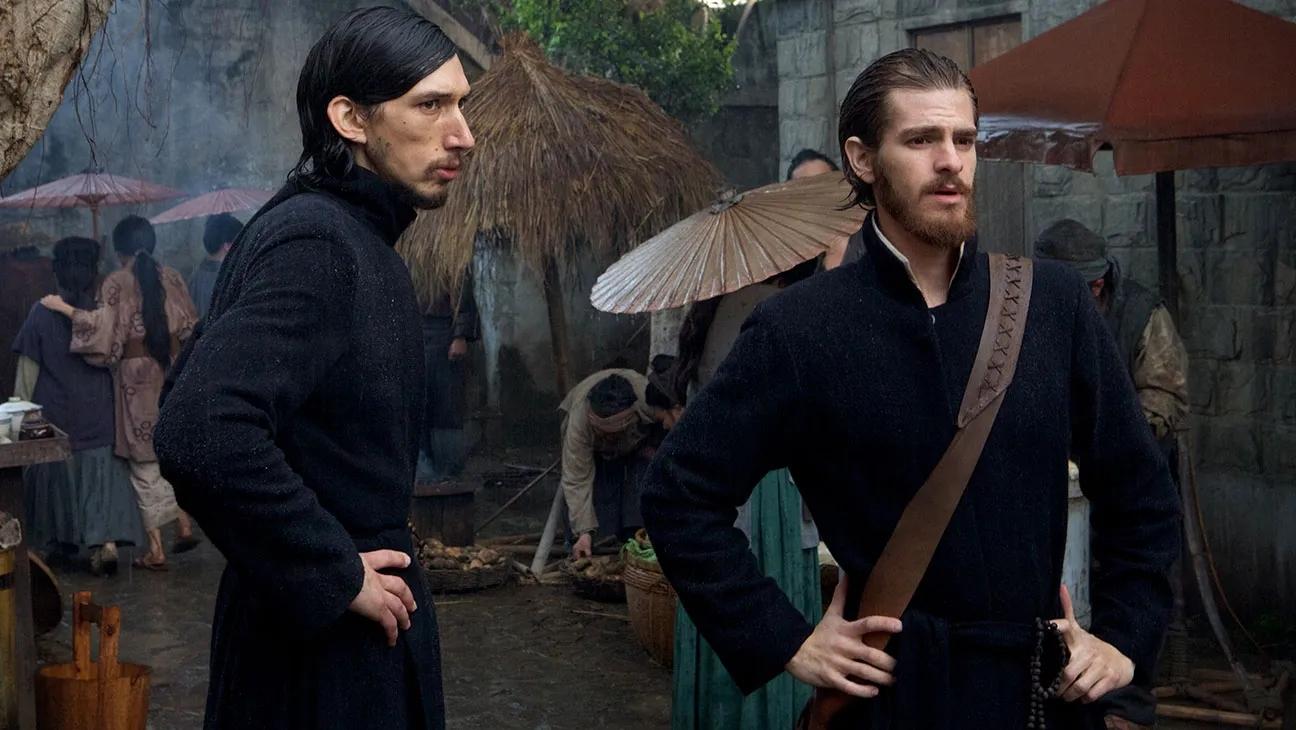
These hot priests are not tortured by desire or especially interested in eliciting a reaction from their audiences. They are hot, but their films are serious. Silence presents suffering and martyrdom with a lineup of movie stars so distractingly beautiful that it becomes a parallel text (you simply cannot cast Andrew Garfield without riling up this particular woman, at least). Meanwhile, Conclave asks its audience to focus on church politics while placing an attractive cast in immaculate robes and bold colors and setting them against architectural sets and sensible lamps that practically serve as thirst traps. It’s no wonder people were hooting and hollering at screenings (you simply cannot cast the lead of The English Patient without riling me up, either). Gregory Peck in The Keys to the Kingdom is similarly untroubled, while Jeremy Irons in The Mission operates with the confidence of a man who never once wondered whether he was too hot for the role.
Second-Career Priests With Dark Pasts
You can’t outrun your hotness. Before devoting their lives to God, these priests had alternate lives (or the other way around).
Examples: Mark Ruffalo in Task, Josh O’Connor in Wake Up Dead Man, Timothy Dalton in Possessed, Colin O’Donoghue in The Rite
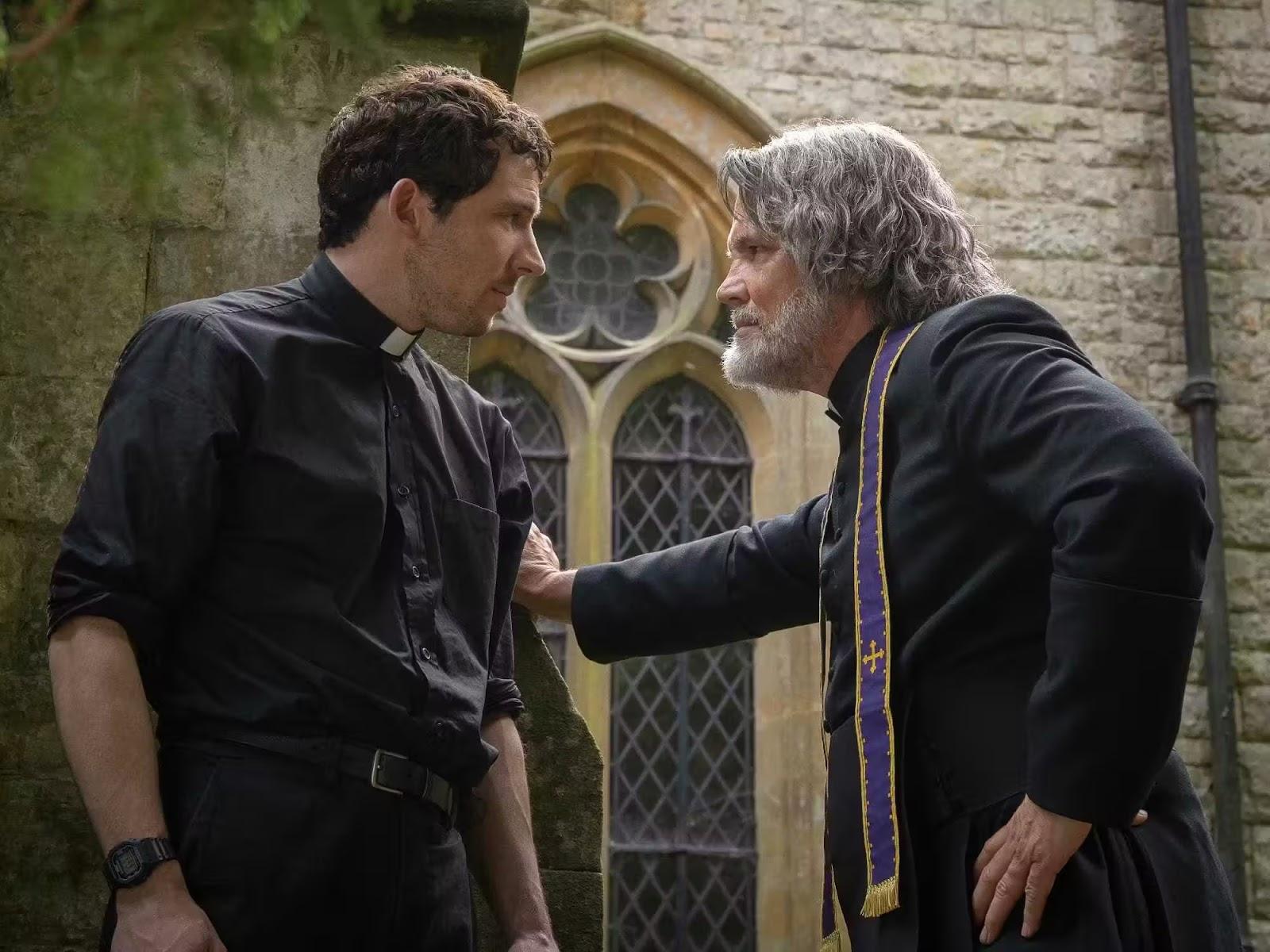
Josh O’Connor is the heart of Wake Up Dead Man. His sincerity—toward both humanity and his profession—is intoxicating and inspiring. At the beginning of the film, O’Connor drops that he had a former career as a boxer. Later, he reveals that he killed an opponent in a match. His priesthood was a knee-jerk response. While it was a redemption-seeking career move, Father Jud assimilated well into the role: His motivation is to better himself by helping others. He’s not in it for the glory; he’s in it because he cares. And that’s super fucking hot. In HBO’s crime drama Task, Mark Ruffalo’s Tom Brandis has a polar-opposite journey, but one with equal impact. Brandis followed the classic priest-to-FBI-agent pipeline. And although the show doesn’t reveal too much about his priest days, his devotion to Christ ended with a sweet combination of a crisis of faith and love/lust for a woman.
Honorable Mentions
Or, priests whom none other than the author thinks are hot.
Examples: Stellan Skarsgard in Exorcist: The Beginning, Tom Wilkinson in Priest, Donald Sutherland in The Rosary Murders, Ian McShane in The Pillars of the Earth, Ethan Hawke in First Reformed
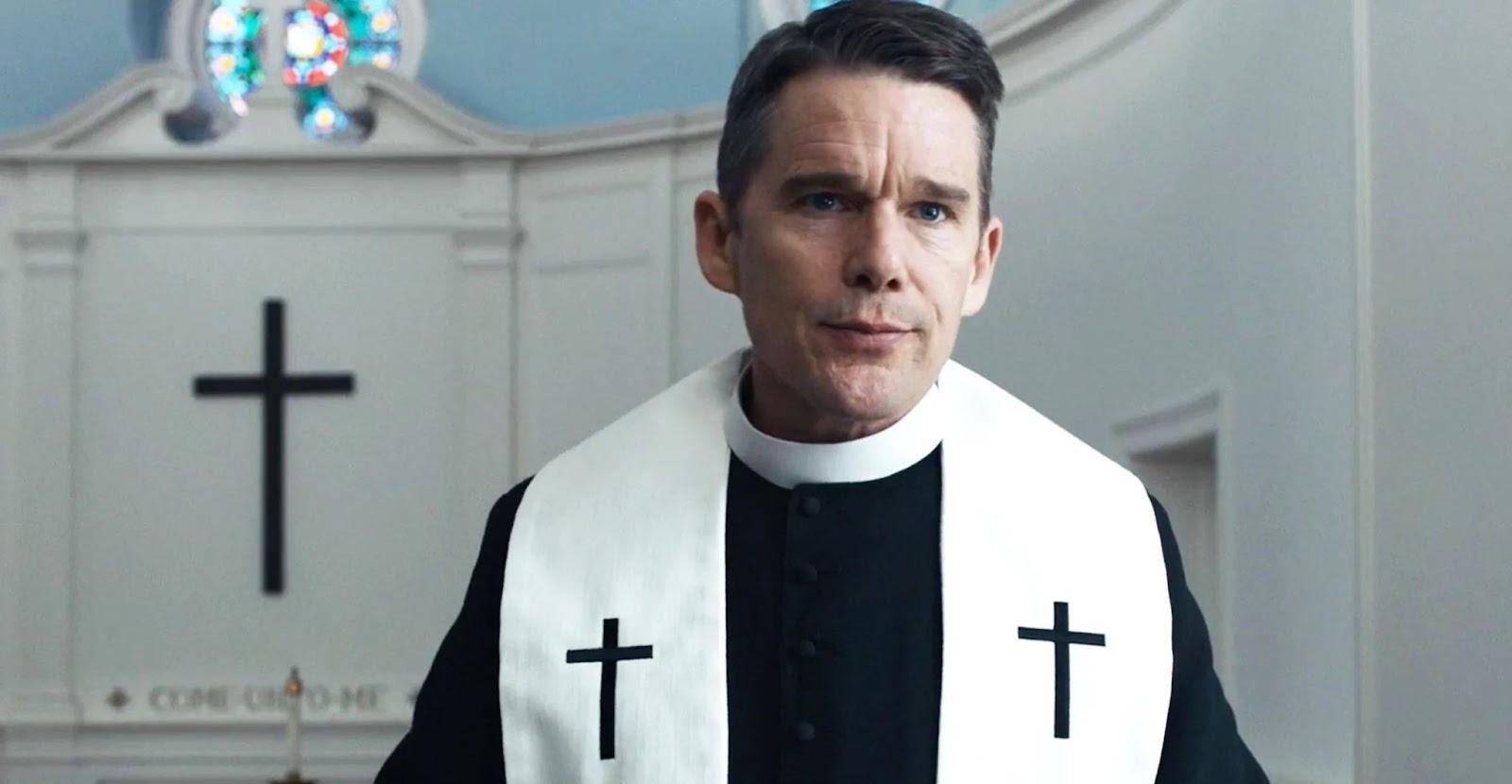
First, I must address the elephant in the blog. At this point, many readers might be asking: Where is Ethan Hawke in First Reformed? The answer is both simple and devastating: He is a reverend, not a priest, and therefore does not qualify. He does, however, deserve to reside here, brooding quietly behind some actual priests who might not be considered hot priests by anyone besides me, while sipping Pepto-Bismol. (He’s just like me …)
Stellan Skarsgard, the father of Hollywood’s best nepos, is hot in Exorcist: The Beginning because I say so, but also because he looks exhausted by his faith. The collar weighs him down, and that weight is magnetic. Donald Sutherland, rest in peace, could always get it. In the mid to bad The Rosary Murders, he plays a calculating priest who, like so many hot priests, gets involved in a murder case. His presence dominates every scene: He has a controlled voice, smoldering eyes, and lethal precision. Even when the movie falters, which is for most of the movie, he makes it feel consequential. And hot.
Happy worshipping.