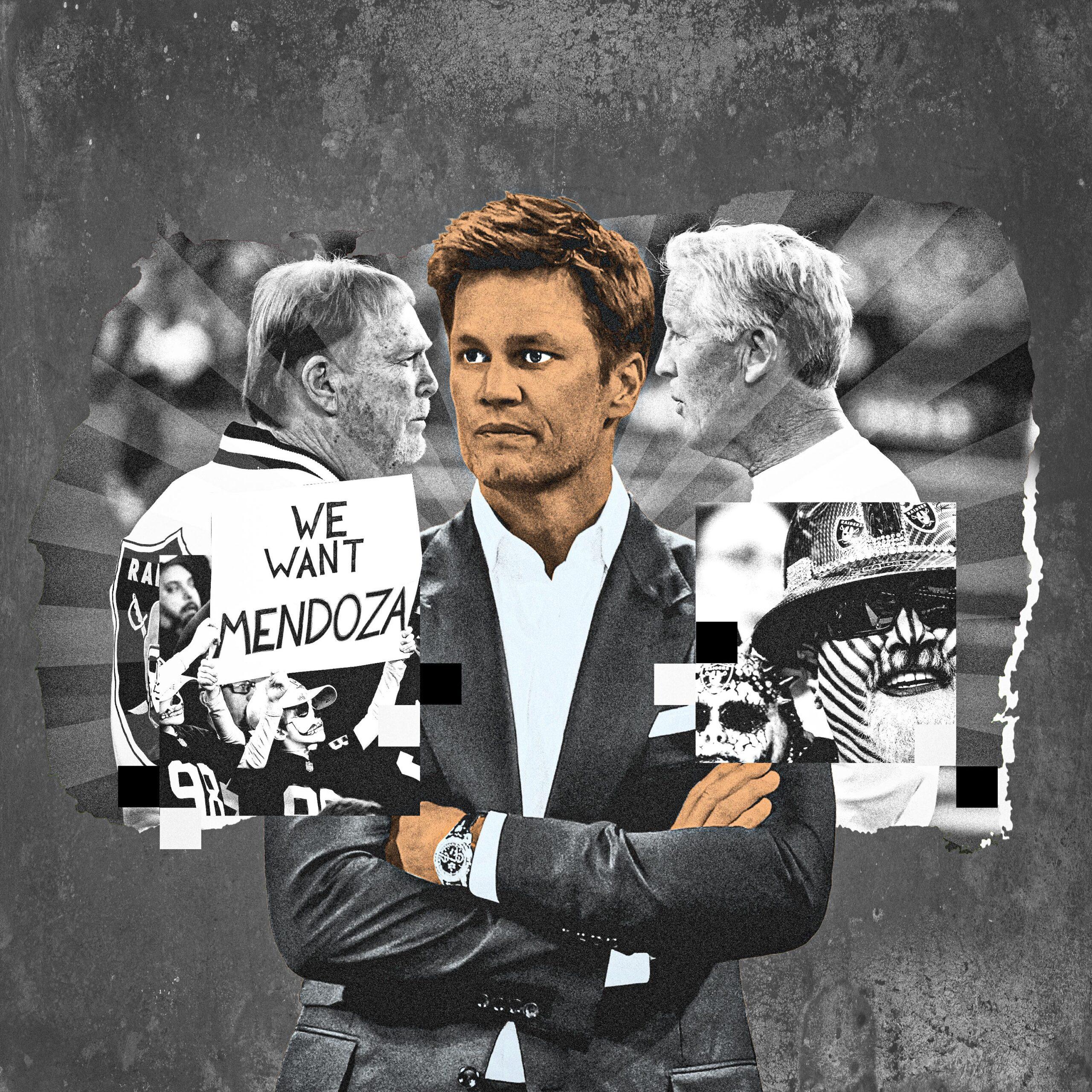

A year ago, the Las Vegas Raiders made Pete Carroll the oldest head coach in NFL history. He was supposed to reignite a winning culture for the organization, make it immediately competitive, and eventually help it find long-term answers at coach and quarterback. Instead, Carroll fared worse than almost all of the 14 other coaches the Raiders have had this century. He led the team to a 3-14 record—tied for the worst in the league this season and by far the worst of his decorated NFL coaching career. The Raiders fired him on Monday, less than a year after signing him to a three-year contract, ending what seemed like a miserable tenure for all parties involved.
Of course, it’s worth remembering that Carroll was always just a backup plan for the Raiders. Owner Mark Davis and minority owner Tom Brady wanted a big-name offensive guru like Ben Johnson or Liam Coen after they fired Antonio Pierce last January. But Johnson took the Bears job and Coen went to the Jaguars, and the Raiders settled for Carroll as a Plan C. The result was an awkward marriage between Carroll and his hodgepodge staff, made up of holdovers from prior regimes, coaches Brady liked, and Carroll’s sons; first-time general manager John Spytek, a longtime Brady ally; and ultimately the roster. It went as expected.
No one was on the same page. The misalignment in coaching and personnel philosophies was obvious right away, and the blame game unraveled into scapegoating over the second half of the season. In his 14 years in Seattle, Carroll had never fired a coordinator in season. In his lone season in Vegas, Carroll fired special teams coordinator Tom McMahon (who'd initially joined the Raiders on Josh McDaniels’s staff) after Week 10 and offensive coordinator Chip Kelly (who was reportedly Brady’s preferred play caller) after Week 12. Carroll also hijacked Pat Graham's defense and, notably, didn't play most of the rookies Spytek had selected in the 2025 NFL draft until late in the season.
On the field, it was a mess. Geno Smith, Carroll’s starting quarterback during his last two years coaching in Seattle, averaged –0.11 EPA per dropback, the worst figure for any Raiders quarterback with 400-plus dropbacks in a season since at least 2000. Carroll’s son Nathan was one of Smith’s position coaches. His other son, Brennan, coached the offensive line. Las Vegas finished the season ranked 28th in pressure rate allowed and EPA per dropback, and it ranked 32nd in EPA per rush. The Raiders averaged –0.69 EPA per drive with arguably the worst quarterback and running back situations in the NFL a year ago; after adding Smith and using the no. 6 pick on Ashton Jeanty, the Raiders were somehow worse, averaging –0.90 EPA per drive in 2025.
Caroll made matters worse by scrambling for control over everything when shit started hitting the fan, but he also wasn’t dealt a fair hand. It was the first time in decades he wasn’t coaching with a staff he'd handpicked, and two of the team’s best offensive players (left tackle Kolton Miller and tight end Brock Bowers) battled injuries at key parts of the season. Carroll inherited a mess and, unfathomably, made it worse. But Davis, Brady, and Spytek created it, and now they have to clean it up … again.

More on the Coaching Carousel
Mark Davis has hired and fired seven head coaches since taking over for his late father, Al Davis, in 2011, and the next man up will be the team's fifth head coaching hire in six years. This is Brady's second time being involved in the hiring process after joining the team as a minority owner in October 2024, and it's clear that he (and Spytek) will have a major say this time around. The Raiders released a statement on Monday announcing Carroll's firing and that "Spytek will lead all football operations in close collaboration with Tom Brady, including the search for the club's next head coach." Davis seems eager to shift responsibility over to Spytek and Brady after taking the blame for the franchise’s recent failures. You honestly have to respect it. He’s already in the spotlight enough for the bowl cut and how much money he’s paying coaches who no longer work for the team.
The challenge is that this year's coaching candidate pool is largely underwhelming. Before the recent inclusion of John Harbaugh, who parted ways with the Ravens on Tuesday, there was no clear hot name. There's no Ben Johnson or Liam Coen—the next-in-line coordinator prospects who can turn coal into diamonds. Instead, the Raiders will have to choose between retreads looking for another shot (Harbaugh, Kevin Stefanski, Robert Saleh, Kliff Kingsbury, Brian Flores, Mike McCarthy) or first-time head coaching candidates (Klint Kubiak, Jesse Minter, Jeff Hafley, Chris Shula, Joe Brady) and all of the question marks that come with unproven coaches making the jump. Stefanski is probably the cream of the crop, considering he's a two-time NFL Coach of the Year who has schemed good offenses with bad quarterbacks before, but the rest all feel like true crapshoots. Can Saleh, Flores, or any of the younger defensive play callers nail their offensive coordinator hires? Can Kubiak or Joe Brady handle all of the additional work that comes with being the head coach and maintain their edge as offensive play callers? What would change with Kingsbury or McCarthy this time around? And what does Tom Brady even value in a head coach? Will he push for a familiar name—like Flores, who coached the Patriots defense during the latter years of Brady’s tenure in New England? No matter whom they ultimately pick, they have to let the new head coach hire his own staff. One year of a dysfunctional Brady bunch was enough.
But hiring the right coach—one who will last more than a year or two—is just the first step in this long-term rebuild. Right now, the Raiders don’t have a quarterback who would entice the top coaching candidates to come to Las Vegas. Ben Johnson wouldn't have taken the Bears job without Caleb Williams, Liam Coen wouldn't have gone to Jacksonville without Trevor Lawrence, and Mike Vrabel said that Drake Maye was one of the main reasons he was convinced to coach the Patriots. But the Raiders do own the no. 1 pick in the upcoming draft.
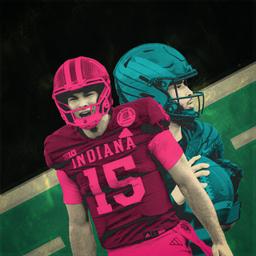
The Raiders will either cut Smith or trade the 35-year-old signal caller for scraps in the offseason. (I can't imagine that the guy who was flipping off fans in his home stadium in November is someone they're going to keep around as an expensive backup, especially with Aidan O'Connell still under contract through 2026.) Could they make a big swing by trading for a veteran like Kyler Murray or Mac Jones? I guess so, but it seems unlikely. They're already on the hook for $18.5 million (which accounts for 6 percent of their cap space) if they cut Smith, and they simply don't have enough talent overall to be just a competent veteran quarterback away from being a contender in 2026. Trading more assets for an expensive quarterback contract only makes improving the rest of the roster harder. They need to rebuild across the board, so having a quarterback on a rookie contract—especially the top quarterback prospect in the draft—is a no-brainer. Thanks to the Carroll disaster class in 2025, the Raiders are picking first overall for the first time since they selected generational bust JaMarcus Russell in 2007. And for the first time since Russell, they're likely going to invest a first-round pick in a quarterback. The choice is going to come down to Indiana's Fernando Mendoza and Oregon's Dante Moore (assuming Moore declares for the upcoming draft).

What Will the Raiders Do With the No. 1 Pick?
Mendoza, currently the betting favorite to go first overall, is the more NFL-ready prospect, but he has a lower perceived ceiling. He’s a 6-foot-5 Heisman Trophy winner quarterbacking the best team in college football. He’s a fast processor and good decision-maker with solid arm strength and athleticism. Mendoza is also two years older and has 14 more collegiate starts than Moore, which is part of the reason why he’s the more polished player right now. But Moore, who is only 20, could be a completely different quarterback two years down the road. Plus, he has more natural arm talent and better mobility than Mendoza. It’ll be easy to fall in love with who Mendoza is right now and who Moore could be in the future. It’ll be a back-and-forth debate throughout the entire draft process.
Mendoza and Moore play each other in the College Football Playoff semifinals on Friday. The winner will play for the national title a week after that. With more tape to be seen and an entire predraft process to argue over all of their measurables and interviews and sift through anonymous quotes, a lot can change over the next few months.
No matter which QB the Raiders choose, Spytek, Brady, and the new coaching staff all need to be in alignment on whom they’re taking and what the plan is to build around him. That starts with spending a lot of their money in free agency—Las Vegas currently ranks third in projected cap space in 2026—and wisely using their other draft picks on bolstering the offensive line and adding a big, sure-handed playmaker to the wide receiver room.
The Raiders have a superstar tight end in Bowers, whom the offense should flow through, and tight end Michael Mayer and wide receiver Tre Tucker are underrated players who could have better production in a more cohesive offense with a better quarterback. But that's still not enough. Spytek drafted Jack Bech and Dont’e Thornton in the second and fourth rounds, respectively, in last year's draft, but neither player has shown that they can be a difference maker. Targeting a wideout at picks no. 36 or 67 should be weighed heavily, especially if they can’t come out of free agency with one of the top dudes.
The elephant in the room then becomes the defense, which lacks talent with Maxx Crosby still on the team. How long Crosby will remain a Raider is one of the biggest questions the new coach, Spytek, and Brady will need to answer together. Crosby is the Raiders’ best and most tradeable player, and they could potentially move him for two future first-round picks (or something close to that)—capital the team could then use to either beef up the offense even more or spread out across the defense. I lean toward keeping Crosby because his contract is a steal relative to those of the league’s other top pass rushers, he's the clear on- and off-field leader and culture setter for the team, and he's a difference maker at one of the most valuable positions in the sport. That said, Crosby is an asset whether he's on the team or not in 2026.
That plan seems pretty straightforward. But you’ll have to forgive Raider Nation if they don’t have any confidence that the current brain trust will nail any of these decisions. The last time this organization picked first overall, it made one of the worst decisions in the history of the draft. For the past couple of decades, their head coaches have been one disappointment after another. The last time they traded huge stars, Khalil Mack and Amari Cooper, they proceeded to essentially light the draft picks they got in return on fire. Brady’s name still has sticker value because he’s the best quarterback to ever play the game, but for how long? He’s an awkward announcer. He’s a failed crypto bro. His biggest headline of the last year was for cloning his dog. No one remembers the BRADY brand. And his flashlight is probably still on in St. Barths.
And the fact that Brady—the villain of the Tuck Rule Game, the man every dad-aged Raiders fan has hated for decades—is now in firm control of the team’s future?
As a lifelong Raiders fan, I’m sick to my stomach about all of it. Firing Carroll was Brady's first good decision; he (along with Spytek and Davis) recognized that they'd made a mistake and quickly moved on from it, but in many ways it had to have been an easy decision. Carroll is clearly past his prime, and the fit was not right.
This is a franchise desperately in need of a long-term plan. And the vision for the future should also be obvious: Draft the right guy at no. 1, and throw the kitchen sink at supporting him—even if that means hiring another head coach in a few years. The hard part will be picking between Mendoza and Moore, if Moore enters the draft, and hiring the right candidate to develop the QB out of the gate.
If Raiders history keeps repeating itself, Brady will botch another post–playing career opportunity, and the Raiders will continue to be the laughingstock of the league for another decade. But if Brady and the Raiders manage to do something right for once, it’ll be the turning point for a team that has been in football purgatory for the last 20 years.