Adolescence Is Defined by the Betrayal of Fictional Pets
From ‘White Fang’ to ‘War Horse’ to ‘Charlotte’s Web’ to ‘Old Yeller,’ these stories are responsible for at least half our childhood trauma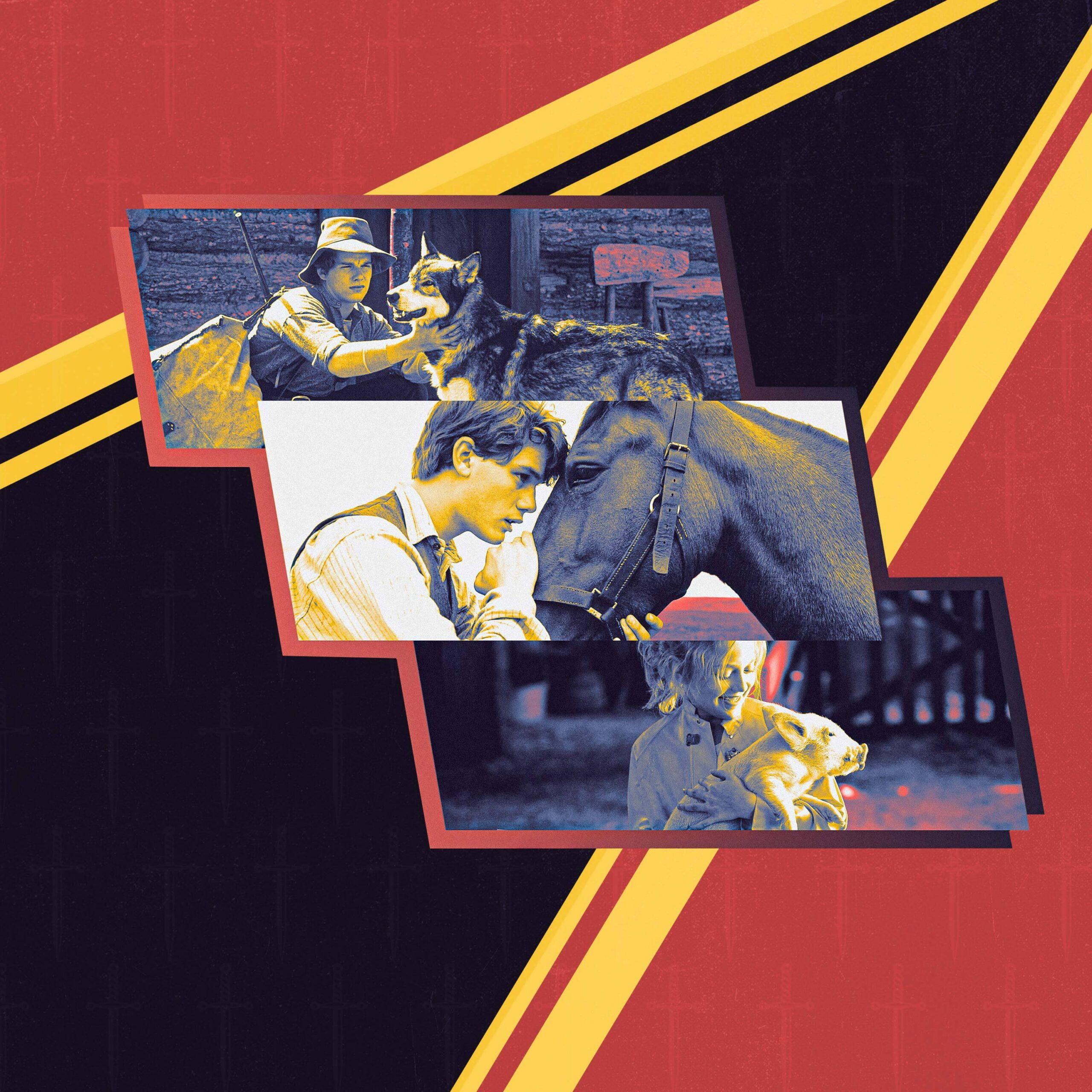

When the call for Traitors Week submissions went out, I racked my brain and searched my spirit for the most gutting moments in betrayal history. Adam and Eve in the garden, turning their back on the God who made them? Old news. Clytemnestra killing Agamemnon in his bathtub as soon as he got back from Troy? Justified! Judas selling Jesus out for 30 silver coins? Our lord and savior came back better than ever.
The betrayal that cut like a knife through my heart, though? This one:
Jack (as played by Ethan Hawke in his literati teen heartthrob prime) has made a fortune on the Alaskan gold rush and is off to civilization—where White Fang, a very good boy who’s saved his master’s life countless times, supposedly can’t join because of his wild wolf nature. When I watched White Fang as an animal fanatic preteen, it was the first time betrayal really registered: My little heart broke as Jack picked up a stick—just like the one used to terrorize White Fang by his previous owners—to send his beloved companion off into parts unknown, probably to get mauled by some mountain lion. It didn’t matter that he was doing it “for White Fang’s own good.” His wolfdog would never know that—only that he’d been banished, with his tail between his legs, never to see his only friend in the world again.
White Fang may have been the first (and deepest) cut, but as I thought back, I realized that the foundational movies and books of my youth were littered with owners who betrayed their pets, intentionally or not: In Old Yeller, the titular tattered yellow dog gets shot by his owner after contracting rabies; in The Yearling, a kid has to kill his pet deer because it keeps eating the family corn; in Homeward Bound, a trio of sweet pets gets left behind when their owners decamp to San Francisco; in Black Beauty, a regal steed is passed from one god-awful owner to another in Victorian England; in War Horse, a boy’s beloved farm horse is sold out from under him to serve (and suffer) in World War I; in Far From Home: The Adventures of Yellow Dog, a faithful yellow lab gets left behind in the wilderness after his owner is airlifted out; in Paulie, a loud-mouthed parrot is taken from his young best friend; in Charlotte’s Web, Fern abandons her pig Wilbur for some no-account prepubescent boy; and in The Fox and the Hound, the traitor is technically another animal, but still—you’re getting the point by now.
These stories—and I’m sure there were plenty more that scarred you, dear reader, when you were a mere youth—scared me straight when it came to the perils of pet ownership. (Perhaps the genre was invented to discourage kids from asking for a puppy for Christmas.) The betrayals and sacrifices contained therein impart an enduring life lesson for the young and impressionable: Life’s a bitch, kids, and sometimes you’ve gotta cut Fido loose to survive.



Traitors Week at The Ringer
As I returned to these sad, sorry tales for Traitors Week, I pondered a couple of questions: (1) How did I manage to consume these stories as a kid without suffering from even more anxiety than I already did/do? And (2) what are these formative texts of betrayal telling our youth? To answer these questions and more, I’ve created the B.E.T.R.A.Y.A.L. Index, which assesses the pet treachery genre to get to the bottom of how it burrows into a young child’s psyche. So come along with me, and let’s unpack our collective trauma!
B: Bonding
For the betrayal to really sink its teeth into you (like a dog sinking its teeth into a truculent wild pig), these stories have to establish a close bond between pet and owner, usually via trials, tribulations, and Rocky-esque training montages.
As our young heroes bond with their animals, they also learn a thing or two about love, forgiveness, and good ol’ Disney-friendly fun. And amidst all the frolicking and good-natured tussling in hay fields, these intrepid creatures also, inevitably, save their hapless owners from various dangers: cows, bears (so many bears), and, most of all: family dysfunction. Whether their dads are money-squandering alcoholics or their siblings are dead and their mom doesn’t like ’em much, these kids need someone they can count on. Their animals’ unabating loyalty—despite all life’s cruelties thrown their way—is a relief from the cynicism and pragmatism of adults, who are forever saying things like: “We have to move to San Francisco and you can’t bring your silly pets” or “We really ought to slaughter that runty little pig.” Together, bonded animal and child escape into a more ideal world—albeit one constantly beset by bears—where the expectations of adult life can’t get in. And oh, do those fun times of fighting off mountain lions and nefarious villains taste oh so sweet, before reality (and betrayal) comes home to roost.
E: Empathy
The bond formed with an animal is a kid’s first chance to practice empathy: to care for a tender-hearted creature, to experience its pains and its joys as their own. Perhaps the real lesson of these stories is that children are the only ones capable of empathy, as the adults merely send them off to pawn shops or the literal trenches. The Sopranos may have argued that only sociopaths feel more empathy for animals than they do for people, but these stories say the opposite: You’re more human if you feel for the plight of the animals. And maybe it’s easier for children to experience that kind of empathy than it is for hardened, money-grubbing, liquor-swilling adults.
T: Trauma
And man, did my empathy take a beating when I revisited these childhood favorites. I must have been a glutton for punishment as a kid, because when I rewatched these movies as a full adult, my cortisol levels shot sky-high. Getting mauled by bears? Just another day in the life for a tween and his golden retriever. White Fang almost gets chewed to death by a pit bull? Of course! Dear Joey gets wrapped in barbed wire amidst the trench warfare of World War I? Gimme some more!
Frankly, these movies are an exercise in human cruelty, a warning for where the darkest corners of our minds can lead if left unchecked. But, of course, the greatest trauma of all—greater even than having it out with a lynx or charging headlong into machine-gun fire—comes when these animals are betrayed by the ones they love (even if that just means getting left behind while your so-called best friend goes on a date at the county fair).
R: Reneged Promises
Adopting a pet as your very own is akin to a sacred vow: a promise to love and to hold, through vicious attacks by wild beasts, for better or worse. But maybe the most valuable lesson of these yarns is that no kid should be allowed to make that kind of promise. Their lives have been too short-lived, too simple, for them to realize the gravity of what they’re signing up for, and I don’t just mean having to take the dog out two or three times a day.
In these stories, loving an animal just means inevitably letting them down. Jack thinks he has to threaten White Fang with the stick, triggering his canine companion’s memories of his cruel, dog-fighting former owners. Travis locks Old Yeller up in a corn crib (and eventually shoots him dead) because of the rabies that’s been going around. Imagine the guilt!
In other cases, promises are broken because of other, higher powers—namely, uncaring parents who sell their children’s pets or wish them dead because they can’t comprehend their impenetrable bond. (Jealous, much?) Kids and animals alike don’t have any real power in these stories; they’re both subject to the whims of the world or of authorities who think they know best. Far From Home’s Angus never would have left Yellow behind if he’d had any say; it’s their rescuers who abandon the canine to the Canadian wilds. Little Marie never wanted Paulie to go to that pawn shop; her dad gets rid of him because he thinks the parrot somehow sent her flying off a roof.
And maybe betrayal is even more tragic when the traitor never meant to break a promise in the first place. At least Iago’s betrayal or Brutus’s comes with the sweet taste of victory for somebody. In the grim world of these stories, filled with bad dads and rampant rabies, everyone’s a loser.
A: Anthropomorphization
Black Beauty, for one, was created expressly to make readers aware of (slash, guilty about) the plight of horsekind in Victorian England. (A dose of guilt I myself might not have earned but nevertheless carry with me to this day.) It’s written from the perspective of the eponymous Black Beauty as he passes from his idyllic countryside beginnings to mistreatment at the hands of barbaric aristocrats. The horse is the narrator and protagonist, and we see the humans around him for what they are: fools and tyrants. As Black Beauty himself so aptly says, “Mine is a story of trust and betrayal, and learning to trust again.”
Like Black Beauty author Anna Sewell, Jack London wrote White Fang and The Call of the Wild from the dogs’ perspective, and the world’s horrors seem even more unjust through their colorblind eyes. The real hero of White Fang is the pup stumbling out of his dead mom’s den, searching for food and mercy in the unforgiving Alaskan wilderness, marveling at the ice caves and wide skies around him. These aren’t just animals but people, making their ultimate betrayal at the hands of their fickle owners all the more wrenching.
Y: Yearning
Remember what it was like to be a teen, awash in emotions that seemed like they’d last a lifetime? All you wanted to do was grow up so you could finally do something about all those big feelings, but when you got older, they didn’t seem so big after all. Similarly, these tales of pet betrayal capture those wistful longings of youth, before adulthood makes them seem smaller than they are. These young protagonists fiercely love and long for their animals after the hand of fate or domineering daddies tears them apart. But youth’s yearning can also sometimes make the impossible happen—wanting something enough can reverse a betrayal and even bring a (left for) dead animal back to life.
Never stop hoping, kids, even after war and rabies have washed all hope away.
A: Adolescence
What gets to me most about these tales of woe—besides all the animal abuse—is the idea that betrayal is how a boy (and it’s usually a boy) becomes a real man. Must one animal after another be sacrificed just so these gormless kids can grow up? Why is a beloved pet just another childish thing to put behind them? Fern’s betrayal of Wilbur in Charlotte’s Web stung so much when I was a kid that I swore I’d never be like her and choose a boy over my beloved pet. To this day, I’ve kept that promise. Growing old doesn’t have to mean growing hard!
L: Life Lessons
The mantra for YA fiction is the opposite of Seinfeld’s: all hugging, all learning. No matter the indignities that befall their animal friends—wolf attacks, broken legs, imprisonment in animal research institutes—look on the bright side: At least the humans got to learn something along the way. Homeward Bound’s Peter Seaver learns to accept his doofy new stepdad. In Old Yeller, Travis’s dad gives him a lecture on looking for the good things in life despite the bad (like when your dog gets attacked by a rabid wolf and you have to put him down in a corn crib). After The Yearling’s Jody has to kill his pet deer, he realizes, aw shucks, his mom does love him after all. Their long-suffering animals are but a mechanism for neat and tidy life lessons—a symbol of how hard adult life is, how difficult the choices that lie ahead will be.
Such is the great betrayal at the heart of these tales: These kids can never love their animals as much as they’re loved by them. Human lives and memories will stretch far past the brief, halcyon time shared with their pets, whereas humans are the whole world for these animals. They’d cross hills and dales and lifetimes to get to their owners again, and the same effort is rarely given in return. Perhaps the real lesson is that, after that first great betrayal, it becomes one of those quotidian parts of life—not some act of villainy, but a necessity of living in this cruel world. And maybe the greatest lesson I’ve gotten from revisiting these childhood betrayals is that they should hurt a little more, if not as much as they did the first time around. Let empathy and yearning live on, and maybe we can all stop betraying our animals (and each other) so much.