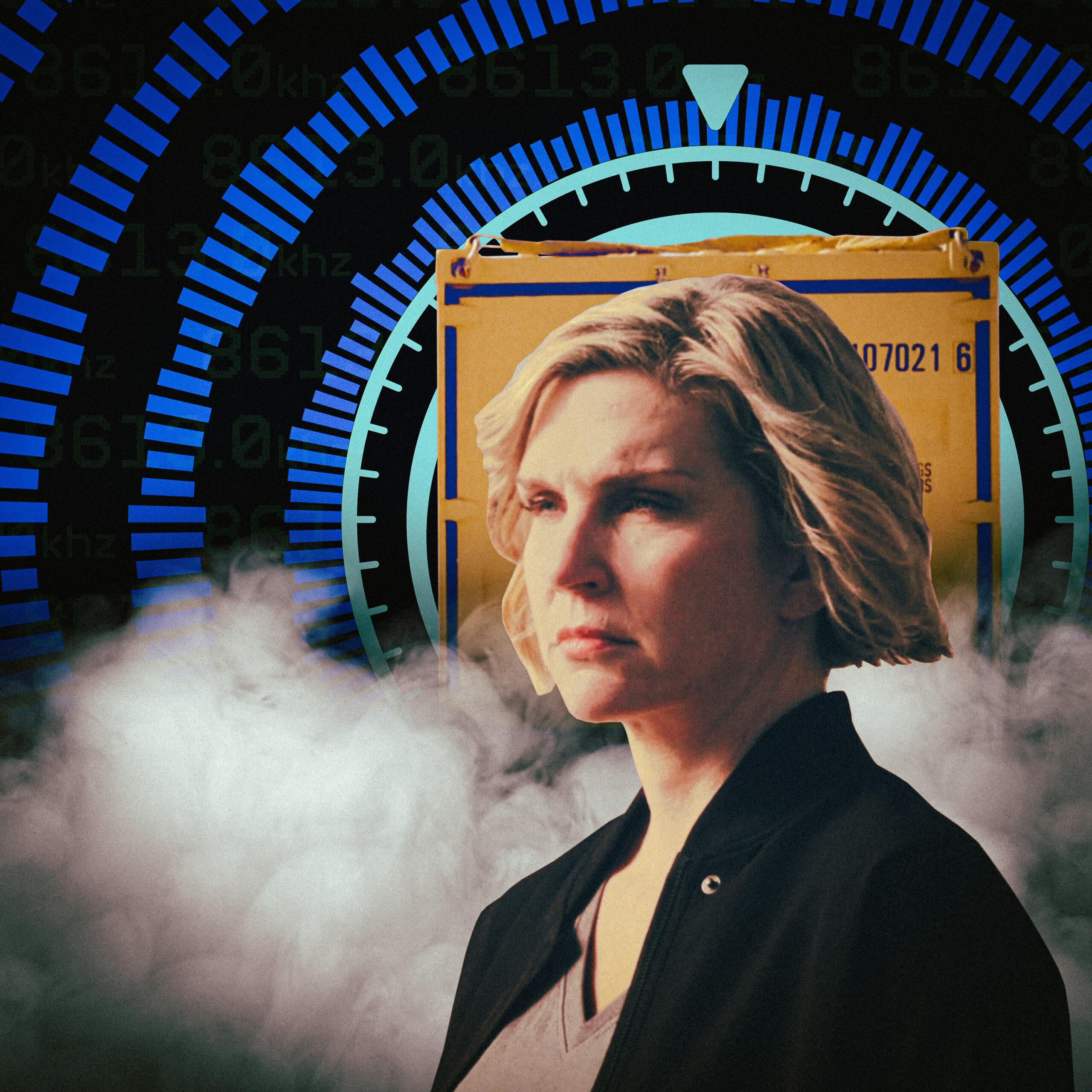


Over the final three episodes of the first season of Pluribus, Manousos Oviedo makes a 50-day journey from Asunción, Paraguay, to Albuquerque, New Mexico. After receiving Carol Sturka’s call to action, he drives to the edge of Colombia, teaching himself basic English phrases on the way so that he can better communicate with Carol upon his arrival. He treks through the infamous Darién Gap, where he gets impaled by bacteria-laden chunga palm spines and nearly dies from a resulting infection. Manousos wakes up in a Panamanian hospital and, instead of staying to recover for a few days, he grabs an ambulance to drive the rest of the way to Carol’s house.
After everything Manousos did to reach Carol and form a partnership with her to save the world, it takes Carol about two and a half minutes of talking to him before she decides to slam her door shut. “You can get back in your ambulancia and fuck right off,” she says. “I’m finito.”
It always seemed likely that Carol and Manousos’s prickly, strong-willed personalities would clash—but their long-anticipated introduction in the season finale goes even worse than anticipated, as Carol shifts her priorities. In “La Chica o El Mundo” (which translates to “The Girl or the World”), directed by Gordon Smith and written by Smith and Alison Tatlock, Manousos asks Carol to make the choice that the finale’s title alludes to: getting the girl or saving the world. And after Zosia’s successful charm offensive against Carol in the penultimate episode, the romantasy author (initially) chooses the girl.
In Episode 2, Carol deemed the five immune survivors she invited to meet in Bilbao “traitors to the human race” for embracing the newly Joined world. In this week’s finale, she jettisons her righteous stance against Earth’s invaders to enjoy her blossoming romance with Zosia. Carol reacts to Manousos’s cynical views and inhumane treatment of the Others with a familiar disdain, echoing the way the rest of the immune survivors responded to her close-minded perspective on the Joining when they first met. However, she fails to recognize—or acknowledge—her hypocrisy, even as she starts to sound like Laxmi. “Have you even tried talking to them?” she asks Manousos. “You could learn a thing or two.”
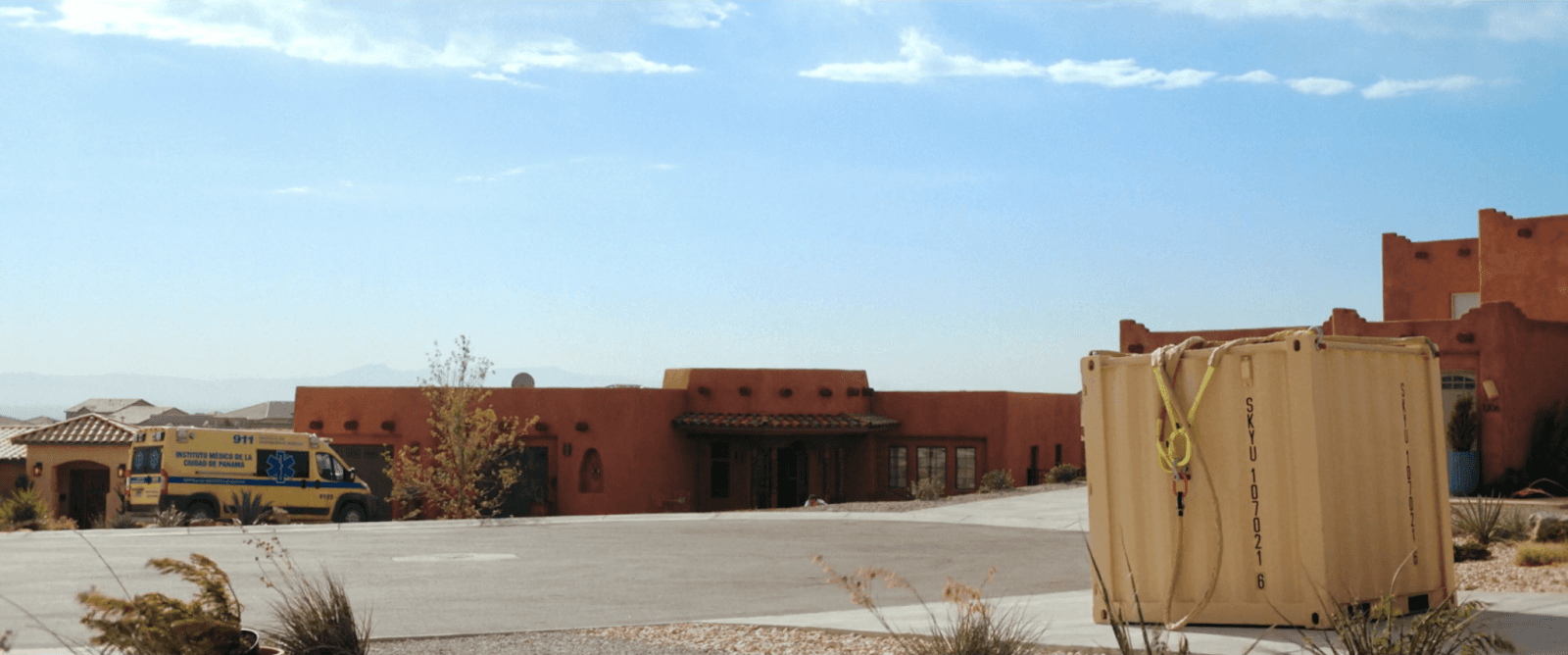
It isn’t until Carol discovers that the Others have been secretly working on another, less invasive way of converting her into one of them that she decides she’s ready to save the world with Manousos after all. The finale concludes with Carol returning from her comically romantic (and very cinematic) vacation around the world with Zosia to rejoin Manousos in Albuquerque and agree to work with him. And she brings a gift, too: an atomic bomb.
It’s been several weeks since we last considered the biggest questions about Pluribus, and there’s a lot to unpack. So as the Apple TV series wraps up its first season and we begin the long wait until its return, let’s lay out five more questions about where the series might be heading in Season 2.
What’s Carol planning to do with the atom bomb?
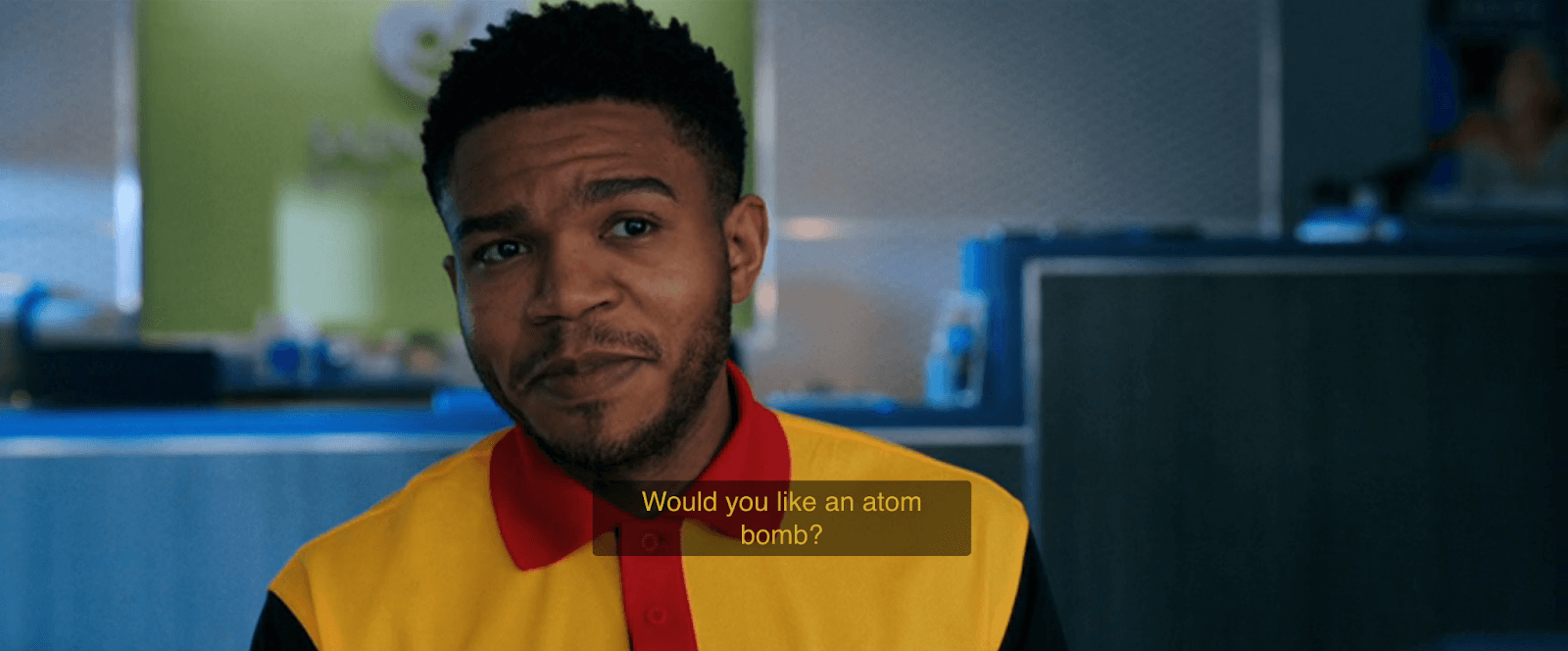
At the end of Episode 3, Carol is dumbfounded by the Others’ willingness to keep supplying her with just about anything she requests, even after she has continually endangered them and nearly killed Zosia with a grenade. Carol tests their boundaries, asking them if they’d bring her an atom bomb if she wanted one. And their answer is …
“Ultimately … yes,” the Other says.“Wouldn’t necessarily feel good about it. But we would move heaven and earth to make you happy, Carol.”
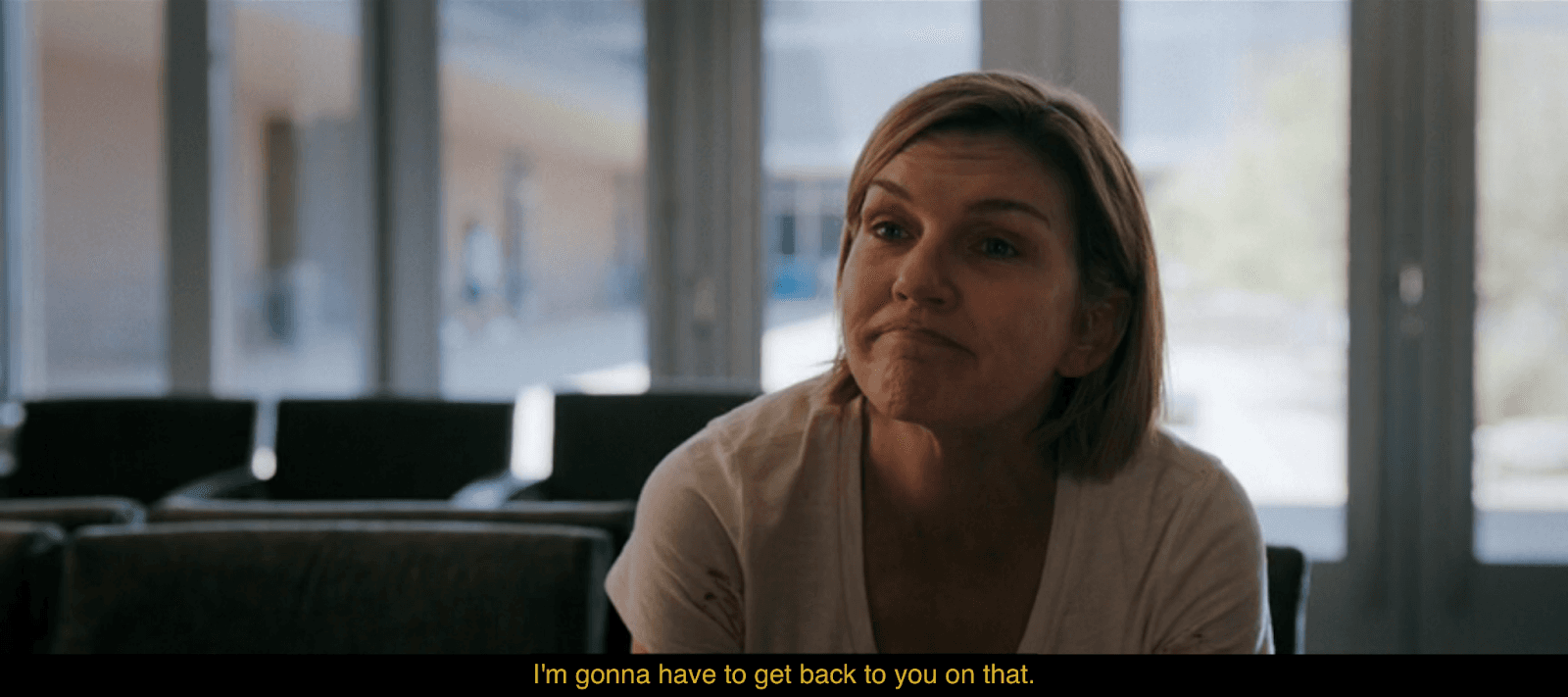
Carol left her seemingly hypothetical request open-ended, saying, “I’m gonna have to get back to you on that.” Seventy days later, she takes the hivemind up on its offer. In the final moments of Episode 9, Zosia flies a helicopter carrying Carol and a crate containing a nuke to Carol’s cul-de-sac.
But what exactly does Carol plan on doing with the warhead? Would she really go so far as to annihilate an obscene number of Others? (And could she, if she tried, given that the Others monitor her movements and have little trouble staying out of her way?) Will she destroy the giant antenna they’re building? Perhaps she merely wants to keep it as a nuclear deterrent to ensure that they won’t convert her (and Manousos, if she even cares about him)? Or maybe she just asked for the bomb out of spite, and has no real plan at all?
It seems as if even the Pluribus writers don’t know what Carol’s going to do—at least, not yet. “I feel like future Alison might be a little mad right now,” Tatlock told Alan Sepinwall, writing for The Ringer. “It really felt like an exciting big swing statement way for Carol to plant a flag at the end of a season. But that did not mean in any way that we had a specific plan. Now, future us is present us. We’re having to figure it out now.”
Time will tell what will come of the atom bomb. Until then, it’ll serve as a bold adornment for Carol’s driveway.
Will the Others be able to use Carol’s frozen eggs to harvest her stem cells?
In Episode 3’s cold open, a flashback shows a trip Carol took with Helen to Norway more than seven years before Joining Day. As they’re getting a tour of their room in a hotel made of ice, Carol jokes to Helen that “I could’ve saved that hundred grand and frozen my eggs right here, yolks and all.”
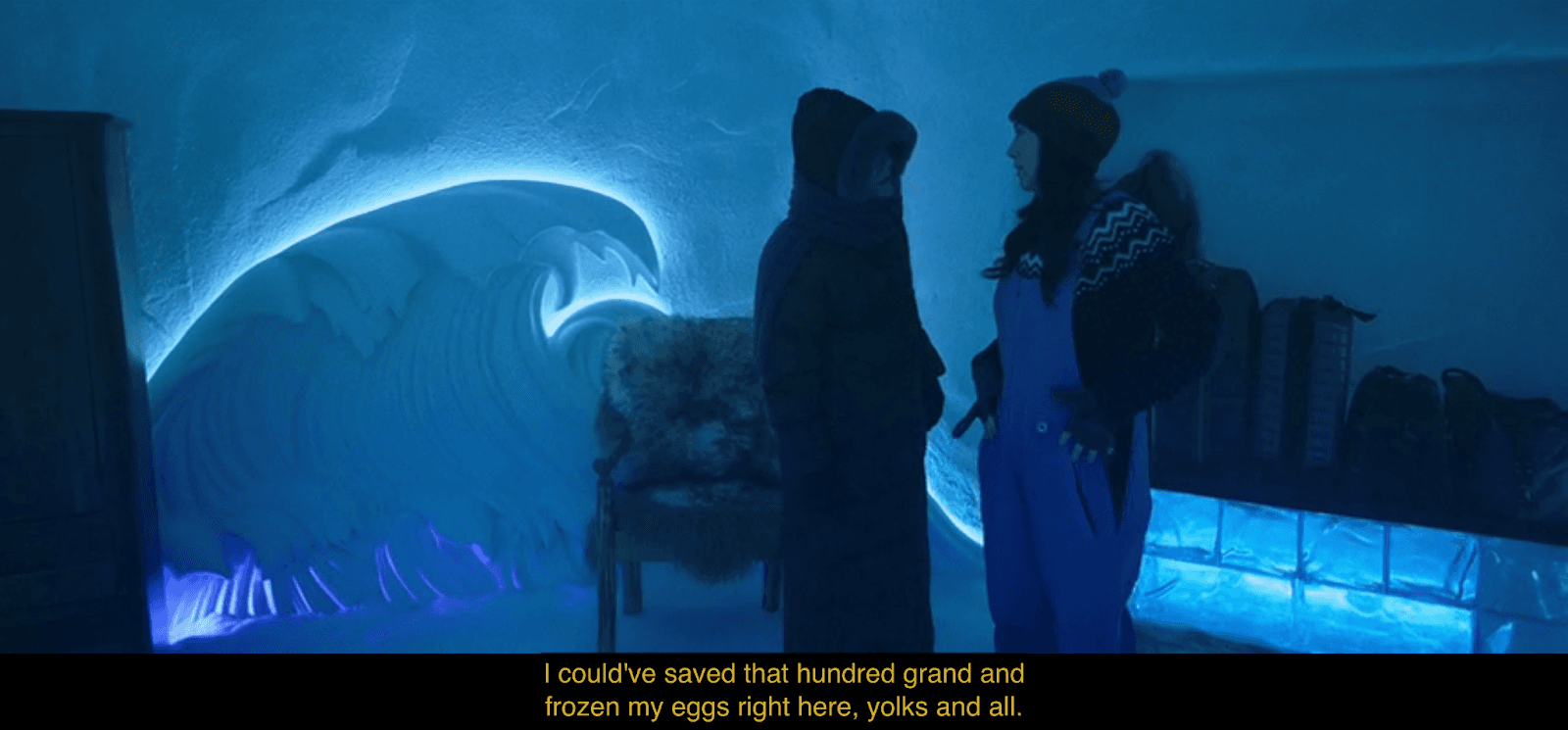
Although the initial mention of Carol’s frozen eggs came in what seemed to be a throwaway line, the detail took on greater significance when Koumba later revealed that the Others needed their stem cells to assimilate them. It quickly became a popular fan theory that the Others would use Carol’s eggs against her, even as Reddit scientists argued about the plausibility of using frozen eggs to obtain stem cells. Now, the season finale has confirmed that—whether plausible or not—the Others have been busy trying to make it happen.
When a lovestruck Carol tells Zosia that she doesn’t want her happiness to ever go away, Zosia cheerfully says that “it only gets better.” The ominous comment leads Carol down a line of questioning about the Others’ continued efforts to convert her to the collective, and she suddenly realizes how they could get her stem cells without having to “jam a giant needle in [her] ass,” as she eloquently puts it.
“My eggs,” Carol says. “The ones I froze with Helen. You have them, don’t you?”
“We do,” Zosia replies.
“And you can make them into stem cells, can’t you?” Carol asks.
“It takes time and patience, plus a bit of luck,” Zosia explains, before confirming that they are indeed working on it.
Zosia says that it should take them a “month,” and “hopefully no more than two or three,” to complete the process. Carol received a false sense of security when the Others agreed not to harvest stem cells from her body in Episode 6. However, using her frozen eggs that are already out in the world is another matter. As the great John Cena once said, “We can’t pluck an apple from a tree,” but “once an apple drops of its own accord, well, we’ll eat it, of course, and gratefully.”
Although Zosia alluded to the difficult nature of the delicate process, it seems that it’s not so much a matter of if the Others will be able to harvest Carol’s stem cells from her frozen eggs, but when. Pluribus’s race against time is back on.
What has Manousos figured out about the Others?
It looks like all of Manousos’s hard work could end up being the key to reversing the Joining.
When we first meet Manousos in Episode 4, he’s meticulously tuning into every frequency on his ham radio as he searches for any signs of life. By Episode 6, he’s stumbled upon something curious at 8613.0 kHz: Rather than the typical static, there’s a series of clicking, looping tones that sounds almost like a water sprinkler. Manousos doesn’t know what to make of it, but he assumes it’s important.
In the finale, Manousos attempts to use that same radio frequency to unjoin one of the Others. After disrupting the hivemind’s shared connection with a jumpscare, he places his portable radio—tuned to 8613.0—on the chest of his joined guinea pig, whispering words of encouragement for them to fight the alien virus that has taken hold of their consciousness. Carol interrupts the experiment before Manousos can see if his hypothesis pans out, but he still comes away from the trial run with valuable data. “You were right,” he later tells Carol. “I think there’s a way to put things back in their place.”
Because Pluribus is often limited to Carol’s narrow-minded perspective in most matters, her disinterest in Manousos’s findings prevents us from learning more about what he’s really up to. But Pluribus has provided us with possible clues as to what might be happening here.
In Episode 8, Zosia explains to Carol how the Others communicate by tapping into their bodies’ electromagnetic fields, or their “natural electric charge, so to speak.”
“So … like radio?” Carol asks.
“Sort of,” Zosia replies. “But radio transmission is like talking. It’s conscious. Our communication is unconscious. Homeostatic. Like breathing.”
Pluribus began with a scientist discovering the extraterrestrial radio signal that has melded humanity together with a psychic glue, and Manousos seems to have figured out on his own that the hivemind’s connection is akin to a radio transmission—which, as we’ve seen many times, can be disrupted by those with an immunity to the virus.
When Carol finally returns from her extended romantic getaway with Zosia near the end of the episode, we see that Manousos has been busy studying an assortment of textbooks that cover topics such as electromagnetism, basic electricity, crystallography, circuits, data acquisition systems, and more. He’s taking notes on a passage about standing waves, which references radio-frequency generators, current nodes, loops, and so on.
Now, I’m not something of a scientist myself, and I’m very much looking forward to scouring Reddit later this week to find someone much smarter than me explaining what any of this really means. But it seems to me that Manousos has discovered that the Others all act like nodes of the original extraterrestrial radio signal that now connects them. He still needs to figure out a way to sever the unconscious link that they all share, and it’s hard to imagine that Carol will be able to offer much help on this front. (No offense, Carol.) But Manousos appears to be on the right track.
Should Carol and Manousos be worried about the advancements in the Others’ joining methods?
At the beginning of the season, the hivemind spreads its psychic glue through saliva. The Others start proliferating the old-fashioned way, by kissing their unsuspecting targets before they can react. They move on to swabbing their saliva into petri dishes and shipping them off, and they even try licking doughnuts in a truly despicable act of deception. It all may have paid off in the end, but it’s hard not to wonder if they could’ve pulled off their invasion with more effective tactics than spoiling someone’s favorite morning treat.
Seventy-one days later, the Others have all but perfected the process. In the finale’s unnerving opening sequence, Kusimayu has her wish to join fulfilled at last. The Others ease her into the transition by surrounding her with the sights and sounds of her Quechua traditions, appropriating her culture to comfort her as she sacrifices her individuality to be one with the many. When the moment finally comes, her joined relatives open a canister that contains a gas—which must’ve been specifically concocted using her stem cells—that Kusimayu inhales. She’s infected within seconds. With the process complete, the Others unceremoniously pack up the village and release its animals into the wild, leaving Kusimayu’s previous way of life with them.
Kusimayu’s joining is a quick demonstration of the Others’ efficiency, and how adept they’ve become at manipulating the last unjoined humans in the world. Just as they deployed Zosia to charm Carol and have given Diabaté everything (and everyone) he’s ever dreamed of, the Others perfectly caters to Kusimayu to add her to their numbers with as little resistance as possible. And their technology has advanced well past the need for any spoiled doughnuts.
Carol and Manousos might not be aware of how everything went down with Kusimayu; all Carol knows is that Kusimayu has joined and is supposedly happier than ever, according to Zosia. Still, they’ll need to act quickly given how fast the Others are evolving.
What will happen to Earth once the Others have joined all humans and built their giant antenna?
Through nine episodes of Pluribus, we’ve learned a lot about the hivemind and the alien virus that hails from Kepler-22b. Yet the Apple TV series is still full of so many questions to be addressed in the next season, and potentially beyond. But how long will creator Vince Gilligan and Co. be able to sustain the series’ growing mysteries?
Beyond Carol and Manousos’s core mission of reversing the Joining, and the constant threat of being transformed before they can, the Others’ true nature and purpose is what continues to drive this series. As far as we know, their primary objective is to satisfy their biological imperative to envelop as many people in their psychic glue as they can, and spread the gift that their alien progenitors have shared with them. In Episode 8, Carol learned that that goal has already expanded to include other planets, with the Others building a giant antenna that would require all the power in the world to operate. If it’s anything like what the two scientists from the premiere—the ones who accidentally reshaped humanity—imagined, an antenna capable of sending a signal from 600 light-years away would need to be the size of Africa, or bigger.
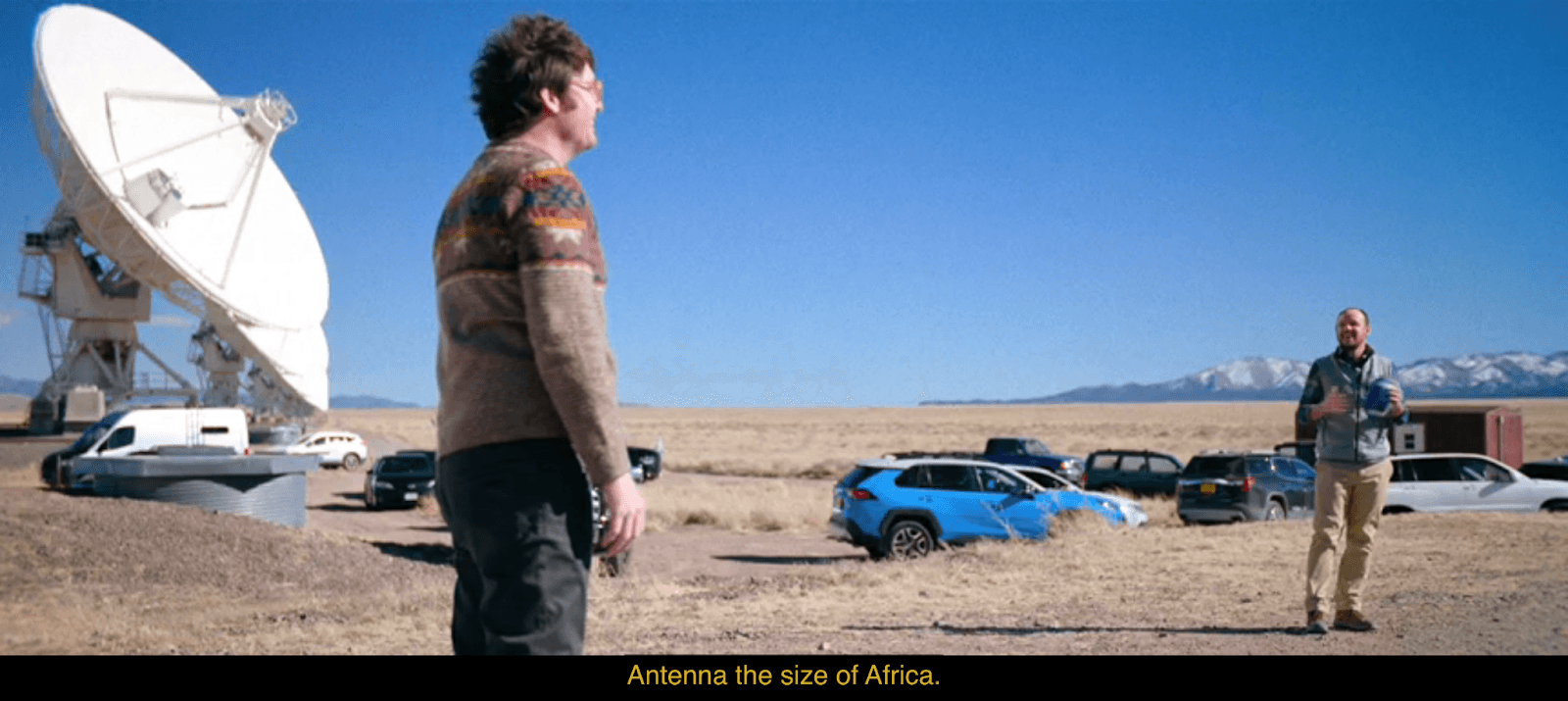
That’s a project that’s going to require a lot of resources and manpower, neither of which is in short supply. As the Others face a looming starvation crisis, they still appear to be more concerned with converting the last dozen (or fewer) immune survivors and spreading their all-consuming happiness to the next alien race. It’s hard to say what those priorities could mean for everyone left on a fully joined world after the kindly invaders’ mission is complete. It’s up to Manousos and a newly motivated Carol to reverse the Joining before Earth’s inhabitants find out. Get ready to learn electromagnetism, Carol.