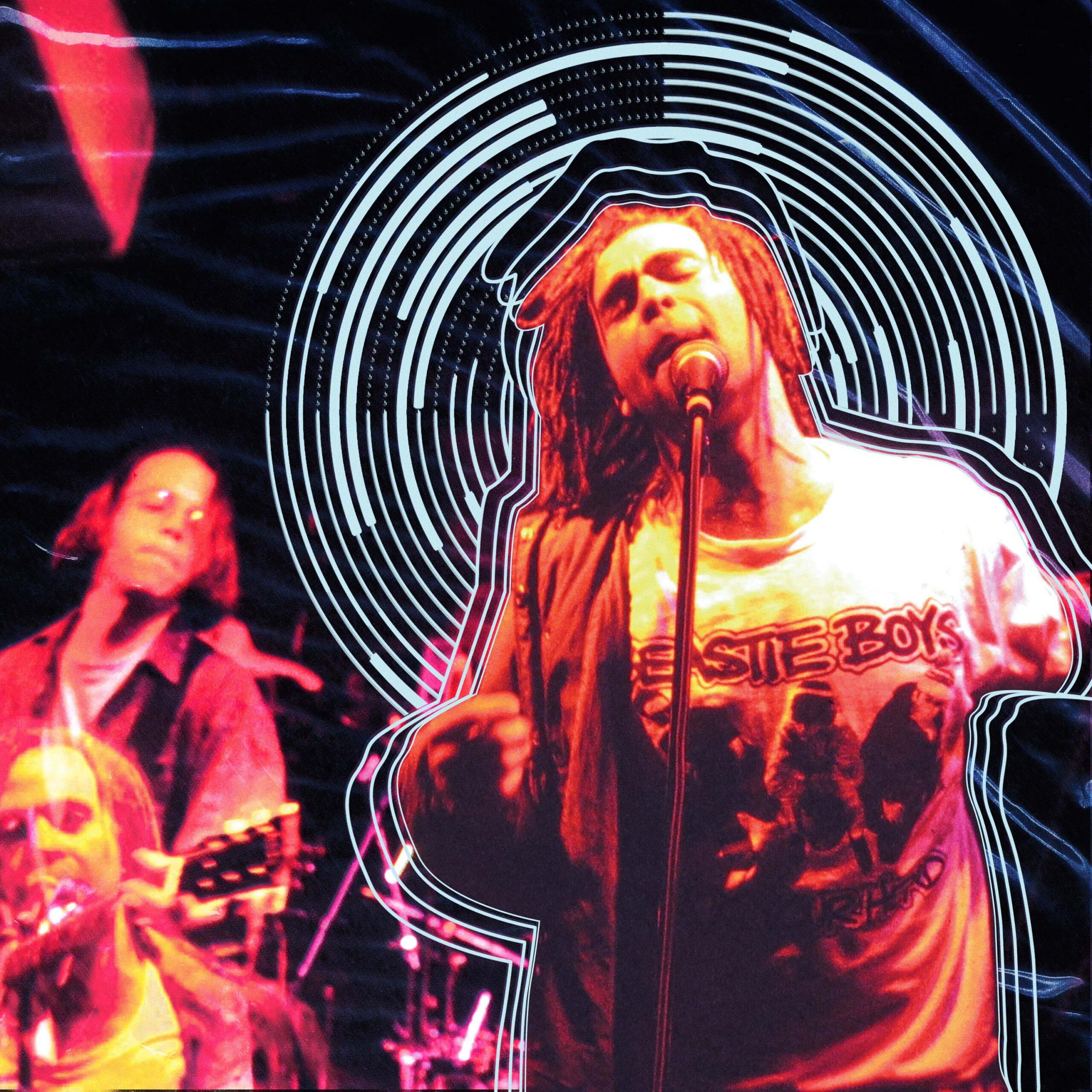

There is a new documentary out on HBO Max this week about Counting Crows and their singer-songwriter, Adam Duritz. I’m sure you have heard of them. The paradox of Counting Crows—this is true of most ’90s rock bands who aren’t Nirvana or Radiohead—is that everybody knows who they are but is aware of only one or two of their songs. And often not by the titles, just the most quoted lyrics. For the Crows, those tunes are “Mr. Jones” (the “I wanna be Bob Dylan” song) and “A Long December” (the one where the guy hopes that “maybe this year will be better than the last”). As noted in Counting Crows: Have You Seen Me Lately?—which was coproduced by Ringer Films as part of HBO’s Music Box series—they are also remembered for two extremely ’90s pop culture artifacts, which for years provided fodder for uncreative stand-up comics and late-night talk show hosts: Duritz’s uniquely public dating history (highlighted by dalliances with two Friends cast members) and his distinctive dreadlocks, which made him infinitely more recognizable (not necessarily in a good way) than the typical tortured poet in MTV’s Buzz Bin. Duritz’s hair even gets its own narrative arc in the film, with a distinct beginning (his abrupt embrace of locks initially shocked the other band members), middle (SNL made some cruel/lame jokes), and conclusion (his girlfriend gently persuaded him to pivot in middle age).
Otherwise, director Amy Scott stays focused on their first two albums, 1993’s seven-times-platinum debut, August and Everything After, and the not-quite-as-successful follow-up from 1996, Recovering the Satellites. For a film aimed at a general-interest audience, this approach is smart and logical—the aforementioned songs, for one, derive from those records—even though those albums account for only 25 percent of their studio output. Nevertheless, I’ve been troubled by my own paradox (or maybe it’s just a minor inconvenience): I am a working rock critic whose extensive knowledge of “deep-cut” Counting Crows LPs has been professionally useless to me. For years, I have been prepared to impart observations about how the “loud” Side 1 of 2008’s Saturday Nights & Sunday Mornings informs the “quiet” Side 2. But I have had nowhere to put that information.
Until now, that is. Have You Seen Me Lately? is just the excuse I need to pontificate on their music, career, and legacy. And, hopefully, this pontification will prove useful for viewers in search of more great Counting Crows songs. Here are six of them.
“Round Here” (MTV’s Live From the 10 Spot Version), Across a Wire: Live in New York City, 1997
Most modern music documentaries fall into one of two categories—“nothing to prove” and “nothing to lose.” A “nothing to prove” music doc is about an act that already has an established baseline of greatness in the wider cultural consensus that only the most hardheaded contrarian would dispute. Which means the subjects of the film have little to no incentive to reveal or concede anything that might undermine that consensus. (This year’s Becoming Led Zeppelin typifies this trend, as does—to a lesser extent—the recently refurbished nine-part Disney+ doc The Beatles Anthology.) A “nothing to lose” music doc, meanwhile, is about an artist who was commercially popular in their prime but whose dubious critical standing is now ripe for revisionism. Which means the subject of this kind of film is motivated to speak about bad reviews, flop albums, and other foibles with greater-than-usual candor. (2021’s Listening to Kenny G—another Ringer Films doc—is one of the better examples from this decade, though 2023’s Hate to Love: Nickelback is the most overt “nothing to lose” music doc of recent years.)
Have You Seen Me Lately? falls into the latter camp. In the ’90s, millions of people hated this band in ways that were only possible in a bottom-down, mass-media world that made avoiding ubiquitous hit songs like “Mr. Jones” much more difficult. In the manner of all “nothing to lose” filmmakers, Scott attempts to explain and then nullify that dislike. Herein likes the central tension of this sort of doc: A “nothing to lose” film is structured in such a way to address the opinions of the very haters who are also the least likely to watch a documentary about music they despise, prioritizing that audience over those who never thought it possible to loathe an album as loaded with classic songs as August and Everything After is. (That said, “nothing to lose” movies are generally more interesting and entertaining than “nothing to gain” ones, for fans and agnostics alike.)
What’s nice about Counting Crows from a documentarian’s perspective is that their “possibly risible” aspects are pretty much synonymous with what’s conceivably endearing about them. Take this live version of the first song from the first album, which I would argue is also their no. 1 track in terms of quality and overall modus operandi. This song is also, I acknowledge, really annoying if you can’t stand this band.


Press play, and you’ll see what I mean. On August and Everything After, “Round Here” sets an immediate tone for a record that synthesizes 25 years of rootsy, vision questy rock, from The Basement Tapes to Born to Run to The Joshua Tree to Automatic for the People. The plot centers on Doing Something to Change Your Life in the most melodramatic and transcendentally epic fashion imaginable, a feeling underscored by the anthemically jangly music. It sounds like Michael Stipe trying to rewrite “Thunder Road.” Though when you scrutinize the striking but disjointed lyrics, the story starts to break down. (Why, for starters, would Maria leave Nashville to find a boy who looks like Elvis? Isn’t that like leaving Los Angeles to find a girl who acts like Rachel Sennott?)
Not that this matters all that much when you listen to “Round Here.” Especially if you put on a live version, which pumps up the melodrama and epic transcendence by several factors, sweeping up the lyrical plot holes in an overwhelming emotional surge. I am particularly fond of the electric rendition from Across a Wire—not to be confused with the rearranged acoustic take from the VH1 Storytellers disc on the same double album—as it reminds me of the bootlegs from the late ’70s where Bruce Springsteen tried to turn the middle of “Backstreets” into a Van Morrison–style spiritual breakdown. Counting Crows did the same to “Round Here,” most famously, on Saturday Night Live in 1994, when Duritz’s shouty improvisations elongated the song to the extreme irritation of the show’s producers (one of whom, according to Duritz in the documentary, denounced him as a “fucking asshole”). But that was also the performance credited with breaking August and Everything After and transforming it into an alt-rock touchstone. From the start, what bothered some people about Counting Crows exhilarated a great many other people.
In that sense, the Across a Wire performance is even riskier, grander, potentially more alienating, and (for all those reasons) better. It is, above all, a lot. And that a lot–ness is key to the Counting Crows enterprise, for better or worse.
“Einstein on the Beach (For an Eggman),” DGC Rarities Vol. 1, 1994
Early on in Have You Seen Me Lately?, Counting Crows guitarist David Immergluck recounts the first time he met Duritz and how they immediately got into an argument after Immergluck dismissed Springsteen, a common attitude among underground musicians in the Human Touch/Lucky Town era of the early ’90s. The following day, Duritz purchased every Springsteen album from the used vinyl section of a local record store and delivered the stack to Immergluck, imploring him to give the Boss another chance.
The story is instructive for two reasons: It illustrates that Duritz was a student—a savant, really—when it came to listening to (and then composing) heartland rock songs. And it indicates that this was true at possibly the least forgiving time for heartland rock in the history of contemporary pop music.
No matter their tremendous success at the time, Counting Crows were woefully out of place in the music world of the early ’90s. This is most apparent when you listen to DGC Rarities Vol. 1, a venerable “CD wallet” staple composed of acts signed to Geffen Records that put Counting Crows in the company of alternative’s biggest stars. In accordance with the times, several tracks critique the very idea of appearing on a corporate music sampler like DGC Rarities Vol. 1: Sonic Youth’s “Compilation Blues,” Nirvana’s “Pay to Play,” that dog.’s “Grunge Couple,” and Beck’s “Bogusflow,” a pious piss-take of Pearl Jam that seems hilariously misguided in retrospect given the source’s eventual Grammy-magnet status.
Ultimately, none of those songs garnered as much airplay as “Einstein on the Beach,” an outtake Duritz deemed unworthy of the debut album that subsequently became one of 1994’s top hits on Billboard’s modern rock chart. It didn’t get left off August and Everything After because it wasn’t good enough (it’s super catchy) or because it was so good Duritz had to leave it off for “punk rock” reasons. (Have you heard the rest of August and Everything After?) It’s possible “Einstein on the Beach” was a little too bouncy to fit the debut’s dour mood. Mostly, though, the issue was that Counting Crows had too many good songs to fit on one record. They didn’t need another hit. But they otherwise had no larger philosophical opposition to bringing tuneful earworms that normal people might enjoy (and snarky guys like Beck might subtweet) to radio.
“Omaha” (Demo), August and Everything After (Deluxe Edition), 2007
That “normie-friendly” mentality is singled out in Have You Seen Me Lately? as the spark of the eventual anti–Counting Crows backlash. And it really was important in shaping the trajectory of their career. But other factors, I would argue, were more critical.
Back to Duritz, the heartland rock savant: The documentary covers the celebrated demo tape that got Counting Crows signed to Geffen. It upended convention by including more than a dozen tracks, which is four or five times more than a typical demo. Many of those songs ended up on August, although those versions sound quite different from the original recordings. As Duritz says in the film, he first had to mold the backing musicians on August to match the sound in his head. That meant forcing guitarist David Bryson to ditch the effect pedals that made him sound like John Squire of the Stone Roses so that he could instead emulate the elemental Byrds-inspired tones of R.E.M.’s Peter Buck. Duritz similarly instructed keyboardist Charlie Gillingham to trade out his synthesizer for a B3 organ and bassist Matt Malley to adopt a chunkier, earthier style rather than the jazzy, fretless bass he preferred.
You understand the need for that heavy hand when listening to the demo for “Omaha,” which is closer to Britpop than the majestic, accordion-driven number that eventually appeared on August. By the time they were making the album, they had assistance from T Bone Burnett, a one-time Bob Dylan associate who in the ’80s and ’90s became the go-to producer for prestige proto-Americana acts like Los Lobos, Elvis Costello, and Duritz’s future duet partners the Wallflowers.
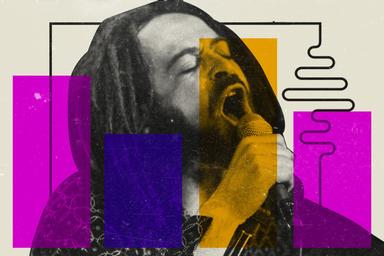
Burnett’s goal, as expressed in Have You Seen Me Lately?, was to take a demo that sounded like an album and make an album that sounded like a demo. The austere, classy sheen he applied to August and Everything After was crucial to its wide demographic appeal as the alternative album that teenagers and their boomer parents could enjoy together. It was also at the heart of what critics didn’t like about Counting Crows—their quasi–tribute act tastefulness, that careful sonic curation that made them sound like “Classic Rock: The Band,” and the way those gestures felt like sucking up to old people.
Their 1993 appearance at the Rock & Roll Hall of Fame as a fill-in for absent inductee Van Morrison didn’t exactly discourage that criticism. That gig might be what caused Robert Christgau to liken Duritz to “the dutiful son of permissive parents I hope don’t sit next to me at Woodstock.” Jim Greer of Spin similarly fretted that their rise signaled “a kind of musical conservatism on the part of the listening public that we’d rather not have to acknowledge.” David Browne of Entertainment Weekly was more precise with his criticism, astutely pointing out that “Counting Crows’ nostalgia is not for rock of the ’60s or ’70s, but for its ’80s incarnation—that overly refined white-guy roots rock promulgated by everyone from Los Lobos to John Mellencamp to lesser bands like the Bodeans.”
While it should be noted that the Mexican American band Los Lobos is hardly a “white-guy” outfit, the argument that this kind of music was “an artistic dead end”—as Browne put it—tracks, at least in terms of critical perception. Although Duritz’s creative blossoming, manifested in the thoroughly against-the-grunge-grain sound of August and Everything After, was considerable enough to overcome that, at least for a time.
“Anna Begins,” August and Everything After, 1993
The pearl clutching over “musical conservatism” has abated since the early ’90s, as it’s become more or less accepted that rock artists—like those in blues, folk, and country, the bedrock origins of the genre—are in constant dialogue with the music’s past. That tide started to turn right after August and Everything After, when cross-generational collaborations between old and young rockers became common—Neil Young toured with Pearl Jam, David Bowie made an album with Trent Reznor, Hole covered Fleetwood Mac for the Crow: City Of Angels soundtrack, and so on. It’s why MJ Lenderman can play “A Long December” in concert now without music critics lining up to berate him with their dog-eared copies of Joe Carducci’s Rock and the Pop Narcotic in tow.
Yet Counting Crows were never fully reclaimed. I can still recall a tweet from 2017 that remains stuck in my craw—a truly wild statement to type, I realize—that was for a Pitchfork article in which staff members listed their most formative teenage albums. The idea, I think, was that many of these choices were now considered embarrassing. (What we used to call “guilty pleasures” before that term became outmoded.) In the tweet, however, Counting Crows were singled out as an especially humiliating example.
In 2013, I wrote a column for Grantland in which I tried to explore why that perception of Counting Crows persists, and it went viral for reasons that proved to be largely exasperating. A lot of people missed the point, in part because the headline (which I didn’t write) likened Counting Crows to Nirvana in a manner that was distractingly provocative. (One detractor concluded that my article represented “the sort of contrarianism that would make even veteran Slatepitchers quail in their boots,” which I assure you made sense as a diss 12 years ago.)
The crux of my thesis pertained to how Duritz’s songs are realistically sad, which is different (and thornier) than songs that are tangentially sad. (Basically anything by Nick Drake, Elliott Smith, Jeff Buckley, and other romantically tragic figures whose music always circles back to the circumstances of their creators’ mythic lives and deaths.) I’ll just restate my central point here, which uses “Anna Begins” as an example:
It describes a scenario that occurs in nearly everyone’s life at least once (if you’re lucky) between the ages of 16 and 23: A person falls in love with a friend, the friend is interested in possibly reciprocating, they consummate their feelings, it doesn’t work, and the relationship is ruined. The song is so direct and plainspoken that it hardly seems like art; it just sounds like dialogue that’s been transcribed from a million arguments between emotionally exhausted parties:
It does not bother me to say this isn’t love
Because if you don’t want to talk about it then it isn’t love
And I guess I’m going to have to live with that
But I’m sure there’s something in a shade of gray
Or something in between
And I can always change my name if that’s what you meanI don’t know if I ever said those exact words to a woman, but I’ve said something like those words. And hearing Duritz sing them never fails to make me cringe a bit. Not because it makes me think about Duritz and the circumstances of his life, but because it makes me think about my life, and not a particularly good part of my life. This is Duritz’s unique talent as a songwriter: He vividly re-creates the feeling of your lowest of personal lows—the “it’s 4:30 a.m. on a Tuesday and it doesn’t get much worse than this” moments that many of us would just as soon forget.
Put another way: Many critics (as well as casual listeners) have what the film writer Will Sloan recently called “a contempt for weakness.” He was referencing Quentin Tarantino’s recent comments about Paul Dano’s deliberately pathetic performance as Daniel Day-Lewis’s wormy foil in There Will Be Blood, but the phrase could just as well apply to an artist who—more than any songwriter I can think of—authentically plumbs the depths of how gross and hopeless and unattractive being in a miserable place in your life can be.
These are not feelings many of us wish to wallow in, and we tend to resent those who invite us to do so, regardless of the art form. We would rather those feelings be presented in an elevated, handsomely desolate package that makes sadness seem aspirational. It’s the very thing that makes distinguishing bad art from good art that evokes unseemly emotions such a challenge.
“Speedway,” This Desert Life, 1999
Have You Seen Me Lately? ends after the release and disappointing reception of 1996’s Recovering the Satellites, gamely making a case that the album is an underrated gem. I would go one step further and call it the best Counting Crows LP and one of the great unsung masterpieces of alt-rock’s “end times” period in the mid-’90s. It’s certainly the record I would recommend as an entry point for younger listeners. While August and Everything After is their greatest “songs” record, Recovering the Satellites sounds more like it came from a band, while also benefiting from having fewer overly familiar hits.
The knock against Recovering the Satellites at the time was that Duritz fixated too much on complaining about his rock-star fame on the album, which allegedly made the songs unrelatable. But that criticism willfully disregards how people listen to music. It’s like arguing that “A Long December” is emotionally resonant only for people who have also slept with Courteney Cox. Few songs ever have literal relatability for an audience; we simply zero in on whatever stray lyric hits home and make the whole song about that. In the case of Recovering the Satellites, Duritz’s broader themes—heartbreak is unavoidable; loneliness is constant; dislocation can be felt anywhere, even in a crowded room—couldn’t be more universal.


As the documentary points out, the second Counting Crows record went double platinum, hardly a failure by most standards. It also didn’t exist in a vacuum. Recovering the Satellites was released on the same day in October of 1996 as Life Is Peachy, the second album by Korn. That record also eventually went double platinum. But Korn and the nü-metal scene it spearheaded were ascendant, while the old alt-rock world that never fully embraced Counting Crows was rapidly fading away.
If Have You Seen Me Lately? had been 10 minutes longer, it might have included the spectacle of Duritz and his bandmates appearing at Woodstock ’99, the least Counting Crows–appropriate setting for a Counting Crows concert ever. It’s a handy metaphor for where they were just four months later, when they put out their third album. This Desert Life sold worse than the first two records even though it’s nearly as good musically, although that scarcely mattered. Funnily enough, the late ’90s were a more amenable time for a white rock singer with dreadlocks. But in every other sense, clearly, Counting Crows were out of their element. To their credit, though, they didn’t hire a DJ or invite Jonathan Davis to do guest vocals. They just plowed ahead with making prototypical Counting Crows songs like “Speedway,” one of Duritz’s most unsparing depictions of depression, which is really saying something. Whereas “Round Here” is about a woman who goes out into the world in search of something that might exist only in her imagination, “Speedway” uses a road trip as an allegory for a journey into self that winds up going nowhere. The protagonist isn’t just leaving a place, but rather his very sense of self. “Sometimes I’m floating away,” he sings. But it doesn’t sound like floating. It’s more like sinking.
“Virginia Through the Rain,” Butter Miracle, the Complete Sweets!, 2025
The most insightful parts of Have You Seen Me Lately? involve Duritz discussing his mental health, specifically dissociative disorder, a condition that made him feel detached from reality during some of the most unreal moments of his life and career. As he related in an interview I did with him back in 2012, “There was a part of me that thought it didn’t matter if I was ever happy, because I was making music and making a mark and I was going to be remembered and that seemed to be everything.”
At the time of that conversation, Counting Crows hadn’t put out an album of original material in four years. They seemed adrift. Their two aughts-era records, 2002’s Hard Candy and 2008’s Saturday Nights and Sunday Mornings, have some excellent songs. But the only music that gained wider traction—the Oscar-nominated Shrek 2 soundtrack smash “Accidentally in Love” and the frankly atrocious Joni Mitchell cover “Big Yellow Taxi”—also happened to be their most aggressively inconsequential.
By the early 2010s, Duritz appeared not only disinterested in writing more Counting Crows songs but also wary about how doing so might affect his fragile emotional state. “I’ve said a lot of stuff about my life over the last 20 years. I’m not sure I have to tell anything else about my life,” he said flatly. “If I stopped and didn’t say anything else about my life from now on, I still will have said plenty.”
He's apparently changed his mind since then. While his creative pace has slowed considerably—this year’s Butter Miracle, the Complete Sweets! comes 11 years after the more than respectable Somewhere Under Wonderland—he also seems more comfortable being Adam Duritz now than he ever has. That rings true of “Virginia Through the Rain,” a gorgeous ballad in a long line of Counting Crows songs related to Duritz’s favorite meteorological phenomenon. Rain imagery, for starters, is soaked throughout August and Everything After. It’s there in the song titles (“Rain King,” “Raining in Baltimore”), as well as in the lyrics of “Round Here” (“I walk in the air between the rain”), “Anna Begins” (“This time when kindness falls like rain”), and “Omaha” (four separate times as “gathered rain,” “bucket of rain,” “summer rain,” and “earth and rain”). And it pours like a tsunami on scores of subsequent songs, from “Have You Seen Me Lately?” to “Amy Hit the Atmosphere” to “God of Ocean Tides.”
The cynical view of all this lyrical precipitation is that “rain” is an awfully easy word to rhyme. It’s also a useful tool for a quintessentially sad troubadour constantly grasping for mournful allusions. But it just makes me think of the late, great music critic Ellen Willis, who once observed that John Fogerty—the original “rain king” of heartland rock, known for “Have You Ever Seen the Rain?” and “Who’ll Stop the Rain”—was a fatalist who constantly referenced the weather in his songs because it’s “something you can’t do anything about.”
I suspect that Adam Duritz, at this point, has a similar attitude about his band’s strange but indelible place in rock history. If you still don’t get the appeal of Counting Crows, well, he’s been here before. But after all this time, he deserves a little more.