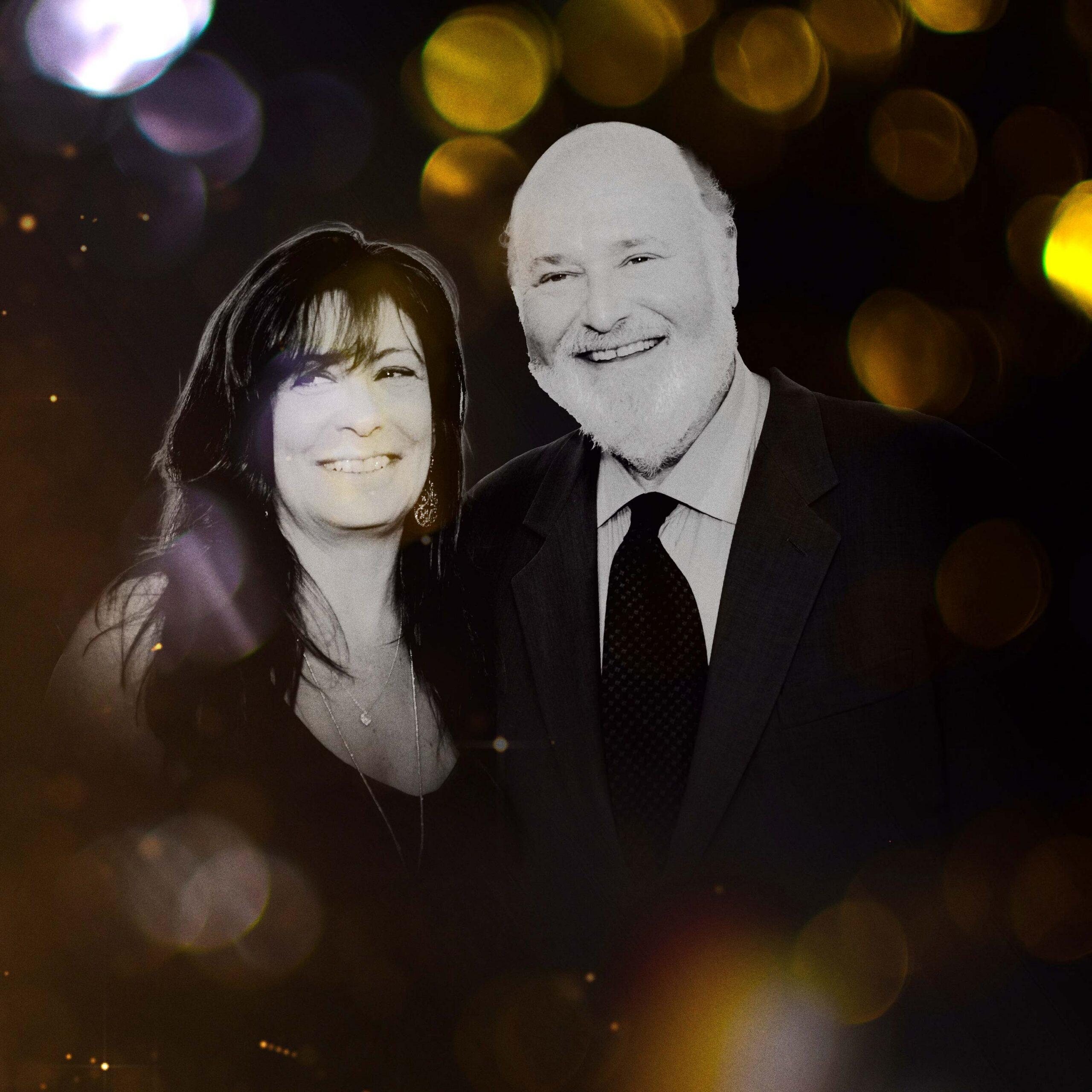

Rob Reiner is dead. I don't want to talk about it. "You guys wanna go see a dead body?" Vern asks in Stand by Me, a film Reiner made in 1986, early in what would become one of the most astounding creative runs in Hollywood history; Vern, today that's the last thing I want. One of the hardest problems in the field of artistic biography is that death changes how we look at artists. It reframes their work for us. Especially sudden or violent death. A poet dies young, a rock star overdoses, a comedian is murdered, and we can never again see them without looking back through those endings, can never view their art without being conscious of their last moments. We know this is wrong—the artists didn't know how they were going to die when they were creating the work for which we remember them; the one doesn't grow out of the other—but it's human nature to make too much of endings. I can't help it. Can you?
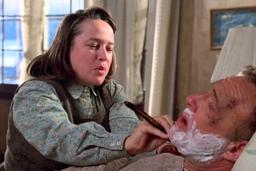
Better to just say it: Reiner, a director whose body of work is one of the most marvelously life-affirming in all of American cinema, was killed at the age of 78. He was stabbed to death. His body and that of his wife, Michele Singer Reiner, were found on Sunday in their home in Los Angeles. Their 32-year-old son, Nick, was arrested late on Sunday on suspicion of murder. It's a gruesome ending to a story that seemed, until now, the utter opposite of gruesomeness; even when he made a horror movie, Reiner wanted the villain to be full of life. (The twisted warmth that Kathy Bates brings to Misery—an evil twin to the warmth that fills Reiner's other films—is what makes it so terrifying and also what makes it feel totally different from most other horror movies.) And I say this in pure selfishness: I don't want to believe that I'll never be able to watch Reiner's movies again without bringing this nightmare to the experience. Losing Reiner is a big enough blow. Losing the joy that lights up his films, the curiosity about people, the affection for humanity, would be too much.
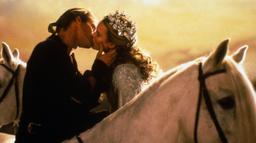
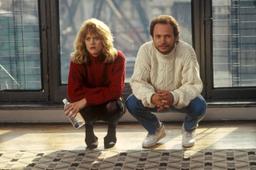
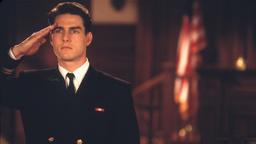
Reiner's movies, particularly those from the otherworldly run that stretched from 1984's This Is Spinal Tap to 1992's A Few Good Men, are certainly aware of death. It's often in the background, like the body of poor Ray Brower in Stand by Me, where it acts as a kind of poignant counterweight to the good-natured matter-of-factness with which Reiner normally viewed the world. We're all chuckling by the campfire, but it's out there, somewhere in the woods. Thinking about it makes us ridiculous, like Billy Crystal's Harry in When Harry Met Sally …, who always reads the last page first in case he dies before finishing the book. Spinal Tap wouldn't be half as funny if the feckless rock band weren't steeped in death-obsessed metal iconography. But encountering death also makes the ridiculous profound. In A Few Good Men, Tom Cruise's smug, immature Lieutenant Kaffee is so charged by the murder of William Santiago that he finds the strength to bring down Jack Nicholson's Colonel Jessep. In The Princess Bride, something genuinely strange and magical happens when Miracle Max resurrects Westley; after that moment, the movie's silliness never again feels superficial, even if Westley was only ”mostly dead,” and even if death, like true love, pales beside a good mutton, lettuce, and tomato sandwich.
I've mentioned most of the titles already, but you can't fully appreciate Reiner's legacy without seeing them in order. So please run your eye down this list of his first seven movies as a director, and take special note of the years—how close together they are: This Is Spinal Tap (1984), The Sure Thing (1985), Stand by Me (1986), The Princess Bride (1987), When Harry Met Sally … (1989), Misery (1990), A Few Good Men (1992). By my count, in eight years, that's six bona fide classics (all but The Sure Thing, a very good romantic comedy), one genre more or less invented (the mockumentary, in Spinal Tap), one genre brilliantly revived (the golden-age romantic comedy, in When Harry Met Sally …), three other genres perfected (coming of age in Stand by Me, horror in Misery, courtroom drama in A Few Good Men), and one film that would have created a genre if anyone had figured out how to copy it (The Princess Bride). Astonishing versatility, in other words, and then you consider the influence these movies have had. Stephen King probably didn't need the help, but Reiner put both Nora Ephron, who wrote When Harry Met Sally …, and Aaron Sorkin, who wrote A Few Good Men, on the map in a new way. It's not a stretch to say that without him, there’d be no West Wing, no Sleepless in Seattle, no string of Meg Ryan rom-coms in the ’90s; River Phoenix's career maybe never would have happened; there'd be no The Office; probably half the courtroom dramas since 1992 never would’ve been filmed. The back half of Jack Nicholson's career would look different. There'd be no Seinfeld, because the Seinfeld pilot was produced by Reiner's production company, Castle Rock. The last 40 years in American entertainment would take on a drastically different cast.

Rewatching Rob Reiner’s Movies
If that doesn't get you, think about the quotes. Again, in eight years, he put all these in the cultural lexicon: "These go to 11," "No, Ace, just you," "Inconceivable!," "My name is Inigo Montoya, you killed my father, prepare to die," "I'm not left-handed, either," "I'll have what she's having," "You made a woman meow?," "You can't handle the truth!" All these and more. "Never get involved in a land war in Asia." Reiner didn't write most of the lines, but he saw how great they were and knew how to frame them. "When you realize you want to spend the rest of your life with somebody, you want the rest of your life to start as soon as possible." I'm pulling these out of my memory. And scanning through the list, I'm realizing that none of them are memorable simply because they're good lines. They're memorable because there's a depth of human character supporting each of them. A lot of famous movie quotes are just strings of well-known words, half detached from the movies that contain them. In Reiner's movies, though, you don't just remember the line; you remember the person who said it and how it felt when they did.
All this, and he made it look easy. Made it look fun: If you're a nice guy and you love your work, why wouldn't classics pour out of you? The son of the legendary comedian Carl Reiner, he learned early on about how to get laughs. He became a sitcom star before he was a director, nationally famous as Meathead in All in the Family, and even after he became better known for his other work, he carried that aura with him. With his bald dome and his big beard and his affable smile, he was America's goofy buddy who happened to be a genius. (Imagine if Matt LeBlanc, instead of making a spinoff sitcom, had followed up Friends by directing half a dozen of the most beloved films ever made.) In his later life, Reiner would occasionally take on acting roles, and even in small parts you could see how the camera delighted in his low-key charm. It should have seemed strange that the guy who directed Misery was also the best part of Season 4 of The Bear, but because he was Rob Reiner, it didn't seem strange at all.
One of the biggest what-ifs in Hollywood's past 40 years is what would have happened if Reiner had directed The Shawshank Redemption. He was dying to direct it, and he was still in the midst of his hot streak, fresh off A Few Good Men. Frank Darabont owned the rights and was determined to direct it himself. A lot of celebrity directors would have thrown a tantrum and tried to end Darabont’s career; instead, Reiner served as a shepherd and mentor for the project, which was made by Castle Rock. Reiner himself settled for directing North, which became the first dud of his career and a sign that the old magic was fading. He kept making movies after that, some better and some worse. He got more involved in politics. He never lost his knack for slipping phrases into the American vernacular. (You've heard of bucket lists? He directed The Bucket List.) But he never reached the heights of that ’80s-’90s run again.
And so what? You live your life. Almost no director has ever reached those heights, and almost everyone loved Reiner whether he was churning out classics or not. A director who's lost the Midas touch is in many ways a better Reiner character than a director who's still got it. And for years, it seemed as though he'd get to go on being our pal Rob, lighting up every soundstage he entered, occasionally releasing a new movie, until he died peacefully, surrounded by loved ones. If he needed extra loved ones, there would have been no shortage of volunteers.
Instead, this unbearable ending. I won't try to make sense of it; it doesn't make sense. But I keep thinking about mortality in his movies, and I say this, too, in pure selfishness: I hope that I can come to see his death the way his films see death in general. One of the things that makes his best movies so special is the way they layer small-scale, everyday reality with the big capital-letter Motives that drive Hollywood story arcs. True love, but also corned beef on rye; a miracle, but also a sandwich. The human experience is part childhood quest and part bewilderment over Goofy. Neither of these things overwrites the other. Being a realist and a humanist means understanding that tragedy exists and that cherry-flavored Pez taste delicious. Death, in Reiner's movies, is always there; so's all the life and fun and silliness around it. To see them both clearly and choose to focus on life and fun was one of his achievements; I hope we can follow his example.