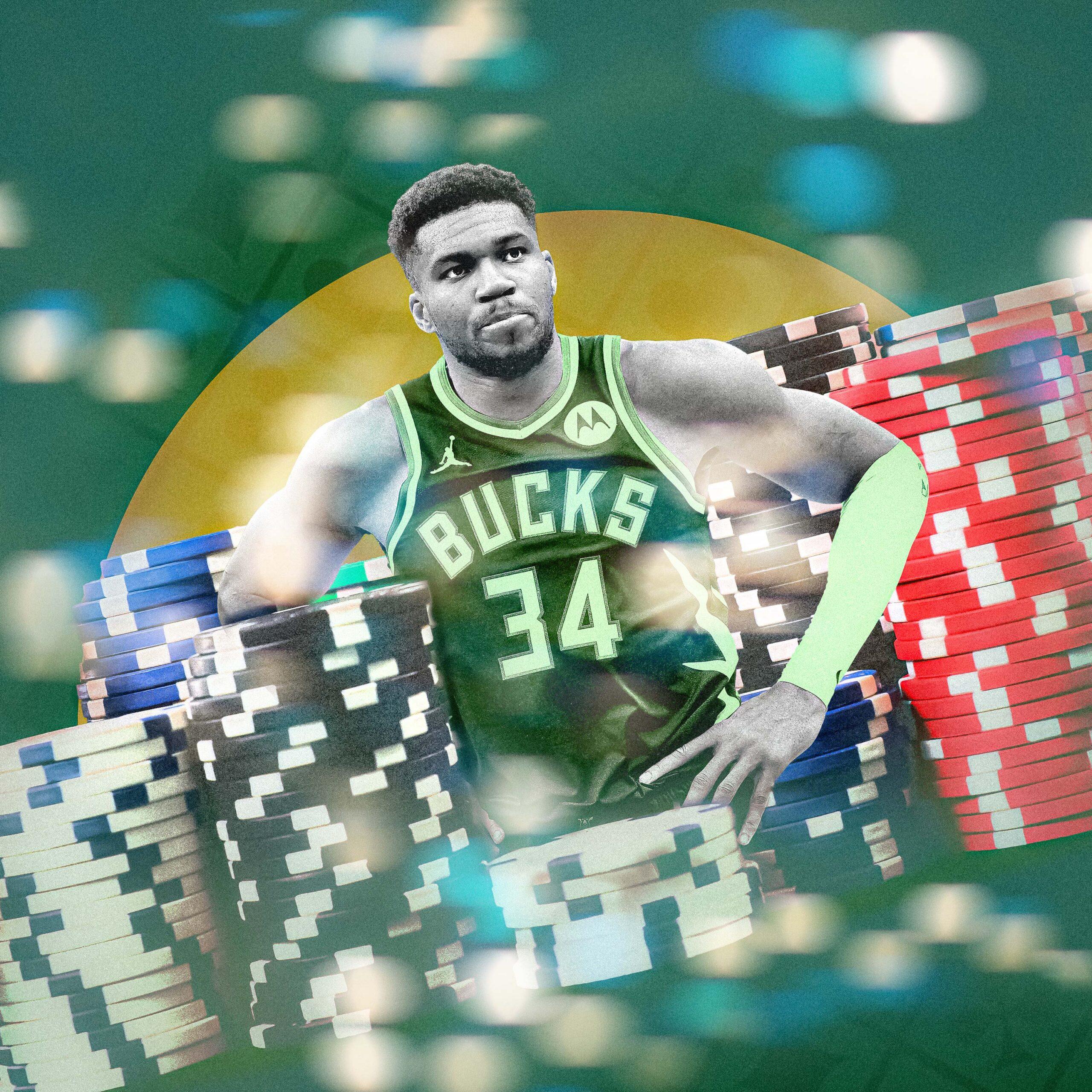
Should You Go All In for Giannis? History Screams No.
NBA teams love going all in for superstars. It almost never works.Should You Go All In for Giannis? History Screams No.
NBA teams love going all in for superstars. It almost never works.
Mikhail Prokhorov didn’t accomplish much during his nine-year ownership of the Brooklyn Nets. No championships. No indelible moments. No mass conversion of Knicks fans, as he’d once vowed. But, well, no one could knock the man’s ambition. The swaggering, trash-talking Russian billionaire spent wildly, chased every marquee talent, and doubled down on every bet—culminating in an all-time blockbuster trade for superstars Paul Pierce and Kevin Garnett in 2013.
It was a deal designed for maximum impact, shock and awe, and the promise of title contention. It cost the Nets a mighty ransom—multiple players, three first-round draft picks, and the possibility of a fourth—but to Prokhorov, who had promised a title within five years of purchasing the team, there was no other way to play the game.
“I'm all in for this team,” he said then, “and I think it’s the only way how to reach championship." He added: "I don’t go halfway on anything. I always go all the way."
Oh yes, Prokhorov was absolutely, unmistakably ALL IN. Is there any more intoxicating phrase for sports fans? We adore ambition. We revere the risk takers. We applaud the bold and the brash.
At least, until the bold and brash go bust. ALL IN is awesome, until it all goes wrong.
The Nets’ audacity was widely praised at the time, but they managed just one playoff series victory with the aging Pierce and Garnett, who were gone within two years. Meanwhile, the picks Brooklyn sent to Boston turned into Jaylen Brown and Jayson Tatum, who blossomed into All-Stars and delivered the Celtics a championship in 2024. The trade, when viewed through the Nets’ lens, is now universally seen as one of the worst in league history.
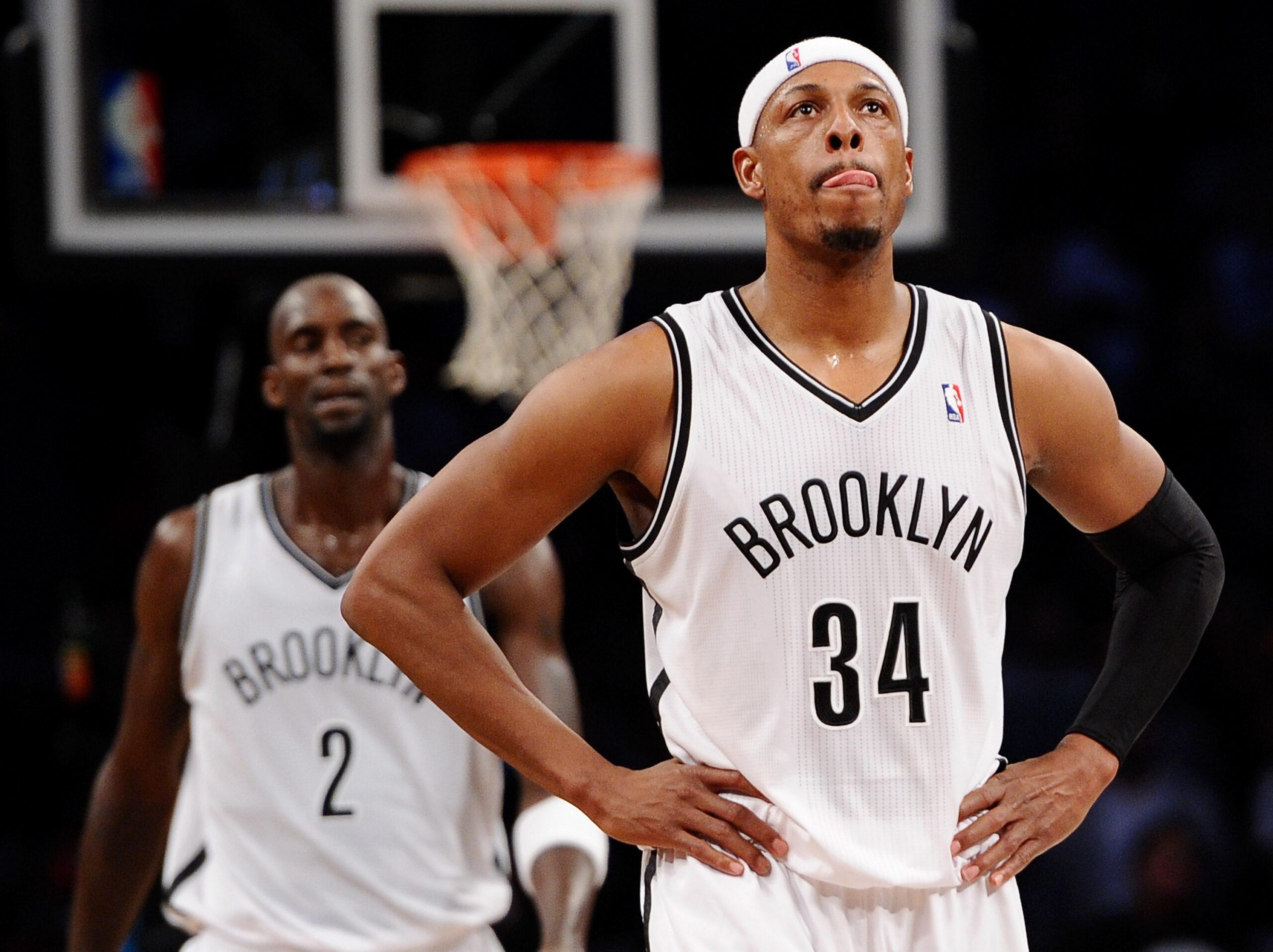
Paul Pierce and Kevin Garnett in 2013
Looking back, the Nets’ overzealous, ultimately disastrous lust for glory should have served as a cautionary tale—a lesson in the dangers of hubris and expediency. Instead, it became the new blueprint for every hyper-ambitious owner and executive.
The once rare ALL IN trade—defined here as sacrificing a massive share of a franchise’s future to win in the present—has only become more frequent in the years since Brooklyn’s infamous face-plant. Teams now routinely send out three or more first-round picks (in addition to players, pick swaps, and second-rounders) to land a coveted player. There have been at least a dozen such transactions in the past six years alone, more than in the prior two decades combined. And another might be on the horizon.
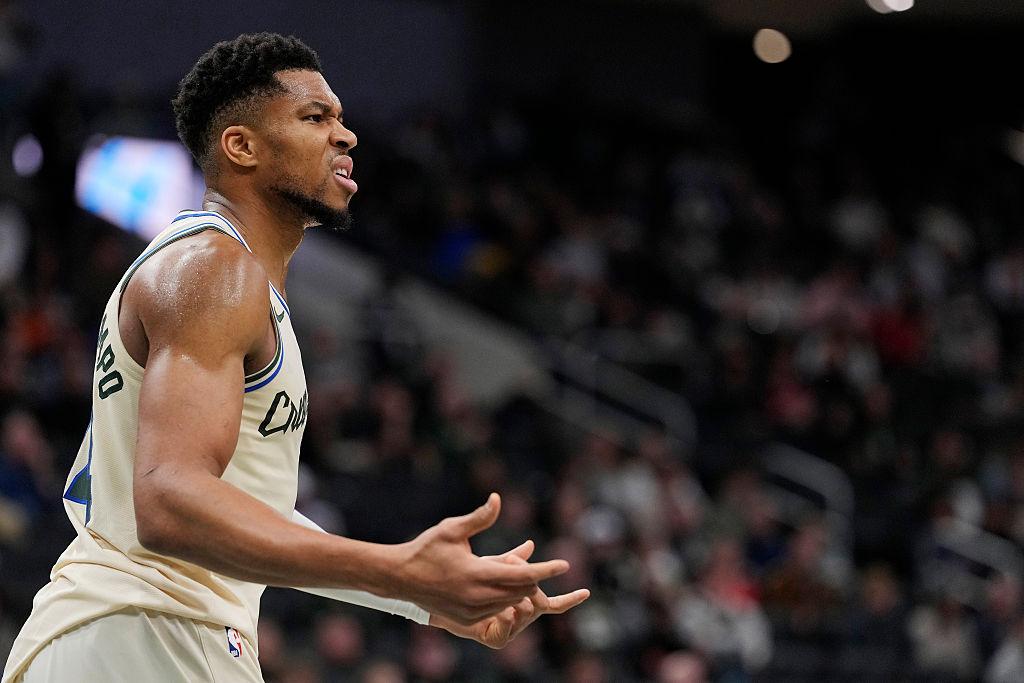
Giannis Antetokounmpo has reportedly grown disillusioned in Milwaukee. A trade request, according to some, might not be far off. Rivals are already busily whiteboarding trade proposals. Some team, somewhere, will eagerly surrender a treasure chest of players and picks to land the two-time MVP. But the odds of the gambit paying off are slim, if history is any guide.
Just ask the Los Angeles Clippers, who in 2019 sent three of their own first-round picks, two additional firsts (from Miami) and two first-round swaps, plus then-budding star Shai Gilgeous-Alexander, to Oklahoma City for Paul George—a deal that, it must be noted, also ensured that Kawhi Leonard would sign with them, which theoretically justified the steep price. But the Leonard-George era turned into a colossal bust due to injuries and other misfortune. Meanwhile, Gilgeous-Alexander blossomed into an MVP and—with help from Jalen Williams, acquired with one of the Clippers’ draft picks—led the Thunder to the 2025 championship.
Or ask the yes-we-will-get-fooled-again Nets, who in 2021 gave up four of their own firsts, another first from Milwaukee, plus four swaps and several young players to acquire James Harden from Houston and form another ill-fated Big Three with Kevin Durant and Kyrie Irving. That group at least showed some promise, getting to Game 7 of the 2021 conference semifinals against the (eventual champion) Bucks. But the whole thing quickly went sour, with Harden demanding a trade the following season.
Or ask the Philadelphia 76ers—the team that acquired Harden from Brooklyn—who gave up two first-round picks plus former no. 1 pick Ben Simmons in the 2022 trade. The Sixers got two trips to the conference semis out of the deal before Harden demanded another trade, this time to the Clippers.
They’re all businessmen. They all want to make money. They’ll all try to get the big name, so they can sell tickets.an NBA team executive
Or ask the Phoenix Suns, who in 2023 sent four firsts, two first-round swaps, and two key starters to Brooklyn for Kevin Durant and months later doubled down by sending the rest of their draft capital (four first-round swaps and six seconds) to Washington for Bradley Beal, all so that they could create a theoretical Big Three with Devin Booker. The experiment lasted just 16 months, with one playoff series victory to show for it, before the Suns admitted defeat. They traded Durant to Houston in July and waived Beal 10 days later.
“The NBA,” one team executive noted wryly, “is not very good at learning from its mistakes.”
Indeed, none of the previous disasters stopped the Minnesota Timberwolves from paying a ransom (five firsts and a first-round swap) for shot-blocking maestro Rudy Gobert in 2022 or the Cleveland Cavaliers from spending their draft-pick stash (three firsts, two first-round swaps) on star guard Donovan Mitchell the same summer. The jury is still out on both deals, but the Wolves have at least made two straight Western Conference finals, and the Cavaliers have become a perennial power in the East.
You could even make a case that the real winners in most of these blockbusters are the teams giving up the superstars, not the teams acquiring them. That was certainly the case for the Celtics, the Thunder, and the Rockets. It might eventually be the case for the Nets (in off-loading Durant) and the Jazz (in giving up Gobert and Mitchell).
In fact, of the countless ALL IN trades of the past quarter century, just two can be declared a clear, unqualified success for the teams going ALL IN.
- The Lakers’ 2019 deal for Anthony Davis, who clicked immediately with LeBron James and helped deliver a championship in 2020. The price was historically steep—four firsts (including the Lakers’ 2019 lottery pick), one swap, and three talented young players—but was arguably justified by the result.
- The Bucks’ 2020 deal for Jrue Holiday, whose acquisition paid off twice: first by helping to convince Antetokounmpo to sign a contract extension soon after and then by helping Antetokounmpo win the championship the next spring.
Neither the Lakers nor the Bucks have been back to the Finals since their title runs. But both franchises are surely happy with the results, whatever the cost. Any team with title hopes would eagerly make the same sacrifice for a ring.


The Trouble With Giannis
Heck, teams today are even making ALL IN moves for high-level role players. In 2024, it was the New York Knicks acquiring Mikal Bridges for four of their own firsts, a fifth belonging to Milwaukee, and a first-round swap. This past summer, it was the Orlando Magic acquiring Desmond Bane for four firsts and a swap.
Star chasing is as old as the NBA itself. League history is strewn with blockbuster trades and stop-the-presses free-agent signings. We love the adrenaline rush of a major transaction as much as we dig a Steph Curry 35-footer at the buzzer. But the frequency—and the cost—of those deals have only accelerated in this instant-gratification era. Impatient stars now demand trades routinely. Impatient billionaire owners—in particular, newbies like Prokhorov, the Clippers’ Steve Ballmer, and the Suns’ Mat Ishbia—demand star power and the appearance of title contention.
“They’re all businessmen,” said the same team executive. “They all want to make money. They’ll all try to get the big name, so they can sell tickets.”
But this willingness to mortgage the future, often to an extreme degree, is more of a recent phenomenon.
When Shaquille O’Neal—at age 32 and still an All-NBA first-teamer—was traded from L.A. to Miami in 2004, it cost the Heat just one first-round pick and one second-round pick, in addition to Lamar Odom, Caron Butler, and Brian Grant. When Garnett—at age 31 and an All-NBA third-teamer—was traded in 2007 from Minnesota to Boston, it cost the Celtics just two firsts and five role players. The Knicks’ 2011 trade for Carmelo Anthony cost two firsts and a pick swap, in addition to valuable young players.
For most of NBA history, trading three or more first-rounders for a single player was an extremely rare occurrence. It happened in 1993, when the Golden State Warriors sent three firsts (plus Penny Hardaway’s draft rights) to Orlando for the rights to no. 1 pick Chris Webber. And it happened again in 1994, when the Warriors shipped Webber to Washington for three firsts (and Tom Gugliotta). Those two deals, although made within a year of each other, were major outliers.
You have the [general managers] that are totally desperate, that are trying to save their jobs by making a splash, so ownership can feel they’re doing something. That almost always ends up in disaster.an NBA team executive
NBA teams have been allowed to trade draft picks since at least the early 1970s, but it wasn’t a common practice then. When the Lakers acquired Kareem Abdul-Jabbar from Milwaukee in 1975, it cost them four players but zero picks. And that model remained the norm for decades. The Suns didn’t give up a single pick to acquire Charles Barkley in 1992. The Rockets gave up just one pick in their 1995 trade for Clyde Drexler.
As recently as 2004, you could land a future Hall of Famer without surrendering a first-round pick—as the Rockets did in acquiring Tracy McGrady from Orlando (for Steve Francis and Cuttino Mobley). Things began to shift by 2006, when the Denver Nuggets gave up two firsts to acquire superstar Allen Iverson. Leap forward nine years, and you’ll find the same number of firsts being traded by Cleveland (to Denver) for … Timofey Mozgov.
Somewhere along the way, picks became all-purpose currency—sometimes a trade sweetener, sometimes an inducement. Utah, for instance, currently owes a first-round pick to Oklahoma City as payment for a cost-cutting deal in which the Jazz off-loaded Derrick Favors (and his contract) to the Thunder back in 2021.
But most pick-laden trades today are driven by competitive pressures, overconfidence, ownership demands, or sheer desperation—or a combination of all of the above.
Witness the Atlanta Hawks giving up three first-round picks (two of their own) and a first-round swap to get Dejounte Murray from San Antonio in 2022. Witness the Bucks giving up a first and two swaps, plus Holiday, to acquire Damian Lillard in 2023.
And witness the Bucks—desperate once more to give Antetokounmpo a better supporting cast—waiving the injured Lillard this past summer to create the salary-cap room to sign Myles Turner, a sequence of risky moves that will hamstring their cap for years to come. It didn’t cost Milwaukee any first-round picks, but it was an ALL IN move of another sort, the kind that could haunt it whether Giannis stays or goes.
“You have the [general managers] that are totally desperate, that are trying to save their jobs by making a splash, so ownership can feel they’re doing something,” said the same team executive, speaking generally. “That almost always ends up in disaster.”
Why do so many ALL IN deals go wrong? Sometimes, it’s because a team didn’t properly value its own assets or players—as the Clippers failed to do when they traded away a young Gilgeous-Alexander. Sometimes, it’s overestimating the player the team acquired—as the Hawks did in the Murray deal. And often, it’s a basic failure to realize the importance of having the right role players around your shiny new star. That was the case in the Knicks’ acquisition of Anthony, which cost them so many assets that they had nothing left to trade for years.
“Whenever a situation like this arises, it’s always, ‘Let’s get him now, we’ll figure out the rest later,’” said a second team executive. “You get that sudden rush of excitement, that ‘Hey, we got Giannis.’” But, the same person admitted, it’s an understandable impulse because every team is on the hunt for a superstar—or, if it has one, is on the hunt for another to pair with the first. “At that moment, you go for it.”
Everything about the Giannis saga is murky at the moment. Will he ask out? Did he already? If the time comes to trade him, what will the Bucks want in return? But some team, somewhere, will undoubtedly offer every draft asset it's got if it means landing a perennial MVP candidate. It’s a dicey proposition but a nearly irresistible temptation.
Would the Hawks, who control the Bucks’ 2026 first-round pick, send that chip back to Milwaukee, along with Trae Young and additional picks and swaps? Would they include the rights to New Orleans’s 2026 first, which Atlanta also controls? Could they make a deal without surrendering rising star Jalen Johnson? Or defensive ace Dyson Daniels?
Would the Spurs include rookie phenom Dylan Harper or reigning Rookie of the Year Stephon Castle, along with a bevy of first-round picks? Would the Bucks demand both? Or would they want the more established but more expensive De’Aaron Fox?
The Knicks, having traded most of their draft capital to the Nets, would have to build a deal around Karl-Anthony Towns and at least one other key player (Bridges? OG Anunoby?)—a swap that would make more sense for New York than Milwaukee, unless the Bucks simply want to stay competitive in the present.
Or what about Houston? Would the Rockets trade their best chips—including first-round picks from the Nets and Suns—to get Giannis? Could they make a deal without including either Alperen Sengun or Amen Thompson? If the Bucks insist on one of those stars, should the Rockets do it? Or might they look back at the wreckage of prior ALL IN teams, shake their heads, and say, “We’ll pass this time”?
Indeed, some execs wonder whether the ALL IN era might be coming to a close, if teams are starting to see the folly in mortgaging their future, especially during a time when the NBA’s second apron is making smart payroll and asset management even more critical.
Players picked in the first round are cost controlled, via their rookie contracts, for up to five years, which makes them cheaper than most veteran stars. Giving up picks means sacrificing financial flexibility, as teams are starting to learn.
“In this environment, the picks have never been more valuable,” said the first team executive. “I do expect teams to be more cautious in handing out future first-round picks. There’s a cautionary tale there, with the situation of the Clippers and Bucks giving away future picks like candy on Halloween—a lesson to be learned there.”
A lesson to be learned … if anyone is willing to heed it. But as recent history has also taught us, desperation and arrogance often trump logic in this league. Some team soon might give up a fortune in picks and players to land Giannis. And someone else will repeat the exercise for the next disillusioned star, and on and on. Because if there’s anything we’ve learned, it’s that no one learns anything.
“No, and we never will,” said the first team executive, “because this is the NBA. It’s a money-driven league. It’s all about who sells more tickets and more merchandise. We’re always going to see teams go after the next shiny big thing.”