In late August 2020, 20 episodes of a Karate Kid lega-sequel series called Cobra Kai appeared on Netflix. The show was an instant smash, rocketing to the top of Netflix’s trending charts. Four months later, another batch of 10 episodes debuted, and fans from Gen X to Gen Z raved about what a great job Netflix had done in bringing the beloved franchise back to life.
There was just one problem: Netflix didn’t develop Cobra Kai. Those first two seasons had been made for and originally released by what was at various points called YouTube Red and YouTube Premium. It was YouTube’s attempt to get into the original scripted streaming business, which every entertainment and tech company was racing to join in an attempt to dethrone, well, Netflix. But to quote Omar Little from The Wire, you come at the king, you best not miss. YouTube Red/Premium lived so far beneath the pop cultural radar that everyone understandably assumed that Cobra Kai, which eventually produced four more seasons directly for Netflix, had been on the streaming giant all along.
This was far from the first, or last, time a show that languished elsewhere exploded in popularity the moment it landed at the top of the Netflix app. Breaking Bad famously struggled to find an audience in its early seasons, then drew huge numbers for its final season on AMC, thanks to all the viewers who had binged the earlier ones on Netflix. (Editor’s note: The Ringer recently partnered with Netflix to host certain podcasts on the platform.) Nobody noticed the first season of You on Lifetime; it became a phenomenon on Netflix and, like Cobra Kai, went on to produce many seasons just for the streamer. Schitt’s Creek (which was a coproduction between the CBC in Canada and Pop TV in the States), Loudermilk (which had a brief run on DirecTV’s Audience Network), and CW dramas like Riverdale and All American may as well have never been anywhere before coming to Netflix. The Netflix effect proved so powerful that even the breezy but disposable USA drama Suits, which had been off the air for four years, turned into a smash hit in the summer of 2023, racking up close to 60 billion minutes of viewing that year, just because it was prominently featured on the app.
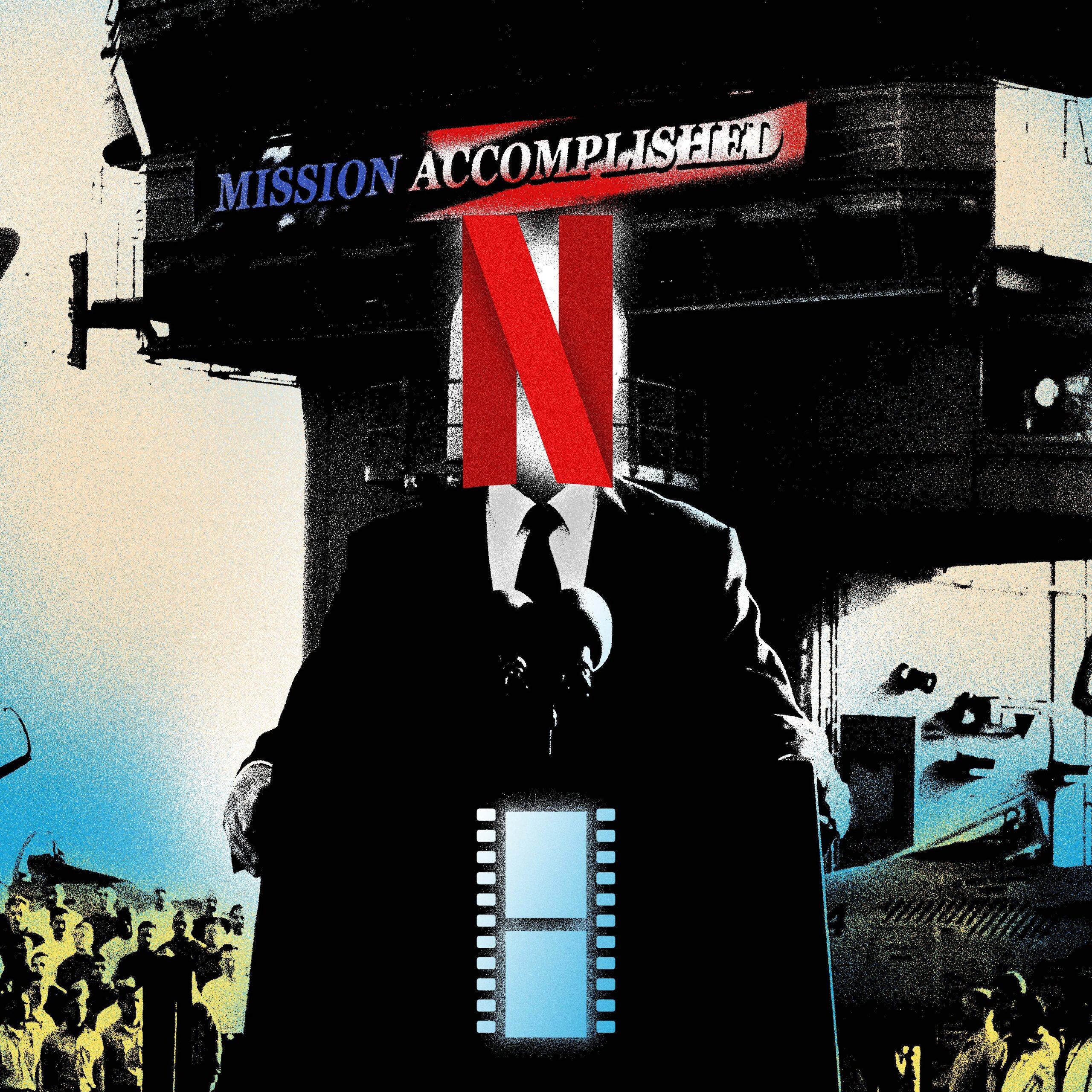
In the dozen years since it started making its own original series, Netflix has grown into the entertainment industry’s biggest black hole. Everything else eventually gets sucked into it, until its own light can’t escape and all you see is Netflix. And now it’s not just individual shows that have been absorbed but the most prestigious TV operation of this century, along with one of the oldest and most esteemed movie and television studios.
The Streaming Wars have been over for quite some time, but Netflix’s tentative deal to acquire Warner Bros. Discovery and all its major assets—including HBO and HBO Max—turns the result from a victory into an annihilation. In hindsight, the idea that HBO, YouTube, or any of the competition could beat Netflix at its particular original programming game was laughable. YouTube’s viewership now dwarfs Netflix’s, but that was only after YouTube scrapped the plan to produce slick shows like Cobra Kai and Ryan Hansen Solves Crimes on Television and went back to user-generated content by the likes of MrBeast and Ms. Rachel. It couldn’t out-Netflix Netflix any more than legacy brands like HBO, Paramount, or even Disney have been able to.
In 2012, five years after it began its transition from a DVD-rental-by-mail company into a streaming service, Netflix began dabbling with making its own shows with Lilyhammer, a Norwegian coproduction starring a post-Sopranos Steven Van Zandt as another wiseguy. But it was the 2013 debut of House of Cards—a remake of a British political drama, produced by David Fincher and starring Robin Wright and a precancellation Kevin Spacey—that announced that the TV game had radically changed. The critical factor wasn’t the content of the show itself so much as the fact that it was the kind of dark antihero drama that HBO had been churning out since Oz and The Sopranos. (HBO had, in fact, bid on the rights to air it.) And crucially, the binge-release strategy that had been used with Lilyhammer was now being deployed on a show with a huge marketing budget. The weekend Cards debuted, the social media platform formerly known as Twitter lit up with viewers (both normies and TV personalities like CNN’s Brian Stelter) openly competing to see who could finish the 13-episode season first. DVD box sets had been around long enough that the idea of bingeing a season of TV wasn’t wholly new. But the way the Netflix interface kept going from one episode to the next rather than requiring you to go through a DVD menu or eventually swap one disc for another was addictive to many, and it rewired a whole generation to prefer bingeing to watching episodes one week at a time (as God and Brandon Tartikoff had intended). Orange Is the New Black followed later that year, and the women’s prison dramedy felt like nothing that had ever been on television before. Netflix had very quickly upended what a TV show could look and feel like and how it could be consumed.
On top of that, executives at the legacy studios, oblivious to the threat Netflix posed to their business model and desperate for a new revenue stream to make up for the collapsing DVD market, eagerly licensed the rights to crown jewels like Friends and The Office to Netflix. Even Disney had its content on Netflix for a while, and many of the early Marvel original series, like Daredevil, were made for Netflix. Everyone was too busy counting their short-term cash to realize that they were helping to create a foe that would kill them all over the long run.
Around the time Netflix began its ascendance, I did a guest lecture at a college pop culture class. The students’ questions were uniformly about Netflix’s originals and acquired library titles. When I encouraged them to check out the aforementioned The Wire and several other recent classics that were available on cable and/or non-Netflix streamers, they all stared at me like I was speaking Klingon. Who needed a second streamer, much less an expensive cable package, when they could get access to so much good television for eight bucks a month?
At the time, The Wire was on HBO Go, a streamer built to give HBO subscribers access to current and past shows when away from their cable boxes. HBO Go later begat HBO Now (the same idea, but you didn’t have to pay for cable to get it), which in turn led to HBO Max, featuring all the HBO content plus the deep Warner Bros. film and TV library (including Friends, finally rescued from Netflix’s clutches), as well as original series like Hacks, Peacemaker, and And Just Like That … As Netflix began eating into every other outlet’s market share, Hollywood and Silicon Valley execs decided that they needed their own Netflixes, at any cost. Hulu and Amazon’s Prime Video got into the original programming game early and briefly outshined Netflix by winning major Emmys for shows like The Handmaid’s Tale and Transparent. Other big players like Apple and Disney and Comcast soon followed, whether or not their services had a + sign after their names. Many have had big hits—The Mandalorian, Ted Lasso, Paramount’s Taylor Sheridan shows—but on the aggregate, none have been able to match Netflix. Over the past few years, there’s been talk of one or more of the streamers merging to survive, and both Paramount and Comcast were also finalists to buy Warner Bros. Discovery. (Paramount boss David Ellison even threw a monkey wrench into the process by launching a hostile takeover bid of WBD on Monday, but we have a long way to go before we see whether he’s too late to succeed with that.)
Paramount+ and Peacock are still around, which is more than you can say for a lot of the other pretenders to the throne. Even the final season of Community couldn’t get anyone to watch Yahoo Screen. If you were to poll a million Facebook users, how many of them would know about the short-lived Facebook Watch experiment that made dramas (pretty good ones!) starring Elizabeth Olsen (Sorry for Your Loss) and Jessica Biel (Limetown)? And pour one out for Quibi, the Jeffrey Katzenberg boondoggle that offered TV shows broken down into small segments that you could watch on your phone while on the go … only to launch early in the COVID-19 lockdown, when no one was going anywhere. There were also plenty of niche streamers that proved redundant and got absorbed by their corporate siblings: DC Universe into HBO Max, Freevee into Prime Video, etc.
Very few Netflix shows have operated in the same creative stratosphere as the best their competitors had to offer, while so many others, like Ozark and Bloodline, seemed reverse engineered so that the algorithm could recommend them when subscribers finished watching Breaking Bad. Netflix has done better on the movie side, giving filmmakers like Spike Lee, the Coen brothers, Martin Scorsese, and Rian Johnson more money than traditional studios would at this point. But the great majority of these movies barely hit the big screen, and they erase themselves from your brain while you’re still watching them. And still, the back catalog of films has always been skimpy compared with other streamers’, especially before Warner Bros. Discovery chairman David Zaslav began purging the HBO Max library just because he could.
It doesn’t matter. Netflix got in the door first, and those early years when it was carrying the cream of the linear TV crop created a level of ubiquity and brand loyalty that no one has been able to shake. Appearing on the Netflix home screen or the recommendations bar is better marketing than any billboard, website wallpaper ad, or traditional TV ad can hope to provide these days. Netflix also operates globally in a way that some of its competitors don’t, so it can make money from American shows that perform well overseas and can also turn its foreign productions like Squid Game into a phenomenon in non-Korean countries.
And now Netflix is acquiring everything great that Warner Bros. and HBO have to offer. It’s unclear whether the various operations will run in parallel or be combined. Netflix co-CEO Ted Sarandos has often expressed admiration for HBO in the past, and after the deal was officially announced, he said that the plan was to continue releasing Warner Bros. movies in theaters, albeit perhaps with a shortened window of exclusivity. On Saturday morning, Netflix published an FAQ about the deal, including a question about whether current HBO Max subscribers should cancel—the answer for now is that “Netflix and Warner Bros. will remain separate until the transaction is closed.”
But whether HBO Max remains a stand-alone service, becomes a Netflix tab, or gets wholly absorbed into the library so that new episodes of Euphoria appear right alongside new episodes of Virgin River, Netflix has become exponentially more powerful than its would-be competitors. This is the Steph Curry Warriors adding Kevin Durant or the Derek Jeter Yankees adding Roger Clemens.
In hindsight, the Streaming Wars ended on that Friday when House of Cards debuted. We just didn’t know it yet, and we didn’t know how utterly dominant Netflix’s win would turn out to be.