The College Football Playoff Chose Outrage
Notre Dame is out. Alabama and Miami are in. And the College Football Playoff committee just did what it does best.

College football fans are angry on the first Sunday in December, just as they’ve been angry on this Sunday in most years of the College Football Playoff era, and just as they were angry on this Sunday in the 16 years of the BCS format. The talking points arrive anew each winter: Alabama got lucky a season after they got screwed, a season after they got lucky before that. The power brokers are biased against Notre Dame, except for the years when they’re biased for Notre Dame. Angry December Sundays are a feature of college football, not a bug. This is less a coherent sport than a collection of fiefdoms fueled by regional outrage. And in its current iteration, a 14-member committee meets every year in a Dallas hotel conference room to give an illusion of fairness to a sport built on resentment and rage.
Do you have an internet connection? Then perhaps you’ve seen the news: The playoff selection committee revealed its final rankings, which put Bama (as the no. 9 seed) and Miami (as the no. 10 seed) into the championship bracket at the expense of Notre Dame (no. 11 in the rankings). This ushered in a barrage of Very Serious Arguments. To some, Alabama did not deserve to make the playoff because, on two separate occasions—against Florida State in Week 1 and against Georgia in Saturday’s SEC title game—the Crimson Tide appeared not to show up to the stadium. To others, Miami did not deserve to get in, because the Hurricanes lost to two mediocre opponents (Louisville and SMU). To still others, Notre Dame did not deserve to get in, because it got beat by the only two contending teams on its schedule, one of which was Miami.
All of this is true! This is the point. Lose games, and you lose control over what happens. Lose games, and you leave yourself subject to the whims of the sport’s bureaucrats, drunk on power and high off the cookie spread at the Gaylord in Grapevine, frantically trying to do the thing that is now and has always been their actual job: Make the decision that will piss off the fewest possible people in power.
Congratulations, committee, you did it. Alabama is in, sparing the group the wrath of SEC commissioner Greg Sankey. So too is Miami, preventing the ACC from getting shut out of the tournament entirely, which seemed entirely possible when five-loss Duke toppled Virginia in overtime of the conference’s championship game. And Notre Dame has been screwed, because someone always has to get screwed, and, well, the case against the Irish is every bit as compelling as the case against the Tide or the Canes.
And yet, we still have college football’s most renewable resource: outrage. At the Tide’s inclusion. At the failure to drop a team even one spot that fell on its face in a conference title game. At the arbitrary decision to switch Notre Dame and Miami, when the Irish have been slotted higher in the committee’s rankings all season long. On Saturday night and into Sunday morning, if you were scrolling through social media or watching coaches and analysts debate on television, you probably heard one word mentioned over and over: precedent. Last year, the committee set a precedent: It will not harshly punish the losers of conference championship games. SMU lost to a mediocre Clemson squad and stayed in the playoff field; Texas and Penn State lost their conference title games and were passed only by a Georgia team that won the SEC. But then maybe you heard about another precedent: 2017. The year Auburn was ranked second by the committee entering the SEC title game, lost to Georgia, and fell all the way to seventh, allowing an Alabama team that had sat at home during championship week—and that Auburn had just beaten—to slip into the fourth and final playoff spot and go on to win the national title.
The truth is, at this point in the history of college football, you can find any precedent from any year and use it to make the case for any team. Because the truth is, at this point in the history of college football, the only real precedent is chaos. The only real precedent is indecision. The only real precedent is mobs of angry fans screaming (and now typing) into the void. Head-to-head results matter! Losses have consequences! And perhaps the most enduring and essential argument of all: Those motherfuckers ain’t played nobody!
All of which is to say: College football is the greatest sport on earth.
Let’s talk about the objects of that anger, shall we? First up: Alabama, who, it turns out, might not be very good at football. The Tide were obliterated 28-7 this weekend by an excellent-but-imperfect Georgia team in a game that was never even remotely close. Bama was held to —3 yards rushing; its quarterback had a QBR of 19.9; and it scored its only touchdown on a drive in which one Bulldogs defender, sophomore cornerback Demello Jones, accounted for 30 yards in penalties by himself. By the end of Saturday’s game, I’d gotten a text from one angry Alabama fan: “Fire him.” And that performance, of course, was not the only poor one of this Bama season.
The Tide barely beat a sub-.500 Auburn team last Saturday, lost at home to Oklahoma in mid-November, and were destroyed by a bad Florida State team back in Week 1. By the end of Saturday night, the entire college football internet had declared that the Tide didn’t belong in the playoff. This is to be expected. Few things are as satisfying to a college football fan as watching Bama fans suffer. But it didn’t stop there. Not one, but two former Tide running backs now working in media—Mark Ingram II and Damien Harris—took to their television platforms to declare that Alabama did not belong in the field. “I got too much Bama in me,” Ingram said on Fox, “but you’re out! Miami and Notre Dame should both get in.”
And yet. Alabama owns perhaps the best win of any team in the country, against the very same Georgia team that just throttled it, on the road, at night, on September 27. A 24-21 victory that broke a six-year, 33-game home winning streak. Bama’s second-best win, at home against Vanderbilt, is also better than any win on Notre Dame’s résumé.
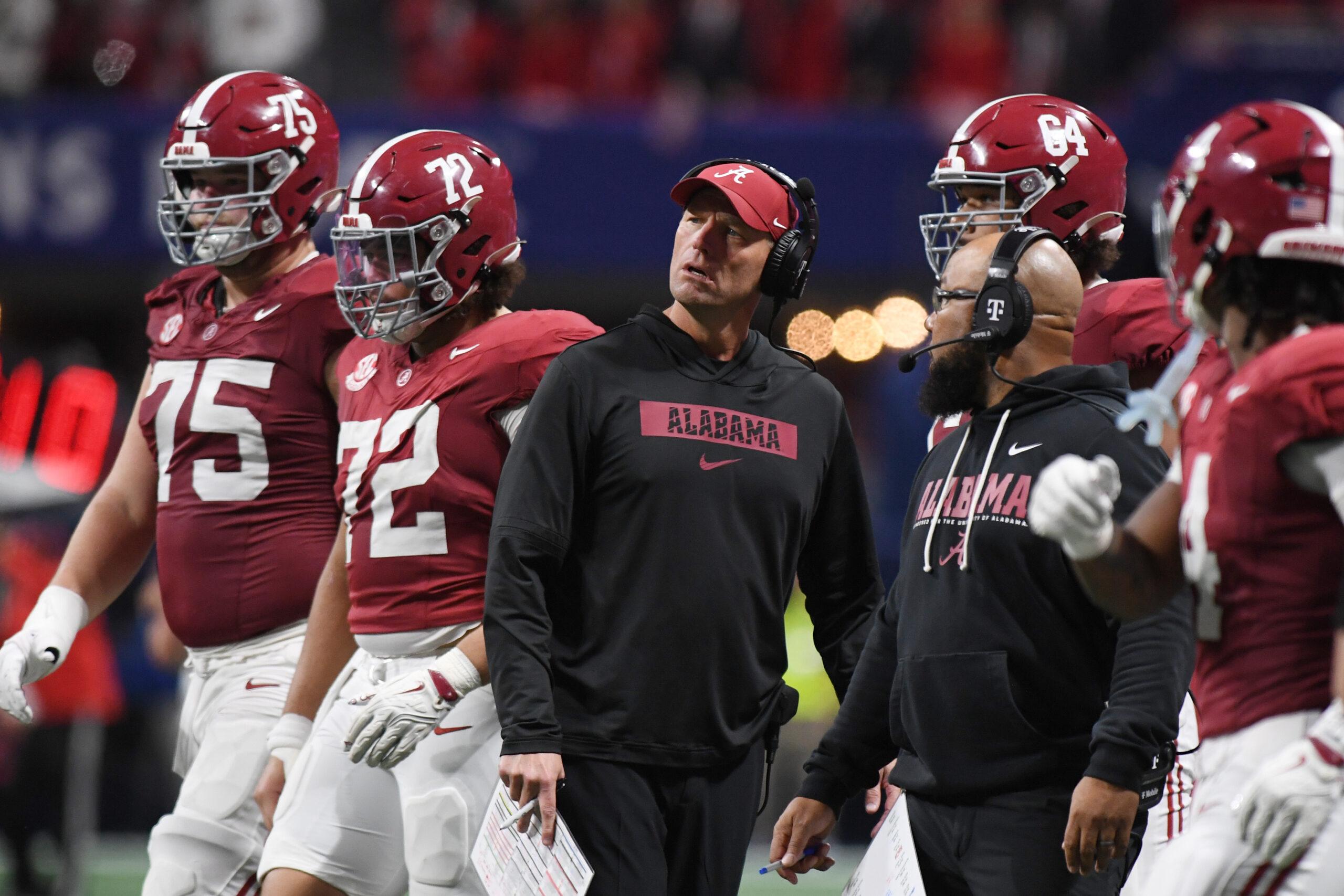
Not only that, but it’s worth reiterating that Alabama only lost Saturday because it was playing in its conference championship game to begin with, while many other playoff hopefuls were sitting at home. The SEC regular season ended in a four-way tie. Because Alabama and Georgia “won” the tiebreaker, they each had the chance to lose yesterday. Meanwhile, Ole Miss and Texas A&M, the other teams that tied for the regular-season title, could sit and watch knowing their playoff spot was secured. You can’t embarrass yourself in front of the committee from the comfort of your own couch.
As recently as two years ago, the committee made clear that losing conference title games mattered. In 2023, top-ranked and two-time defending national champion Georgia lost by a field goal to the Tide, 27-24, and fell from first all the way down to sixth in the rankings. In the 12-team playoff era, though, the committee so far has suggested that conference title games can help a team’s case, but can’t hurt it, at least not fatally. Alabama entered the weekend at no. 9; it left the weekend in the exact same spot, even after Saturday’s humiliation.
Is this rational? Not really. Is it fair? Only a little. Is it right? This is college football. There is no such thing as right. The conference title games exist to make money. To continue making money, they need teams to want to play in them. Telling the SEC runner-up that it would have made the playoff had it just stayed at home on Saturday, but now it’s been eliminated because it showed up and got its ass kicked, would undermine the entire point of college football: making people rich.
(And before you mention it: Yes, I know that the committee did punish BYU for its own conference title game loss, dropping the Cougars from no. 11, ahead of Miami, to no. 12, two spots behind the Canes. That argument makes me believe that you’re trying to think about college football like a reasonable person, which makes me question whether you’ve ever actually watched college football at all.)
Next up: Miami and Notre Dame. Two talented teams that had successful but unremarkable seasons. Both stacked with NFL talent. Both went 10-2. Both played schedules much weaker than Alabama’s. Between them, they have one great win, Miami’s Week 1 win over Notre Dame, which calls into question whether that win was actually even that great at all.
But, well, it did happen. Miami dominated for most of three quarters before Notre Dame mounted a furious fourth-quarter comeback, only to lose on a late field goal. The Canes later dropped in the rankings after losing two games in the middle of the season, whereas Notre Dame rose by ripping off 10 wins in a row, many of them in dominant fashion. But only one of those wins came against a team (USC) that finished the season in the Top 25.
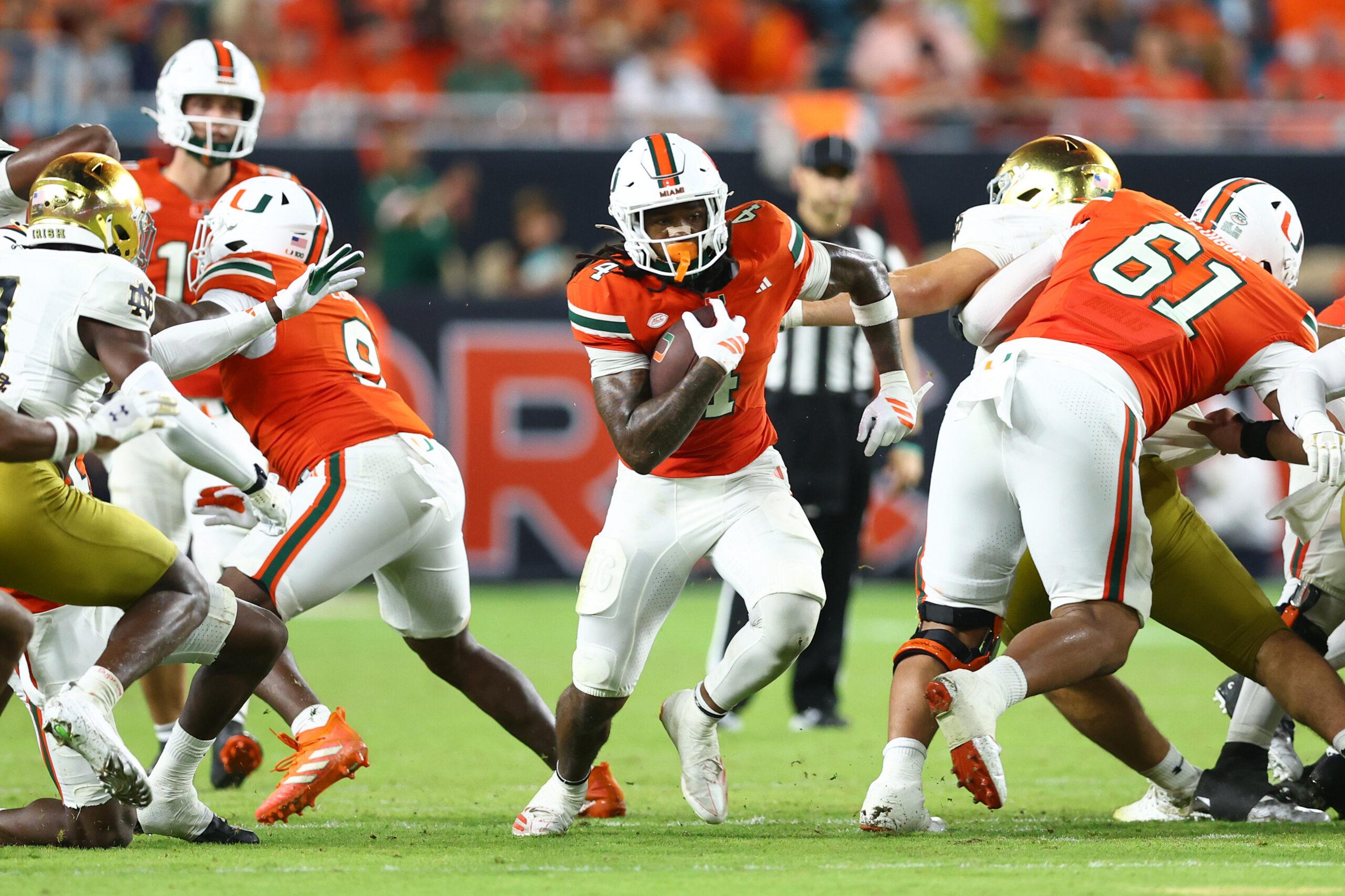
For weeks, the committee kept Notre Dame ranked above Miami. This, it seemed, would be this year’s great playoff injustice: Notre Dame would be picked over the team that beat the Irish on the field. As with everything in this conversation, the argument would be strained, but vaguely coherent. That game was a long time ago. In the months since, the Irish have clearly been the better team.
In the end, though, the committee did what it should have done weeks ago. It ranked Miami ahead of Notre Dame. Not because it had any new pieces of data. Instead, it flipped the teams after a week in which neither one played. The explanation: BYU’s loss to Texas Tech dropped the Cougars a spot, and now, with Miami and Notre Dame slotted next to each other, it had no choice but to respect the results of the head-to-head matchup.
It’s the right choice! And it makes no sense at all! College football logic at its finest.
This kind of argument is now, and always has been, part of the fabric of college football. Sure, there have been prominent recent efforts to legislate the kind of vitriol that serves as the sport’s lifeblood out of existence. But they never work. Before we were arguing about the final selections in the 12-team playoff, we were arguing about the final selections in the four-team playoff, and before that we were arguing about who should be chosen by the BCS. Every year we convince ourselves that things will be different this time around, if only so that we may be outraged anew.
But in Tallahassee they still remember 2023, when an undefeated Seminoles team was passed over for one-loss SEC champion Alabama, which the committee justified by pointing to FSU quarterback Jordan Travis going down with a season-ending injury just weeks before. In Happy Valley they still remember 2016, when a two-loss Penn State team won the Big Ten but was passed over in favor of a one-loss Ohio State that the Nittany Lions had beaten a few weeks before. In Boulder they still remember 2001, when a two-loss Colorado team beat Nebraska 62-36, only for the Huskers to finish 0.05 points ahead in the final BCS rankings and go to the national title game to play against Miami. And a few in Los Angeles still remember 1978, when USC beat Alabama in Birmingham, but the Trojans still had to split the national title with the Tide. (And somewhere, someone remembers 1946, when Notre Dame won the title despite a 0-0 tie against Army, the two-time defending national champ that also finished without a loss.)
As Michael Weinreb chronicled for Grantland in a piece about that Army-Notre Dame game and the origins of college football arguments, the AP poll was invented in 1936 as a way to foster debate. “It was a case of thinking up ideas to develop interest and controversy,” the inventor of the poll, Alan Gould, said years later, explaining its origins. “Papers wanted material to fill space between games. That’s all I had in mind, something to keep the pot boiling. Sports then was living off controversy, opinion, whatever. This was just another exercise in hoopla.” The very idea of crowning a national champion came about as a way to fuel outrage. The natty was invented not for competition, but for content.
So it is now, and so it will continue to be—next year and into perpetuity, with a playoff of 12 or 16 or 24 teams. As long as young men from one part of the country line up across from young men from another, the fans who support them can do what college football fans do best: Point at each other and declare that someone else has unfairly received what’s rightfully theirs.