
Hosts
 Derek Thompson
 Derek Thompson
About the episode
For the past few years, Silicon Valley executives and economists have warned that artificial intelligence could wipe out millions of jobs. Some companies have even blamed AI for layoffs. But what if the AI job apocalypse isn’t actually happening?
Today, Derek talks to economist Alex Imas about the growing gap between the rhetoric around AI-related job loss and the facts. Despite widespread fears of mass unemployment, surveys show that most executives expect AI to create jobs or have little impact on hiring. Even employment in software engineering (one of the fields thought to be most vulnerable to AI) continues to grow.
Derek and Alex discuss why automation fears persist despite contradictory evidence, the history of technological disruption, and why AI may not be destroying work as much as it is simply redirecting us toward entirely new industries and opportunities.
Subscribe to our YouTube channel here.
If you have questions, observations, or ideas for future episodes, email us at PlainEnglish@Spotify.com.
In the following excerpt, Derek talks to Alex Imas about the possibility of AI taking jobs away from people.
Derek Thompson: It feels like you’re suddenly everywhere these days, Alex. You’re the most in-demand economist on the issue of AI and jobs, so I’m very, very grateful that you agreed to stop by. Before you were suddenly everywhere, what were you doing at UChicago? What were you studying?
Alex Imas: Well, I grew up studying behavioral economics. So I was always fascinated in human psychology and how that relates to what people actually want in the economy, how the economy adjusts to those desires. And basically, most of my research, up until the past few years, when I’ve been focusing more on AI, has been on essentially empirically documenting how psychology enters economic models.
Thompson: I love the idea that a background in studying the economics of desire is fruitful for understanding the future of AI. I think some people who aren’t familiar with your work might not necessarily understand that intersection, but by the end of this hour, they absolutely will.
So there’s a widespread feeling, I think, in the media, among AI builders and technologists, that artificial intelligence could wipe out tens of millions of jobs and lead to a lasting, elevated level of unemployment, which is something that no technology has done before. I mean, we are living now in a world with more technology than existed in any previous decade, and the unemployment rate is still under 5 percent. You and I are going to spend most of this interview talking about why we think the prediction of an AI jobs apocalypse is implausible. But can we begin by making the strongest possible case that this time, in fact, is different? What do you think is the smartest version of the argument that an AI jobs apocalypse really could happen?
Imas: So this argument that technology can wipe away jobs is actually very old. So let’s go back to 1820 for a second here. So [David] Ricardo, who’s one of the classic economists that everybody who took undergrad in economics knows about, he has a really nice chapter called “On Machinery.” So Ricardo, he was living through the Industrial Revolution, and he started out as a person who, like all people in the capitalist class, they thought that, look, obviously technology is a good thing. It will increase productivity, it will decrease the price of consumer goods, everybody’s going to be better off.
And in this one chapter, he changed his mind. He said, “Look, actually, if you have people working and you have technology replacing these people, what’s going to happen to these people? This is labor, basically.” He said, “Well, now these people are going to be out of work. What’s going to happen to the economy? What’s going to happen to circulating capital?” as he calls it. And so he highlighted this idea that, actually, the Industrial Revolution could be kind of bad for most people. And then the world churned and continued, and his prediction did not come true.
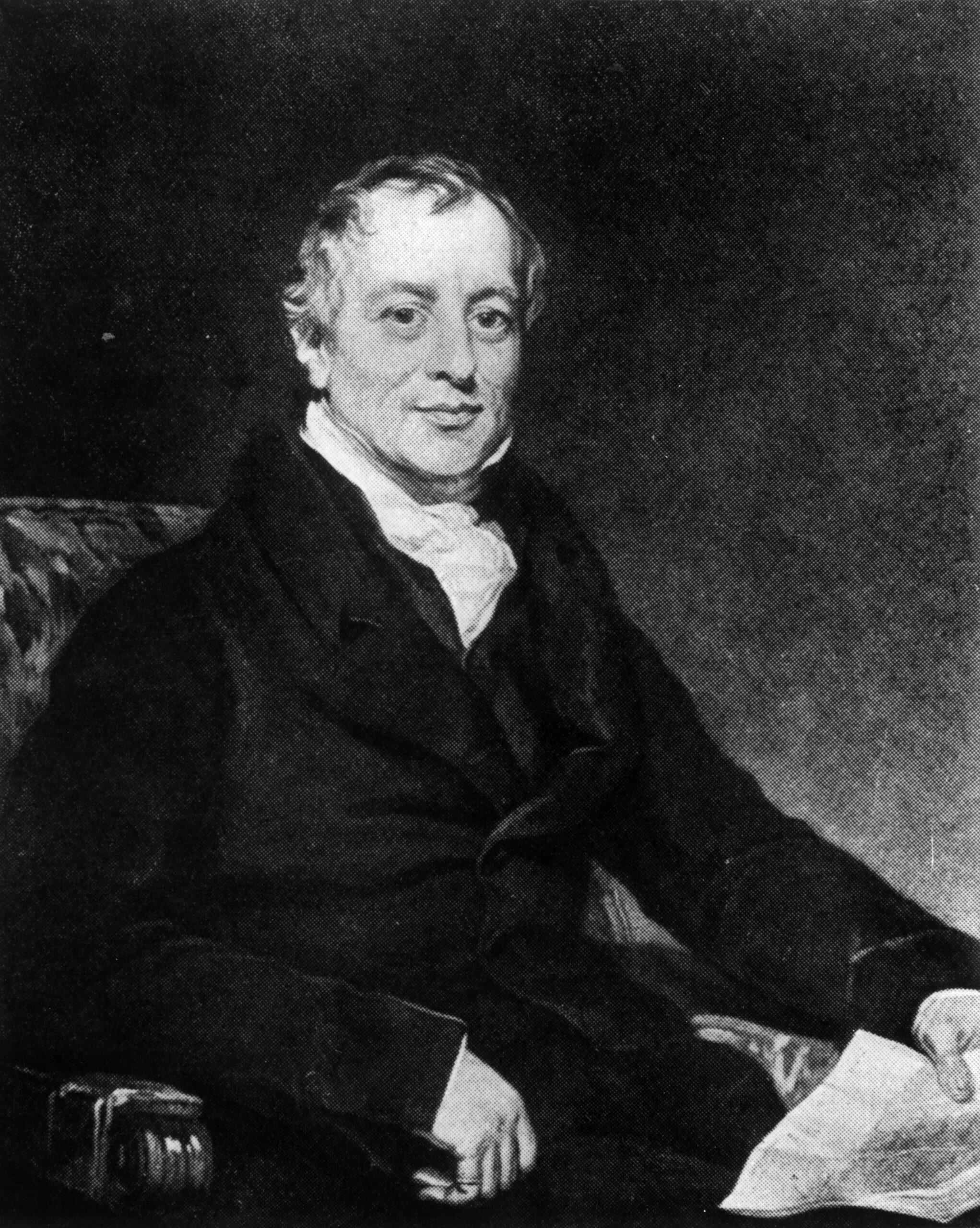
British economist and MP David Ricardo, who made a fortune on the London Stock Exchange before devoting himself to the theory of economics
But in 1989, Paul Samuelson wrote a paper called “Ricardo Was Right,” that technology can, in fact, produce a jobs apocalypse. So fast-forward to 2026, late 2025, and the best version of the argument was, I think, done by Philip Trammell on his Substack. Basically, his argument is that technology makes things very cheap to produce, and because it makes things cheap, you have this hyperintelligent system, it could create lots of new variety. So lots of different types of goods, varieties that we really can’t even imagine. So like video entertainment that’s fully immersive, concerts that have no human performers necessarily, but they have a fully immersive experience with virtual reality and all of these sorts of things, video games that we’ve never heard of, delicious food that hits all of the flavors that we want to eat. We maybe hadn’t even considered that we wanted to eat them in the first place.
Anyway, it creates all of this variety, and all of this variety gets people to spend all of their money on all of this variety that’s created by technology, such that the part that’s produced by human labor just gets less and less and less and less and less money, and its just labor share goes to zero.
Thompson: Yeah. It’s kind of like, all right, what do I spend money on in any given day? I spend money on food, I spend money on entertainment, I spend money on transportation. OK. What if we imagine artificial intelligence being able to make all of my food, making all of my entertainment, and being in charge of all the transportation, because all the cars are self-driving? It’s essentially like if AI could do every single task in the economy, then wouldn’t consumer spending end up flowing entirely to these AI firms? So there’s the idea that artificial intelligence is going to create something that we’ve never seen before in economic history, which is a permanent technological replacement of labor.
You have a very interesting essay where you offered a counterpoint to this idea that anything that can be automated will always end up automated. And that story begins with Starbucks. What happened at Starbucks, and why does it matter?
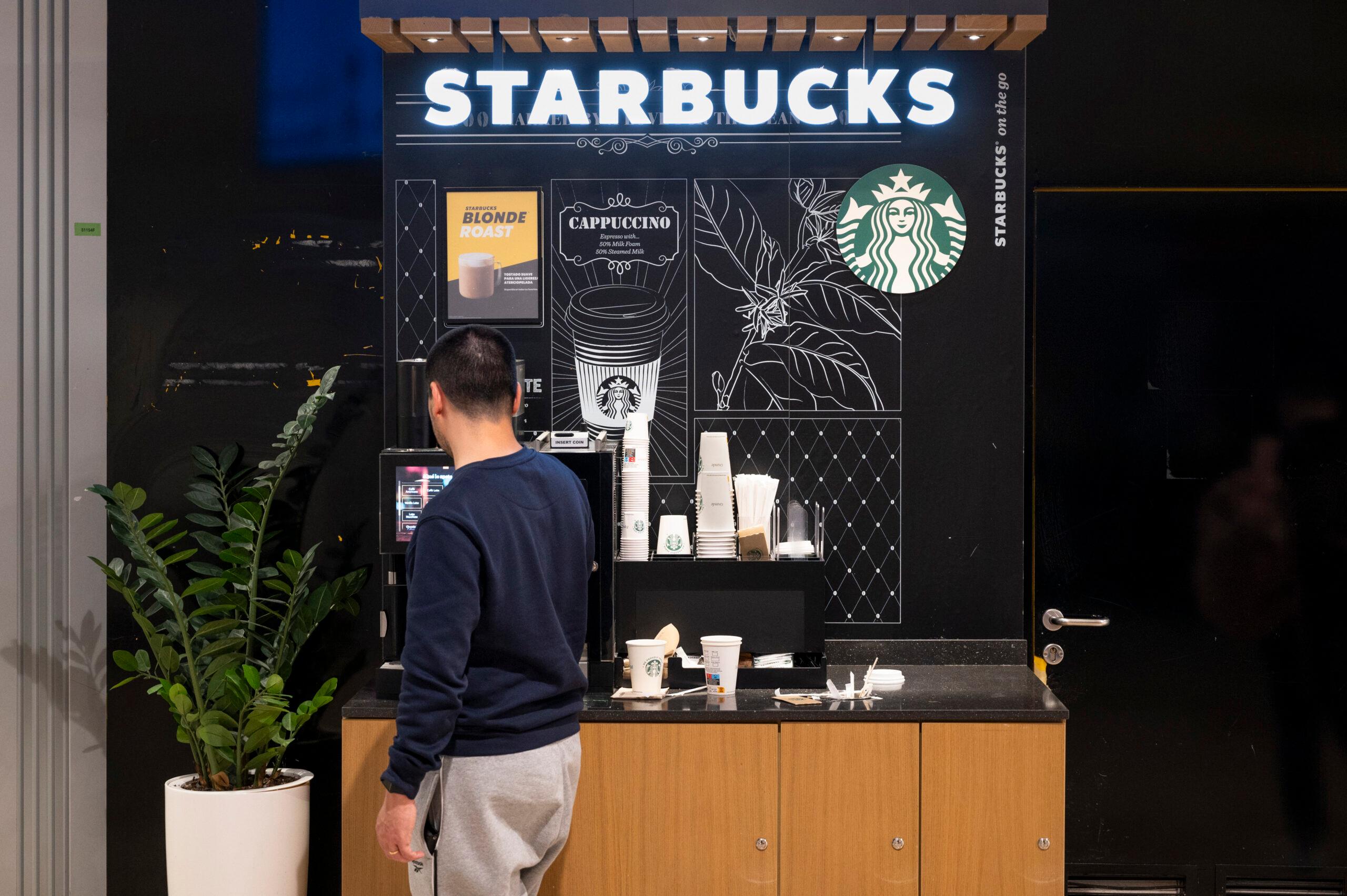
A customer orders a coffee from a Starbucks automated kiosk in Adolfo Suarez Madrid-Barajas Airport
Imas: So Starbucks, during the early 2020s, thought that, look, we want to improve the customer experience. We want faster throughput time. Somebody comes in, they want to order a cup of coffee. Let’s get them that cup of coffee, get them to leave the store as soon as possible so the next person could get their cup of coffee. Let’s make all of this standardized so all the coffee tastes the same.
And so they implemented all of this automation within the stores. And a few years later, the CEO of Starbucks decided to reverse this whole thing. He said, “Actually, we went way too far with the automation. We’ve got to get more baristas, we’ve got to bring back people writing the names of the customers coming in, and we have to go back to the original vision of Starbucks.” Which, if you remember how Starbucks started, it was a personalized coffee chain, where people knew your name behind the counter, it was handcrafted lattes, handcrafted coffee, and things like that. Let’s go back to that. So it was a reversal of the automation story, where you could actually automate every single objective part of the experience of getting that coffee. They did that, and then they went back.
This excerpt has been edited and condensed.
Host: Derek Thompson
Guest: Alex Imas
Producer: Devon Baroldi
Additional Production Support: Ben Glicksman
More on AI