Hosts
 Derek Thompson
 Derek Thompson
About the episode
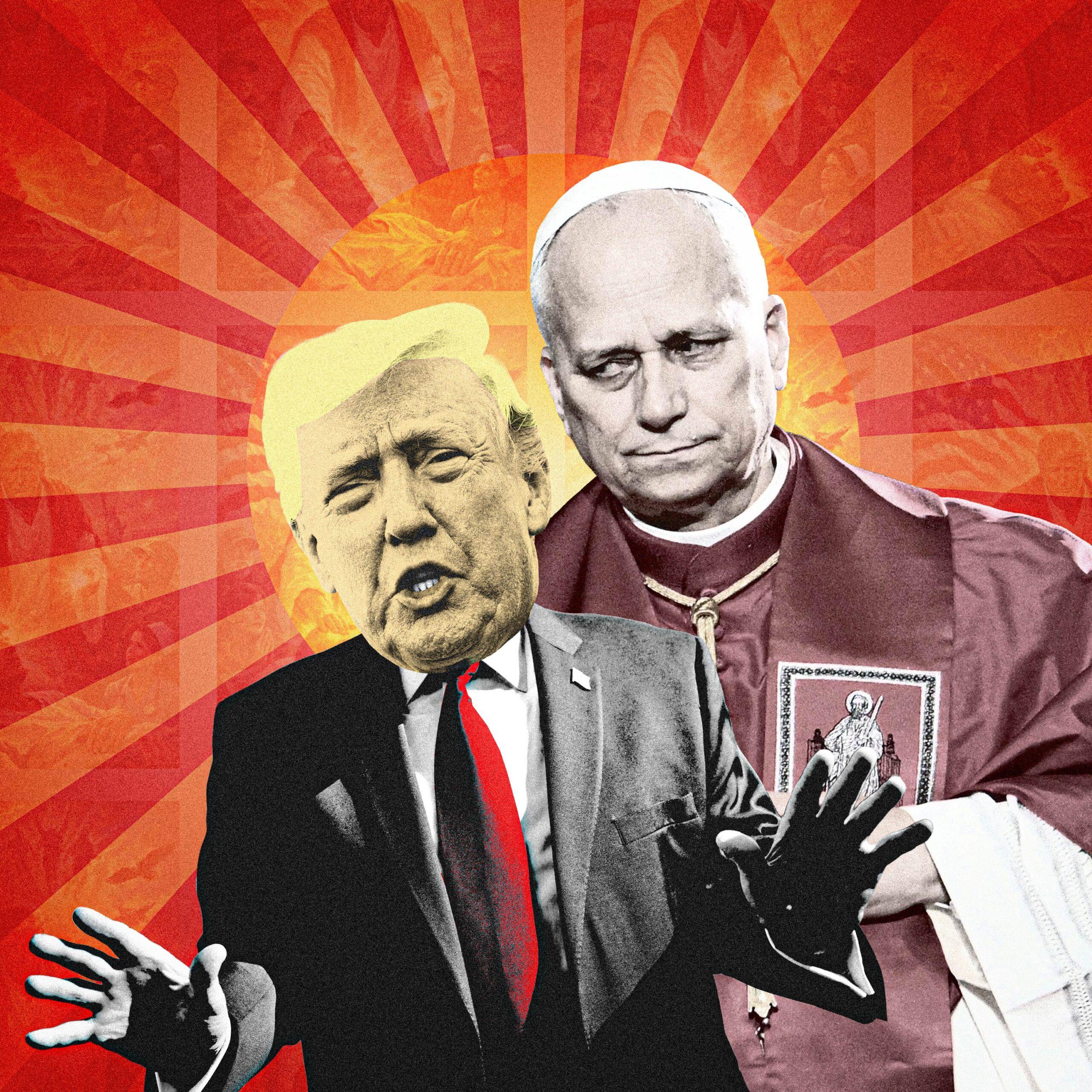
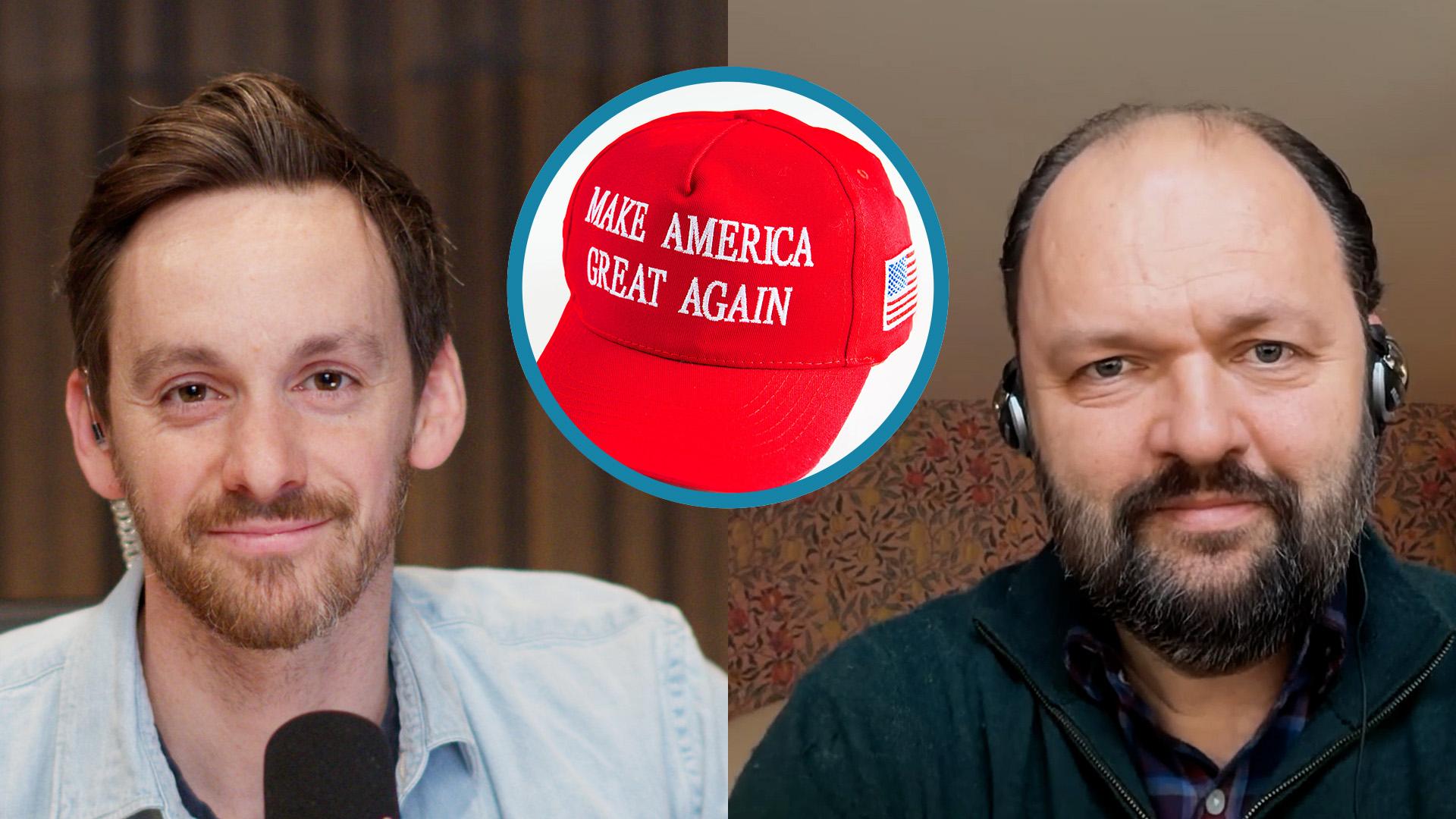
For nearly a decade, critics have predicted that this would be the moment Trumpism finally fractures—January 6, the overturning of Roe v. Wade, endless internal feuds, even Trump’s online beef with Pope Leo. Yet the movement endures. Derek is joined by Ross Douthat to unpack the contradictory coalition Trump has built: Christian conservatives who overlook increasingly pagan behavior, antiestablishment populists who embrace strongman bullying, MAHA health obsessives that ignore their leader’s diet of exclusively processed food … What holds this movement together, and could the Iran War finally tear it apart?
Subscribe to our YouTube channel here.
If you have questions, observations, or ideas for future episodes, email us at PlainEnglish@Spotify.com.
In the following excerpt, Derek talks to Ross Douthat about why the war in Iran might be the breaking point for conservatives.
Derek Thompson: For years, I have been impressed by—that’s one word—surprised by the resilience of Trump’s popularity. This is a man who famously could cross any line, theoretically shoot that man on Fifth Avenue, and he would retain the same level of popularity within his own party and among the commentariat of that party.
But it feels to me like something has changed in the last few weeks, especially at the level of commentary. When I’m traveling and I’m in hotel gyms and I look at Fox News, the Fox News commentariat is defending the war, criticizing the war’s critics.
But when I get wind of Tucker Carlson’s podcast and Joe Rogan’s podcast and Megyn’s podcast and Candace’s podcast, it seems like a sizable share of the anti-liberal right-wing commentariat has really turned against this administration, in a way that has no precedent in Trump 2.0 and certainly not in Trump 1.0.
Before we dig into why, I just want to make sure that you’re seeing this premise as I am. Do you think something has changed here?
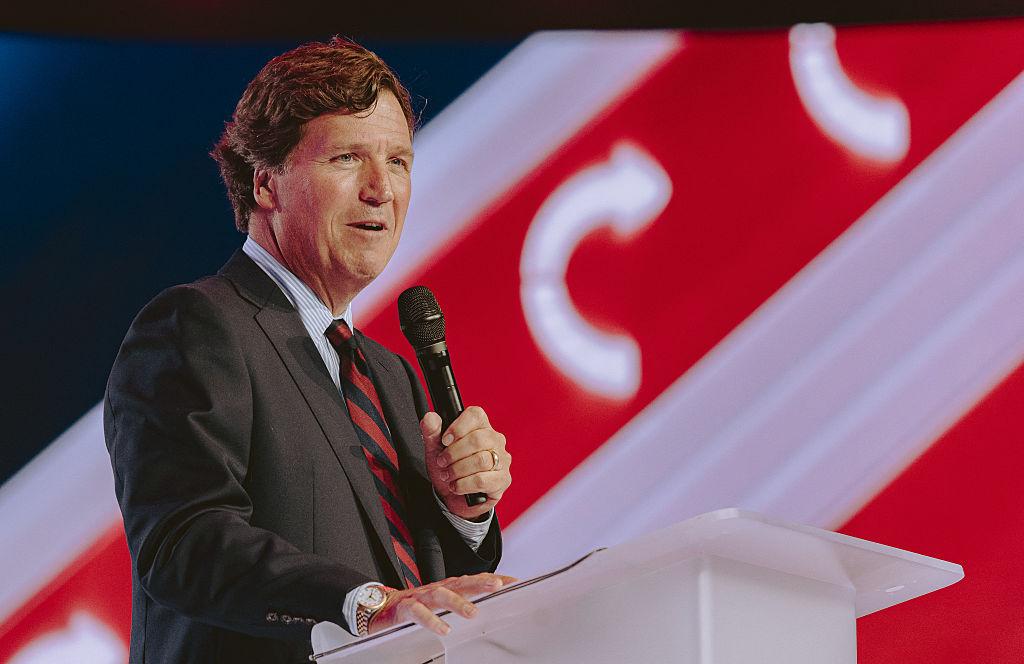
Tucker Carlson speaks at Turning Point’s annual AmericaFest conference
Ross Douthat: Yeah, no, I think that’s right. I think the change is, as you said, more about a kind of distinctive part of the media ecosystem rather than saying, “Oh, now a third of Trump’s base has left him” or anything like that.
I think if you look at Trump’s overall popularity, there’s just sort of a consistent downward movement that the Iran war has contributed to, but not accelerated in some radical way.
So I just want to be clear: I agree. But I think we’re talking right now about conservative and right-wing media culture more than Republicans are abandoning Trump en masse.
Although also, some of the people you’re talking about, Rogan especially, I think, have never spoken to the Republican base in the way that Fox News speaks to the Republican base. So tthe voters who have left Trump or the voters who now disapprove of Trump, some of those voters might be Rogan types who weren’t ever core, base Republican voters.
Thompson: I wonder why the Iran war did this. There’s all sorts of opportunities that the right has had to break with or sharply criticize the president.
This could have happened, I suppose, if you were a neoliberal supporter of the president over the tariffs. It could have happened if you were a free-speech supporter of the president and saw some of the norms under this administration. Maybe if your no. 1 curiosity was the Epstein files, and you saw the way the DOJ under Trump was treating the Epstein files, that would’ve been the breaking point.
But for some reason, it seems to me like the Iran war has been a unique kind of breaking point for the MAGA coalition. Why do you think Iran has been that breaking point?
Douthat: I think it’s a combination of the nature of the thing itself and the scale. So the thing itself is a violation of Trump’s promise to not be George W. Bush. That’s a promise that goes all the way back to the Republican primaries in 2016, when Trump famously criticized the Iraq War, I think on the South Carolina debate stage. People booed and people were shocked, and his support was just fine.
It was a moment when he identified a sort of unspoken part of right-wing politics, this not yet articulated recoil against the Bush doctrine, nation building, the Iraq occupation, all of these things.
And I think, especially for people who have made their names as conservative influencers in the Trump era, or, like Tucker Carlson, have reinvented themselves in some profound way, that idea that Trump was not a candidate of military intervention, it’s just been really important.
And obviously, other things have been important, too. But I think that always tapped into something that was more profound and more important than, say, Trump’s support for tariffs. Trump’s support for tariffs was something that some conservatives went along with.
They said, “Oh yeah, Trump’s going to reindustrialize America” or “The globalists have betrayed us,” and so on. But I don’t think it was ever quite as powerful as Trump’s promise to be a, not a dove, right? He’s obviously not a dove, but not someone who gets into big overseas quagmires.
And then, two, the scale matters. Trump can do things in the Middle East that some of his supporters and advocates don’t like. Carlson was obviously incredibly against the bombing of the Iranian nuclear program last summer. But up till now, whenever Trump has done things like that, they have always been conspicuously limited, with clear off-ramps.
And this is just a situation where right now we don’t know what the off-ramp is. We’re sitting here every day wondering what the off-ramp is. And I think that, too, changes the dynamic.
It’s like you can accept that Trump does something you disagree with if the risks seem relatively low, it seems relatively contained. And this is different so far.
This excerpt has been edited and condensed.
Host: Derek Thompson
Guest: Ross Douthat
Producer: Devon Baroldi
Additional Production Support: Ben Glicksman