


To paraphrase The X-Files: Steven Spielberg wants to believe. He also wants us to believe, fully and consistently, in him—in his ability to suspend skepticism, to use the tools of cinema to make an airtight case for the impossible, to render unreasonable any and all doubts. “I’ll believe in you all my life, every day,” vows Elliott at the end of E.T. the Extra-Terrestrial, still the most gravity-defying of Spielberg’s leaps of faith, and probably the one that most succinctly visualizes his wish-upon-a-star sensibility. The signature image of Henry Thomas and his pals achieving liftoff in silhouette against the fullest moon in movie history endures past pastiche and parody for a reason: It taps into the conjoined yearning for escape and sanctuary that audiences have been chasing since Judy Garland sang about going somewhere over the rainbow in The Wizard of Oz.
The idea that there’s no place like home—a sentiment shared equally by Dorothy Gale and E.T. and, while we’re at it, the crew of the Orca, who sang a whole sea shanty about wanting to be shown the way back to port—manifests across Spielberg’s filmography, sometimes in slippery or sinister ways. It turns out to be central to his latest feature, Disclosure Day, which stars Josh O’Connor and Emily Blunt as civilians in possession of sensitive material pertaining to the existence of alien life. Spielberg is not as obsessed with The Wizard of Oz as his late friend and Fabelmans star David Lynch was, but he’s played with its iconography plenty over the years. Recall the scarifying moment in 2005’s War of the Worlds when Tom Cruise emerges from a farmhouse basement and opens the door to reveal a blasted, drained hellscape—a reversal of the earlier film’s momentous, awe-inspiring shift from drab black-and-white realism to transportive Technicolor. War of the Worlds’ relentless, technocratic terror was (very deliberately) the flip side to E.T.’s surging, fairytale optimism; taken together, the two films give a sense of Spielberg’s affective range even as they testify to his reliance on sci-fi scenarios as a comfort-slash-twilight zone that frequently yields his best work.
The earliest reports on Disclosure Day speculated that the film was a direct sequel to Spielberg’s first sci-fi hit, Close Encounters of the Third Kind, which drew cleverly on the paranoia of ’50s B movies before resolving in a new age light show under the sign of Stanley Kubrick. It’s telling that 50 years later, Spielberg feels obliged to riff on his own creations. The familiarity of Disclosure Day’s iconography is double-edged: It’s cozy and redundant, suffused with nostalgia but short on surprise. At one point, we get a montage of close encounters, all derived from different time periods and shot in different formats and styles; they play like a victory lap around memory lane. The repeated shots of viewers staring mesmerized at the screen end up doubling—a bit wistfully—as signifiers of Spielberg’s former status as the focal point of global film culture.
That status has receded in recent years, owing more to a shift in the audience’s tastes and expectations than to Spielberg’s diminishing artistic returns. Oft imitated and never duplicated, Spielberg has nevertheless been diluted, and he hasn’t necessarily won new adherents by making sturdy, classical pictures like Bridge of Spies or West Side Story. The startling success of a Gen Z landmark like Backrooms—whose director, Kane Parsons, is even younger than Spielberg was when his breakthrough, Duel, marked him as Hollywood’s reigning wunderkind—is worth parsing in contrast to Spielberg’s seemingly eroding authority. Backrooms is legible as an expression, however oblique, of something latent and authentic within the zeitgeist: Among other things, it addresses collective fears of an endlessly reiterative (and degraded) popular culture, of entertainment cannibalizing and regurgitating itself into a disfigured infinity. (It’s telling that Parsons’s hazmat-suit-wearing ciphers could have wandered out of E.T.) Spielberg himself touched on similar themes in the enervating but underestimated Ready Player One, which took place in its own version of the Backrooms. It was explicitly concerned with the question of what a virtual world made in Spielberg’s (and George Lucas’s and James Cameron’s) blockbuster image might look like. The not-so-hidden paradoxical joke of the Overlook Hotel sequence—which was not in Ernest Cline’s source novel—was that Spielberg was simultaneously playing gatekeeper to the Kubrick mystique and letting the Zoomers sneak in through the back door to deface the place.


It’s become increasingly easy—and essential—to read self-reflexivity into Spielberg’s images and intentions. The prevailing criticism of the director’s work in the 1970s was that it existed in shallow, crowd-pleasing counterpoint to the more personal efforts of his New Hollywood contemporaries. That line of attack no longer works, partly because Spielberg got busy chasing after respectability sometime in the mid-’80s and partly because he’s not exactly shy about centering himself. The theme of self-portraiture dates all the way back to Jaws, where the heroic trio of Richard Dreyfuss, Robert Shaw, and Roy Scheider slyly compartmentalized the young director’s burgeoning persona (the adventurer, the nerd, the everyman). It surfaced again in Indiana Jones and the Temple of Doom, where Jones’s brief dalliance with the dark side was charged with the bad vibes of Spielberg’s very public divorce. The wittiest shot in Jurassic Park remains the shelf full of branded merchandise, a nifty (and self-critical) synecdoche for the effect his work has had on turning movies into vehicles for product placement (or maybe theme parks).
The culmination of this tendency, of course, was 2022’s The Fabelmans, which mostly dispensed with allegory and symbolism in favor of a suburban bildungsroman chronicling its maker’s earliest forays into filmmaking and the seismic psychic aftershocks of his parents’ divorce. Between its white-hot oedipal angst and lacerating observations about the selfishness inherent in using private life as the raw material for art, The Fabelmans gave us Spielberg at his most naked; it could have easily been called Disclosure Day. “The movie projector tricks us into believing that motionless pictures are moving,” explains Paul Dano’s left-brained patriarch, a pep talk that’s also a thesis statement; the ability to fool the viewer so pleasurably that they feel grateful rather than had is Spielberg’s gift. It’s also a bar that he’s previously set so high that it would take a kid on an enchanted two-wheeler to clear it.
Disclosure Day comes up short—not by a lot, perhaps, but enough to place it in the earthbound section of Spielberg’s filmography. It’s still superbly well-made, of course, and its showiest sections remind us that Spielberg can still maneuver acrobatically through—or else meticulously subdivide—screen space with the best of them. Janusz Kaminski’s camera is always swooping and reframing, catching reflections and imbuing stray objects with their own aura; you get the feeling at all times of being in steady hands. But while the control is real, so are its limits, and Disclosure Day offers a fascinating case study in the relationship between form and content. The question is whether Spielberg’s direction can elevate a script that’s so leaden as to threaten liftoff altogether.
The story is Spielberg’s own, having supposedly gestated for decades before being dictated into the Notes app on his trusty iPad (“Thank you, Steve Jobs,” he joked to CBS). The actual screenplay, though, is by David Koepp, a longtime collaborator dating back to Jurassic Park and, theoretically, enough of a consummate pro (and professional Spielberg whisperer) to transubstantiate a slender and familiar premise into a successfully multifaceted narrative. “It was his story, and he carried it around in his head for 20 years,” Koepp told Slant. “I think I felt, particularly in the first draft or two, a real overweening responsibility to not screw it up.”
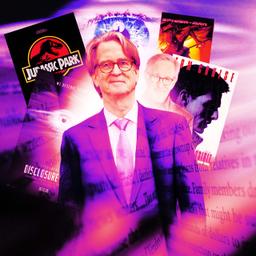
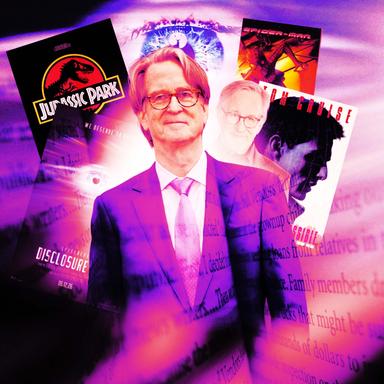
That anxiety is palpable in the final product, which is somehow overdetermined and indecisive. For Disclosure Day to work, it has to converge, but it comes together without coming to much. There’s a famous story about how in Paul Schrader’s original draft of Close Encounters of the Third Kind, titled Kingdom Come, the aliens never showed up on-screen—a perfectly Schraderian gambit. Naturally, Spielberg, whose core beliefs include the doctrine that money belongs on-screen, rejected such austerity measures. Still, I couldn’t help but think of that anecdote during Disclosure Day’s final act, which is patterned after Close Encounters minus the pop-operatic catharsis: It’s like showing up for Burning Man and entering a self-help seminar instead.
It turns out that the protagonists of Disclosure Day are in need of spiritual sustenance, though they have more immediate problems to solve first. For instance: It’s hard for Daniel Kellner (O’Connor) to focus on his distressed inner child when he’s being hunted down by a cohort of shadowy paramilitary trackers trying to reclaim the cache of data he’s stolen from his former corporate employers at Wardex—the company enlisted to keep a lid on Roswell and everything after. Daniel’s resourcefulness in evading his pursuers is incongruous with his actual skill set (apparently a mathematics degree means that you can drive like Steve McQueen in Bullitt), and yet his escape artistry has obvious precedent within Spielberg’s filmography. Catch him if you can. Meanwhile, Daniel evokes a link to the Pentagon Papers whistleblower Daniel Ellsberg, who was played by Matthew Rhys in Spielberg’s 2017 drama The Post. One common denominator between the fact-based docudrama and the action-packed blockbuster is the notion that the truth is out there; another is the malign presence of Richard Nixon, whose cameos in both films confirm that the conspiracy-minded side of Spielberg’s filmmaking—from Amity’s duplicitous city fathers in Jaws to the cloak-and-dagger tropes of Munich and Bridge of Spies—exists in the shadow of Watergate.
No less than in All the President’s Men—or The X-Files—Disclosure Day insists that the truth is out there. Daniel isn’t a journalist, but Margaret Fairchild (Blunt) resides in the fourth estate as a local weather reporter whose aspirations to be the weekend news anchor at KCXE bump up against an inveterate restlessness. The same thing that’s eating at Daniel—a suppressed memory of preadolescent trauma—is rattling around in Margaret’s subconscious, waiting to be awakened. The trigger is the arrival of a cardinal who stares her down in her dining room before flying away one morning. While Daniel and his lapsed-Catholic girlfriend, Jane (Eve Hewson), dodge secret agents (at one point getting themselves to a nunnery to hide out and regroup), Margaret finds herself suddenly and inexplicably imbued with extraordinary psychic powers of perception and persuasion. Think Christopher Walken in The Dead Zone crossed with Bradley Cooper in Limitless. Her newly installed internal GPS draws her toward Daniel—a moving target—as surely as the alien technology commandeered by the latter’s former Wardex superior, Scanlon (Colin Firth), leads Disclosure Day’s soulful bad guy to his targets.


Spielberg loves his obsessive, megalomaniacal trackers, and Scanlon is plenty formidable. Armed with a crystal obelisk that looks suspiciously like one of the sacred stones from Temple of Doom, he can locate pretty much anybody in the world within a couple of miles and also occupy their mind to puppet them, Mola Ram style. This omnipotence resonates between plot points; whether surveying the situation across a bank of monitors or giving the supernaturally hypnotized Jane her murderous motivation from the other side of the astral plane, Scanlon resembles nothing so much as a malevolent film director. His opposite number, Hugo (Colman Domingo), scans as a more sympathetic Spielbergian surrogate: He’s ex-Wardex and similarly empowered (minus the crystal) to stage-manage his team members’ fortunes from a distance. Hugo tells Daniel that he needs to find Margaret or lie low until she finds him; in the meantime, he’ll be in a secretly located structure that looks like an old-fashioned, suburban-cum-Spielbergian domicile (shades of Thomas Kinkade) on a massive soundstage—the staging ground for a master plan that pivots, deliriously and movingly, on the no-place-like-home equation.
Suffice it to say that Hugo’s project dovetails—at least metaphysically—with the memory play aspect of The Fabelmans, and that Spielberg’s attempt to thread the needle between showmanship and self-reflection is novel and exciting—until it isn’t. One problem is that the plot device of setting the story against the backdrop of rising global thermonuclear tensions is poorly handled: There’s no real sense of incipient apocalypse, just throwaway dialogue insisting that the doomsday clock is fully cranked. The larger issue, though, is that the closer Disclosure Day gets to the moment of (literal) truth, the clearer it is that Spielberg and Koepp are trying—sincerely, perhaps, but a bit desperately—to hinge the entire enterprise on vibes. It’s the sort of thing M. Night Shyamalan specializes in, except he’s got a more baroque (and thus keener) sense of narrative architecture, as well as a sharper knack for catharsis. Say what you will about Signs, but when it swings away, it connects (and its deus ex machina nod to War of the Worlds is clever too). Another possible point of comparison: Spielberg’s Bridge of Spies screenwriters Joel and Ethan Coen, who used an alien-abduction subplot to prod the psychology of grief and denial in the pitch-black comedy of The Man Who Wasn’t There.
Disclosure Day moves like a shot, and it’s absorbing from scene to scene, but there’s no real threat in any of its set pieces, and no suspense either; even at its most kinetic—as in a train-crash sequence that, like The Fabelmans, betrays a love for The Greatest Show on Earth—the movie is just marking time. O’Connor and Blunt are both credible as do-gooders feeling ambivalent about being instrumentalized by a higher power, and the latter gets some virtuoso moments when Margaret starts speaking spontaneously in foreign tongues. But the actors can’t transcend the fact that they’re playing vessels, and the sheer circuitousness of the storytelling—and the goldbricking around the characters’ places within the grand design—seems weirdly aligned with Wardex’s obfuscatory methods. Once the secrets, such as they are, are out in the open, they can’t help but feel underwhelming, not to mention amorphous. Like his pal Francis Ford Coppola in the neo-Roman folly of Megalopolis, Spielberg is asking us to lend him our ears.
OK, but to what? The wonder of Close Encounters of the Third Kind lies in the eloquence of nonverbal, musical communication as a universal-slash-intergalactic language, with John Williams coming through with five notes that could plausibly serve as a skeleton key to transcendence. (The sickest joke in War of the Worlds was how the tripods mimicked the Moog tones of Close Encounters just before opening fire.) The message of Close Encounters may not have been profound (especially if your takeaway was to flee from your wife and kids in order to hang out with some aliens), but the movie’s precise and exhilarating shape provided its own form of fulfillment. With apologies to Jaws—one of the great scare machines of all time and a wonderful comedy of squelched alpha masculinity—the Devils Tower in Close Encounters is ground zero for Spielberg face because it earns the awe. So do E.T., War of the Worlds, and A.I., with its jaw-dropping reinterpretation of the Blue Fairy as a submerged false idol incapable of granting Haley Joel Osment’s Pinocchio manqué his wish to become a real boy. Disclosure Day’s focus on excavating buried memories is suggestive because it suggests—for the characters, but also for an audience familiar with Spielberg’s aesthetics—that certain revelations have been hiding in plain sight all along; it also places considerably more importance on the act of disclosure than what’s being disclosed.
It’s here that Disclosure Day is at its most unconvincing—in the optimistic idea that a fractious, self-destructive world would come together in the face of a widely simulcast info dump. (Who watches Watchmen? Apparently: Steven Spielberg.) Geopolitical acumen aside, Disclosure Day simply wishes away complexities that might have made for a better, more trenchant movie. There’s one obligatory line about AI and deepfakes, but it’s so cursory that it may as well have been generated by ChatGPT. The insistence by a gobsmacked news anchor that the images of UFOs and their pilots defy description is undermined by the platitudes she spouts (for the benefit of the viewers on both sides of the screen). The more that Spielberg and Koepp insist that they’re tapping deep reservoirs of feeling, the more parched Disclosure Day feels. As for the implication that the best way to become informed, and to prompt change from within, is to switch to terrestrial television—well, Spielberg has always been a master of fantasy. (The fantasy in question here belongs to a liberal boomer who wonders why we all can’t just get along; there’s a difference between offering an antidote to cynicism and peddling placebos.) The point of Disclosure Day would seem to be that seeing is believing. Still, no matter how many images Spielberg provides of long, hard stares, there’s less here than meets the eye—and not a lot that meets the moment, either.