Hosts
 Derek Thompson
 Derek Thompson
About the episode
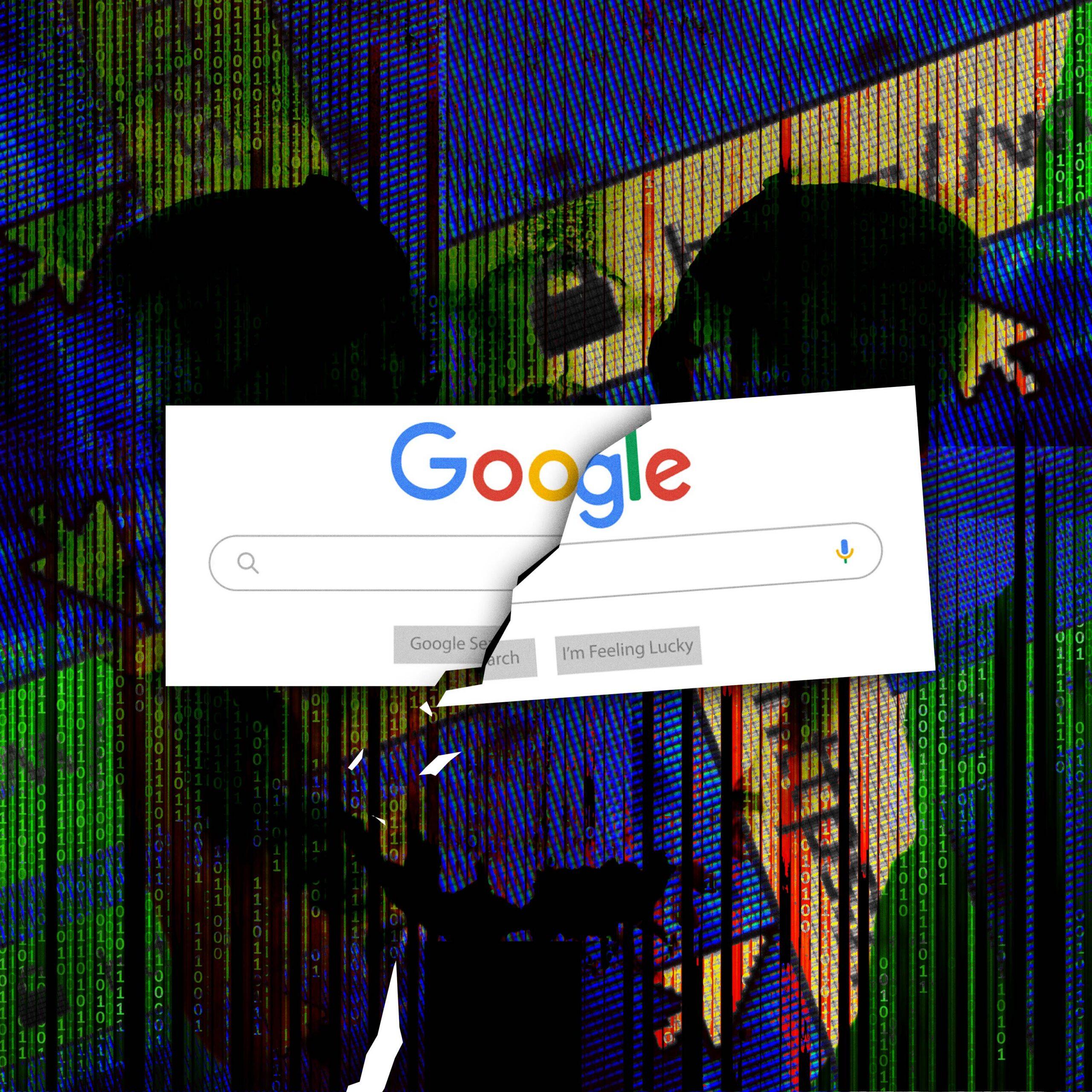
For roughly 25 years, the economics of the web were pretty straightforward. Publishers created information, Google indexed it, users searched Google, Google sent those users to those publishers’ websites, and the publishers monetized those visits with advertising. But last month, the stock of Alphabet, the parent company of Google, plunged nearly $500 billion when the company flagged to investors that the firm would use more AI in its search.
The rise of AI doesn’t just threaten to disrupt Google; it threatens to destroy the economics of web publishing. With AI, Google doesn’t just direct our attention to the answer; it now answers the question entirely. For many publishers that live and die on search traffic and clicks, this shift is existential. News websites are shuttering, journalism layoffs are rising, and even Wikipedia reported that human page views have fallen by almost 10 percent in the last year. Artificial intelligence is very much threatening to change the business model of the internet as we understand it, and an internet that runs on chatbots is going to require a totally new set of economic rules.
Subscribe to our YouTube channel here.
If you have questions, observations, or ideas for future episodes, email us at PlainEnglish@Spotify.com.
In the following excerpt, Derek and Joe Marchese get into why Google is leaning into AI search and what it means for the rest of the internet.
Derek Thompson: Let’s start with the news. Alphabet lost more than half a trillion in market value after its latest earnings report, which really freaked out investors, as it seems like the company’s going to allow AI searches to eat into overall searches. I think a lot of people are thinking, “OK, well, AI searches often give you answers rather than just lists of links.”
I thought the whole business model of Google was clicking on one of those links. Why is Google seeming, at least, to risk the destruction of the greatest business model in history?
Joe Marchese: I think the very simple answer is it has no choice. If you look at Google’s mission statement, it’s to organize the world’s information and make it universally accessible and useful. Very important, that last part. AI is a lot of things, but what it certainly is is better search. And maybe to put a finer point on it, it’s better search results because it synthesizes a lot of information from a lot of different places and brings answers. They’re not perfect, getting better all the time. So if you said, “Our mission is to organize the world’s information, make it universally accessible and useful,” AI is that.
And here’s a fun fact that I think some of your listeners might know, but maybe not. The paper that kicked off the ChatGPT revolution is called “Attention Is All You Need,” because they were teaching neural networks to learn very similar to attention models. The people who wrote that paper all worked at Google.
All of them, except for, I think, there was one person from the University of Toronto. So good on University of Toronto for getting in there. So why did Google have all those engineers that wrote the paper that kicked off ChatGPT and didn’t launch ChatGPT? So I think it’s easy to say this wasn’t Google’s first choice to get into an arms race for the new search engine, but now it has no choice.
Thompson: It’s not just that answers are replacing search. It’s also that click-through rates are dying at a rapid pace, which completely changes the business model for publishers. In the open that I just recorded, there was a study that Pew did that tracked about 68,000 Google searches. And when an AI overview appears at the top of the results page, the click-through rate declines by half, and only 1 percent, only 1 in 100 users, actually click a cited source in that AI overview. Is this as simple as the click is dying?
Marchese: I mean, yes is the answer. I mean, you look at what click-through rates are on other chatbots, on ChatGPT or Claude. The information is coming to people rather than people going out onto the web. And let me be clear: I think Google will absolutely be fine. The fact that it had half a trillion dollars to lose in a day and is still a multitrillion-dollar business because it’s diversified into YouTube and Waymo and servers and chips, but everything downstream of Google is having its business model reevaluated. And you know what’s downstream of Google? The entire internet. And so that is the question we’re at right now.
Thompson: And what is the beginning of the answer? I mean, what is your counsel to publishers, to creators, to people running an internet business when you’re saying that the click is dying?
Marchese: Yes.
Thompson: Where does one begin to see some optimism here?
Marchese: Well, some optimism comes from: New, fresh information becomes more valuable than ever. The joke of: How does information get from meat world into AI? How does it learn that the coffee shop down the street is the best? Something has to be feeding this thing. The problem is we have a bit of a gap between now and whatever the new model is going to be, which is just that Indiana Jones trying to swap out the treasure with a bag of sand before it goes—and people always use that example, and they forget he didn’t pull it off. The boulder came after him.
Thompson: No, the boulder comes right after him. Yeah.
Marchese: So the problem is, and actually you see Cloudflare probably has some of the best stats on this and the work they’re doing to try to protect publishers and create a marketplace for the value of their content, but people don’t realize advertising is what made up so much of the revenue. This AI arms race is actually being fueled by ad revenue from Google, from Meta, from Amazon. And so if we replace that, and the publishers aren’t getting traffic to their sites, subscription will matter more than ever, fresh content will matter more than ever, and then protecting it and getting a fair share from the hyperscalers for reading their information.
This excerpt has been edited and condensed.
Host: Derek Thompson
Guest: Joe Marchese
Producer: Devon Baroldi
Additional Production Support: Ben Glicksman