Hosts
 Derek Thompson
 Derek Thompson
About the episode
What exactly is effective altruism? Beginning in the early 2010s as a nerdy way to rethink the most cost-effective charity, the movement has since grown into a broader philosophy for thinking about just about everything in our lives, from the careers we choose to the technologies we build.
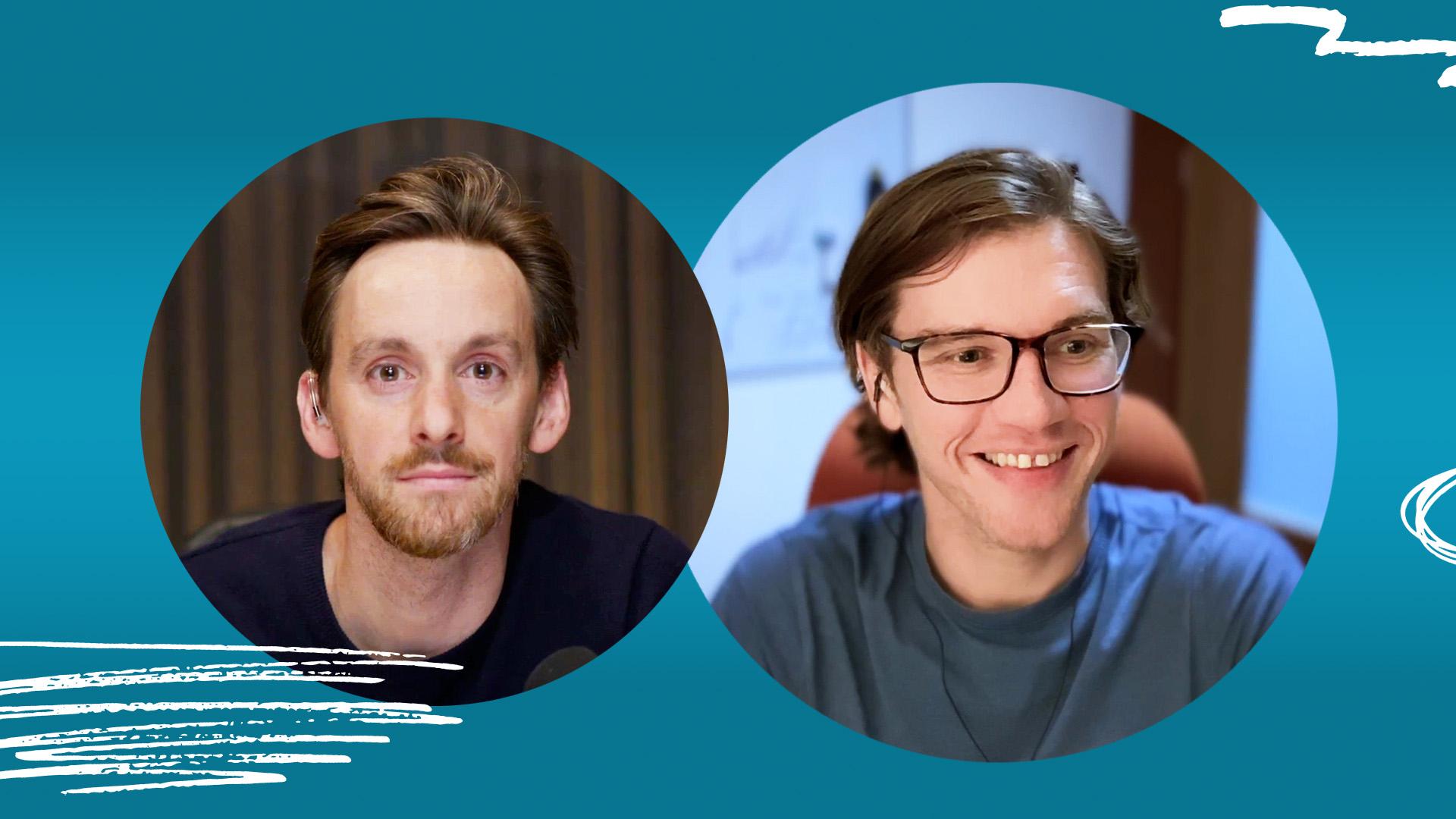
Today, Derek Thompson talks with Will MacAskill, one of the movement’s founders, about the origins and ideas behind effective altruism, its blind spots and controversies, the downfall of major funder Sam Bankman-Fried, and what it can tell us about this moment in history.
Subscribe to our YouTube channel here.
If you have questions, observations, or ideas for future episodes, email us at PlainEnglish@Spotify.com.
In the following excerpt, Derek and Will MacAskill discuss effective altruism and how it is distinct from other philosophies.
Derek Thompson: Will, you’re considered one of the founders of effective altruism, so you’re probably a good person to ask. Where did effective altruism come from and when did it come from?
Will MacAskill: So I’ll tell you about at least my part of the story, which for me began really in Oxford, U.K. in 2009, where the intellectual underpinnings really came from Peter Singer and a series of arguments he’d made for the idea that if you live in a rich country, because you can help people in poor countries so cheaply at such little sacrifice, you are morally obligated to donate a large fraction, maybe even the majority of your income to those nonprofits that could help the poorest people in the world. And I had been very influenced by that idea, but had done very little until I met another graduate student in Oxford at the time, Toby Ord. And he had spent years thinking about this, taking it very seriously. He had made a pledge to give everything he earns above a fairly low baseline of about 20,000 pounds per year, Oxford’s 2009 adjusted. And he had also been doing a lot of work in the side of things that I had not appreciated, but I think became the distinctive aspect of effective altruism. Which was thinking about not just how much should you give, but also where you give, and what are the charities that do the most to help other people with every pound or dollar they receive.
Thompson: Someone listening could think that you’re basically just applying philosophies otherwise known as utilitarianism or consequentialism to philanthropy. Why does effective altruism have a name at all, and why is it effective altruism?
MacAskill: So I think there’s a couple of things there. The first is that all ethical perspectives should care about helping others, and in fact, almost all do. And as long as you care about helping others, whether you are a virtue ethicist or a libertarian or any other model perspective, well then you should care if you can help more people rather than fewer, or help by a larger amount rather than less, then surely that’s actually important. But the striking thing in at least academic ethics over the last 50 years, was that even though there’d been a lot of discussion of Peter Singer’s arguments in this area, there’d actually been very little work done to really work them through and figure out, okay, well, if you do want to help other people by as much as possible, what should that involve? And so effective altruism was almost called positive ethics.
So academic ethicists normally talk about, “Thou shalt not.” And yeah, this debate, does that apply to abortion, does that apply to animals? But there was very little on the kind of thou shall. Actually, if you want to help others by as much as you can, what in fact should you do? And so I think the distinctive part of effective altruism was really taking that aspect of things seriously and really trying to work through as thoroughly as we could, the effectiveness question. The question of just you have limited time, you have limited money, but you want to have as much positive impact as you can, with those scarce resources. What should you do?
Thompson: Four years later in 2013, we were roommates, and my mother passed away the previous summer before you moved into my apartment in New York City. And my first interaction with effective altruism was you pointing out that many people who want to do good in the world via philanthropy will act in a way that is often shaped by social status or by the desire to do something that is sentimental but might not be consequential. And you said, “There are so many opportunities, Derek, to donate money in a way that can actually save lives.” And I was incredibly motivated by this, gave tens of thousands of dollars in my mom’s honor, to the Against Malaria Foundation to buy malaria nets. I was also very interested in arguments that you made outside of philanthropy. If I recall, for example, we talked about the idea of choosing what to do in a career.
You said if you go to work for a philanthropy as some grunt at maybe PETA or some other do-good philanthropy, if you don’t get that job, someone just like you is very likely to get that job. But if you get a job at Goldman Sachs and you give away 60 percent of your income, you’re probably donating much more of your income than the next guy up or next woman up at Goldman Sachs. And I use that story as a door into this other question I’m interested in, which is how did the ideas of effective altruism escape containment from the world of philanthropy and end up walking into all these other spaces, how we should act as consumers, how we should think about our careers as doing the most good? When did those ornaments start to get hung on the EA tree?
MacAskill: Yeah, so in terms of the history, in 2009, it was very focused on giving, and I set up Giving What We Can, which was encouraging people to give at least 10 percent of their income to those most effective charities. But we were talking a lot to students. I was myself a PhD student at the time and there was this question of just, well, should I become a philosophy professor? Is that the best thing to do? An undergraduate was wondering about whether to go into doing a PhD himself or to go into investment management with the aim of earning to give, and so on. And because there was this demand for just, look, this is a question that many of these students actually are grappling with, and where they do want to do good with a career, this undergraduate, Ben Todd and I gave a lecture that turned into a series of lectures that then turned into this organization, 80,000 hours that was trying to take this same effectiveness oriented mindset, how can you do the most good with your scarce resources, but applying it to time as well as to…
This excerpt has been edited and condensed.
Host: Derek Thompson
Guest: Will MacAskill
Producer: Devon Baroldi
Additional Production Support: Ben Glicksman