
Hosts
 Derek Thompson
 Derek Thompson
About the episode
What is Donald Trump good at? In his second administration, he promised lower prices, stronger manufacturing, and an end to foreign conflicts. Instead, inflation has risen, blue-collar job growth has slowed, and the U.S. finds itself involved in another war in the Middle East. But there is one area where Trump has undeniably succeeded: increasing the wealth of the Trump family.
Even as his approval ratings have fallen, Trump and his businesses have reportedly received billions of dollars in new investments and deals, raising questions about presidential ethics and conflicts of interest.
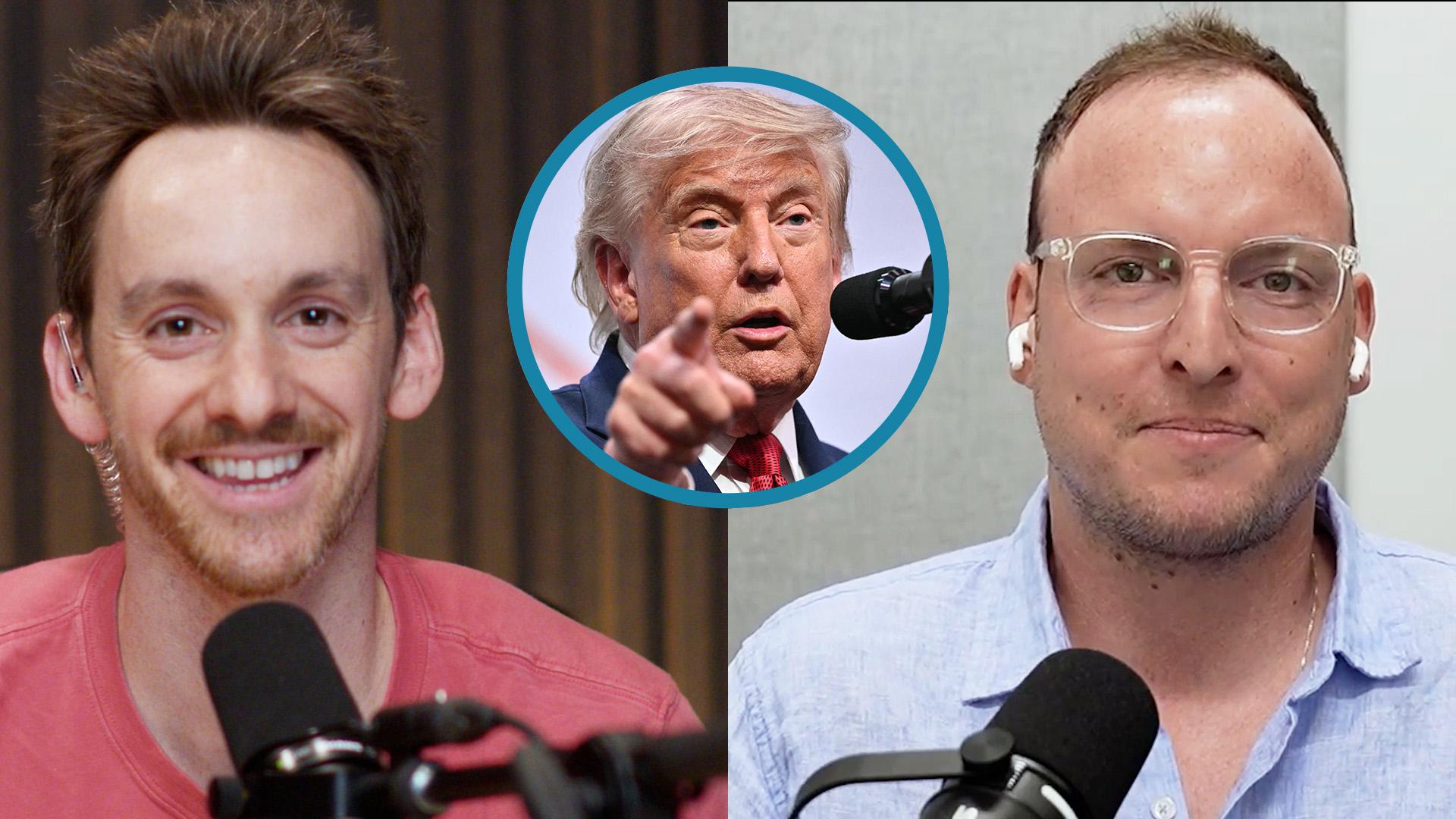
Today, Derek is joined by Isaac Saul of Tangle to draft the most striking examples of alleged corruption and ethical controversies in the second Trump administration and ask a simple question: Are we witnessing an unprecedented era of presidential profiteering?
Subscribe to our YouTube channel here.
If you have questions, observations, or ideas for future episodes, email us at PlainEnglish@Spotify.com.
LINKS: https://www.readtangle.com/the-everything-everywhere-all-at-once-corruption-story/
In the following excerpt, Derek talks to Isaac Saul about Trump, his base, and corruption.
Derek Thompson: Isaac, so welcome to the show.
Isaac Saul: Thanks for having me, Derek. Glad to be here.
Derek Thompson: It’s really great to meet you. I’ve been a fan for a long time. I’m a fan. My wife is a fan. My wife’s fandom is actually mildly annoying. There are times when I’m really struggling with a complex idea, like some debate in the news and really trying to be fair and ski slalom my way down the middle in a way that’s appropriate but not both side-sy. And then right as I’m really struggling with a piece, she’ll turn over in bed with her phone and be like, “I just read the most amazing article about this on Tangle.” And it’s really freaking annoying. So damn you, Isaac, but it’s also nice now to sublimate that anger by welcoming you to the show. So thanks very much for both inspiring today’s episode and for appearing here. I’m really happy.
Saul: I love to hear it.
Thompson: So before we get into today’s game, before we even explain the rules, I have a question about your approach to this subject, and it’s a question that’s also self-directed. You’ve got a very careful brand. That brand is, I wouldn’t even say bipartisan. It’s anti-partisan. You really bend over backwards to not take sides in complex debates. And I really want to also emphasize that you don’t aim for false balance either. You don’t aim for this idea that all sides are always equally right in any debate. You resist that bullshit very effectively. But with that said, you have now published several multi, multi, multi-thousand word pieces on the president’s self-dealing. Why is this issue of Trump’s corruption so important to you?
Saul: I think first of all, I am just built for it to offend my sensibilities. I mean, I think the things that frustrate me about government are typically around wasteful spending, corruption, obfuscating the truth from the public. And the Trump self-dealing and grifting stories just hit all three of those right on the head. And there’s something about the dynamic of the president doing this the way he’s been doing it, which is blatantly, openly, shamelessly, that has kind of just neutered it as a political issue. I mean, he’s inoculated the public from being angry about it, which is really remarkable. And it’s kind of how I opened my first piece explaining what I’m observing is just they’re being so bold that it feels like people don’t feel as if they could be really upset about it. And then I’m sitting here stewing over it because it’s so over-the-top and egregious. And to me, from my vantage point, genuinely seems like we’re witnessing the most corrupt administration of all time. If you’re judging it based on the kind of self-dealing, enriching and grift and lies, and nobody’s really mad about it.
And I was somebody who chased the Hunter Biden laptop story and the Biden family business dynamics and all these really critical and I think important stories that popped up over the last few years, last decade. And the people who cheered me on then, who are Trump supporters now are just turning a blind eye to this. And that to me was so frustrating that I felt like I had to write about it. And then when I read the responses, some of which were predictable and some which surprised me, I had to follow up and write about it again because I really wanted to compel people to see this is so important, and we can’t accept it because if we don’t draw a line here, it doesn’t stop with Trump. We’ve observed this throughout history.
Anytime the president of the executive branch expands power crosses a new line, the next president, the next executive branch embraces that new power or crosses that line again without punishment. And I’m really worried that we’re going to allow this and then it will become the new precedent.
Thompson: Tell me a little bit more about the response. Surely you have a lot of Republicans, a lot of MAGA readers. What did they say when they opened their newsletter that they consider a kind of objective from the heavens kind of 360 review of the world and it went so hard at their guy, what did they say?
Saul: I think there were two overarching responses, one that I expected and one that I didn’t really expect. The one I expected was just the cynicism, which I think is part of what has made Trump succeed. There are a lot of people out there, and I understand it, who prefer the guy who will roll a grenade into the room and blow everything up, and they don’t really care about what’s being built in its place. They’re just so exhausted and done and cynical about the system we have and the governance we have that they’re happy to see Trump kind of drive in on the flaming card, giving everybody the double bird. It’s invigorating. And I get that because I get frustrated with our governance too.
But the cynicism that I expected was just everybody in DC is corrupt. All these politicians are always self-dealing. They’re all like psychopathic self-interested people. That’s why they’re senators or congressmen or sitting in The White House, and Trump’s just doing it less sneakily and with more pride than any of them did. And I expected that response, and I was prepared to answer it, which is basically just that’s not true. I actually interview members of Congress and senators and people who have been in the White House or working around the White House. And when you get to know people in that way, you see some of them are corrupt and self-dealy and psychopathically self-interested. A lot of them are there to be in service and make the world a better place. The majority of people in Congress I actually genuinely believe fall into that category. They are often the people we hear about the least, but they’re there and they exist and I don’t think it’s fair to label everybody that way. So I wrote a little bit about that.
The thing that I was surprised by was the direct comparisons to other presidencies and really not letting go of kind of flattening them all into the same thing. The most common response or one of the top three probably was people saying Barack Obama came into office worth a million dollars and like a no name political activist who had kind of climbed into the Senate, and now he’s leaving as a ultra-wealthy, worth hundreds of millions of dollars former president. It’s so much worse that he came into office without money and left with money than President Trump who came in off as rich and now it’s just continued to get rich. And that answer surprised me a little bit, and I understood it.
And the response for me was just, we know how Barack Obama got rich. It’s not a mystery, right? Barack Obama came into office and as his fame and celebrity grew and he was definitely a kind of …we were all infected with the fame of Barack Obama, whether you loved him or hated him. The world revolved around him in a similar way to a lesser degree than it does around Trump. But he took book deals. He did speaking tours. He signed a deal with Hulu or Netflix after to do a documentary about his life. He invested his money, and he filed those his investments.
Thompson: He became IP, you could even say, right? Obama, Inc. was like Marvel or Lucasfilm. It was something that he could sell to a Random House, to a Netflix. Yeah, it was for people in entertainment, a very familiar path to wealth. Wrap up though before we start the game.
Saul: Yeah. I mean, there were books, there were TV shows, etc. And then he did the thing Trump doesn’t do. He filed his tax returns so we could all follow the trail. So if you actually want to know how President Barack Obama got rich, you can sit down and map it out, and there’s no mystery there and none of it’s really corrupt. There’s like one or two stories you might hear about a guy who helped, for instance, I think it was somebody helped negotiate the Hulu or Netflix deal that he landed after he was in office and then that guy in his second term or between his two terms. And then during Obama’s second term, that guy got some obscure ambassadorship. It’s like, okay, well maybe. Trump does stuff like that every day that didn’t even make it into my piece. So it’s so far down the ladder of “corrupt” that I have a hard time getting excited about it, but we basically know.
And with Trump, as I’m sure we’re about to talk about in this episode, the ways in which he’s making money and the family’s profiting is much more directly related to the work and power that he has as president. It’s him pulling the levers of the federal government in order to enrich himself or his family. And that’s the thing that I find so offensive, and it’s the thing that’s fundamentally different between him and former presidents that we’ve had. Nobody has ever done it at this scale. And again, with the kind of shamelessness that Trump has, and that’s the thing I tried to remind my readers is like, he’s not denying it. He’s answering questions about saying, “I tried to separate the business first term. Nobody cared. So this time we’re not even trying.” I mean, he literally said that to the New York Times with a recorder running. And it’s that sort of brazenness that has somehow hypnotized everybody into just not really giving a shit, which has driving me a little bit insane as I’m sure you can tell.
Host: Derek Thompson
Guest: Laurie Santos
Producer: Devon Baroldi
Additional Production Support: Ben Glicksman