
Hosts
 Derek Thompson
 Derek Thompson
About the episode
Why do placebo effects work, even when patients know that they’re taking a sugar pill? How do “nocebo” effects work, and why do some people hold on to beliefs that they suspect might bring them pain and suffering? What do the major world religions have to teach secular athletes and workers about the power of belief, and what does the psychological research tell us about the benefits of prayer, even for those who don’t believe in God? Nir Eyal, bestselling author of the new book Beyond Belief, joins the show to talk about the research behind how our beliefs shape our lives.
Subscribe to our YouTube channel here
If you have questions, observations, or ideas for future episodes, email us at PlainEnglish@Spotify.com.
Today’s open is adapted from Derek’s Substack essay “If Placebos Work So Well, Why Not Prescribe Sugar Pills for Everything?”
In the following excerpt, Nir Eyal explains to Derek some of the research that’s been done linking prayer to increased pain tolerance and his personal experience with religion.
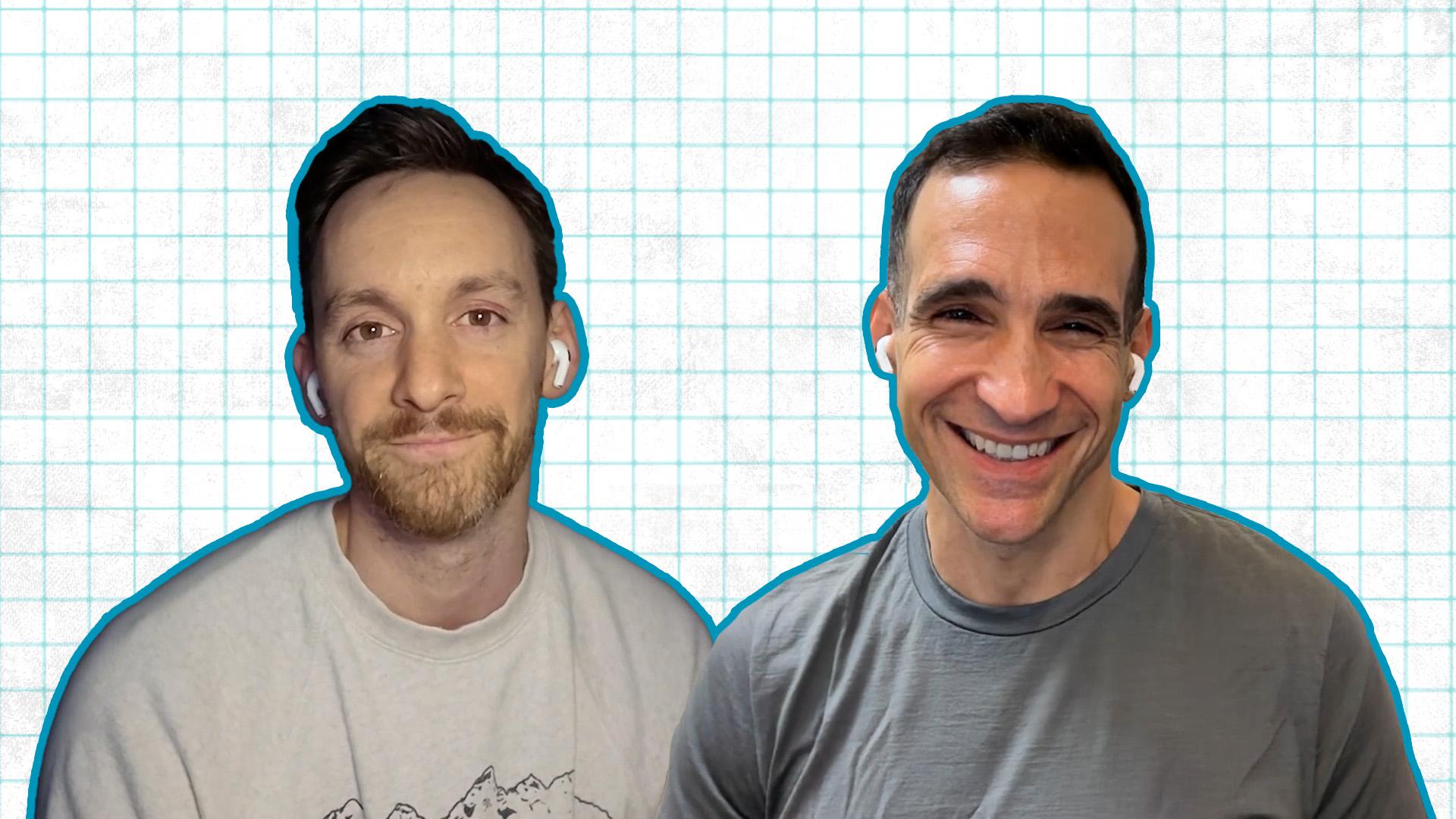
Derek Thompson: We initially started corresponding when I was writing about smartphones and compulsion and addiction, and then got really interested in your work on those subjects. We’ve just stayed in touch and remained writer friends for the longest time. I loved this book.
Nir Eyal: Thank you.
Thompson: You’ve written about technology. You’ve written about how companies hook us, written about how to resist the temptation of digital compulsion. This new book was a really interesting departure from some of those themes. It’s a book about the power of belief in life. And I would love to start with religion. Tell me about your personal history with Judaism.
Eyal: Well, I grew up in a pretty secular family, and the last time I prayed before I embarked on this line of research that I’ve been steeped in the past six years, the only time before that that I ever prayed was when I was 6 years old. And I remember my family had been in the country for only three years, and in very short order, they got scammed out of basically every penny they had by some scam artists, American, who took advantage of a new immigrant family that barely spoke the language. And my family was in a really tough situation. And I remember going outside before anyone else woke up in the morning, and I would lie on my driveway, and I would look up at the sky, and I would have a conversation with this voice that I called God. And it was very comforting at the time. I distinctly remember that.
But then as I got older, I thought, well, if I can’t prove that I’m talking to anybody, if nobody’s listening, what’s the point? Why am I doing this? And I didn’t pray again for decades until I started this line of research, which became my book Beyond Belief. And I kept coming across the power of prayer, how people who pray live longer, they have more friends, they make more money, they contribute more to their community. All these great things happen to people who pray. But I thought that was kind of inaccessible to me because I didn’t have a particular faith. I didn’t have a conviction in the supernatural. And so I just thought that was off-limits to me until I read a study that changed everything, which was this study where they had three different groups and they asked them to do all the same tasks.
The task was: It’s a pain-tolerance test where they asked people to put their hands in very, very cold water. And the test is to see how long they can last in that cold water. And so in these three groups, one, they said, just don’t do anything. Just let us see your pain tolerance by seeing how long you can last in this ice-cold water. The second group were people who prayed with some kind of faith tradition. So they were identified as Jewish or Catholic or Muslim or whatever the case might be. They had a prayer practice. The third group was the most interesting to me. These were people who did not have any particular faith, but they were taught how to pray. They had a particular protocol on how to pray. And they said, if you don’t want to say the word God, you can substitute something else, something meaningful to you.
It can be the universe. It can be Mother Nature. It can be the sum of all forces. It doesn’t really matter. You can substitute any secular interpretation that you want. And so that’s what they did. And what was interesting, the result of this study is that not only do the people who prayed from some kind of faith tradition show much greater pain tolerance, they could last much longer in this pain-tolerance experiment than the people who didn’t have any kind of faith background and weren’t taught to pray. But even the people who didn’t have a particular faith but learned how to pray also enjoyed those pain-tolerance benefits. So it turns out that prayer works even without faith. You can still get a lot of the benefits. And so that kind of opened my mind to explore this further, to see, well, what have I been missing out on?
And it turns out I’m not alone, that the largest religious group in America today are the nones—not the Catholic nuns, the n–o–n–e’s, the people who have no religious connection in terms of any particular faith. And it turns out that those people have problems associated with that lifestyle, that, in fact, people who call themselves spiritual but not religious, which is millions and millions of Americans today, turns out that they suffer more from depression and anxiety disorder than people who do have a particular faith. But for someone like me who didn’t connect with any particular faith, I wanted to see: Could I find those benefits? And that’s exactly the mission I went on.
Thompson: And the reason this story really resonated with me is that I grew up Reform Jewish. I had a bar mitzvah. I read the haftarah and the Torah portion and loved it and found something really beautiful and mystical and beyond the veil of knowing about Judaism that really appealed to me when I was younger. And today I would say that my relationship with Judaism sometimes feels like a relationship of last resort. Like, when I’m afraid that something bad might happen or very desperate for something good to happen, I find myself almost automatically saying the Shema, which, for folks who aren’t Jewish listening, is just a very basic, very ancient prayer of a call to God. And the Shema, it’ll just materialize on my lips, is what I think I wrote in the essay that I published on my Substack introducing some ideas from your book.
And for years, I’ve wanted this deeper relationship with faith without being able to really put that yearning in context. And your book really succeeded in putting that yearning in context. I would love for you to go just a little bit deeper on this concept of faith as pain tolerance. Why is that an important idea?
Eyal: From what the research shows us is that prayer gives us a sense of agency. It’s exactly what you said, that when I feel that I really want something to happen that is partially or completely out of my control, that’s when I would turn to these rituals because it gives me that sense of agency over something that I may not have direct control over. And that’s very psychologically comforting. Now, the part that I struggled with about this was reconciling: Is that true? Is it a fact? And this took me a long time to get over, that if I couldn’t prove, if I didn’t know definitively that someone was listening to my prayers, that it wouldn’t be worth doing. And so I completely disconnected from the practice. And it turns out that that, I think in retrospect, was a foolish decision because I was holding my beliefs to the standard of facts.
Facts are not beliefs. A fact is an objective truth. It is something that is true whether or not you believe it. The world is more like a sphere than it is flat. Sorry, flat-earthers, that’s just the way it is. On the other end of the spectrum is faith. Faith is a conviction that does not require evidence. So, “God rewards the righteous.” No evidence is required for a matter of faith like that. Beliefs are something different. Beliefs sit in between fact and faith. A belief is a conviction that is open to revision based on new evidence. And what makes beliefs so special is that they can change. You can put down the ones that don’t serve you, and you can adopt the ones that do serve you. So beliefs are tools, not truths. Beliefs are tools, not truths. But I was holding my beliefs to the standard of fact.
If it’s not a fact, I’m not going to do it. And so I would disconnect from all religious tradition. And it doesn’t have to be like that. There is another option. So when I came to Singapore—I’ve lived in Singapore for the past six years—there was a form on the immigration documents that they wanted to know your religious background. And so there were all the usual biggest religions. And one of the categories, it didn’t say atheist or agnostic. It said free thinker. Free thinker. And I wondered, what the heck is a free thinker? It turns out that a free thinker can be from other faith traditions. You can be a free-thinking Christian or a free-thinking Muslim or a free-thinking Jew, a free-thinking Buddhist. You could be a free-thinker anything. It’s someone who doesn’t hold that their convictions or necessarily their beliefs have that standard of fact or faith, that you’re simply practicing as a tool.
And I think that really expanded the opportunities that I’ve had to participate in ritual in a way that has greatly benefited me because I no longer am debating people on the existence of God anymore. I don’t need to debate that anymore. I stopped caring whether I’m going to prove any particular faith correct or whether there is something supernatural at all. I’ve stopped caring. Rather, the standard is: Does this improve my life? Does it give me peace? Does it make me a better person? That’s what I’m looking for.
This excerpt has been edited and condensed.
Host: Derek Thompson
Guest: Nir Eyal
Producer: Devon Baroldi