

Hosts
 Derek Thompson
 Derek Thompson
About the episode
The Strait of Hormuz is the tiny bottleneck that could destabilize the global economy. As a critical passageway for crude oil, natural gas, and critical inputs for fertilizer, computer chips, and plastic, this small stretch of water is a tiny choke point for global trade, and the war in Iran has all but shut it down. What does this mean for the U.S. economy and other countries around the world? Geopolitical analyst Rachel Ziemba joins the show to discuss.
Subscribe to our YouTube channel here.
If you have questions, observations, or ideas for future episodes, email us at PlainEnglish@Spotify.com.
In the following excerpt, Derek talks to Rachel Ziemba about the downstream effects from the closure of the Strait of Hormuz.
Derek Thompson: You and I are talking at 12:38 p.m. Eastern time on Monday, just to give people a sense of where we are in the span of space and time, because this is a story that’s moving very, very quickly. And in the general picture, we’ve got a situation where on one side, Iran has announced that the new leader of that country is going to be the son of the assassinated religious fanatic Khamenei. That’s an unpredictable situation. On the American side, you’ve got Donald Trump as president. That’s an unpredictable situation. So my general sense, even going into this interview, is that anybody who has a high degree of confidence that they know what’s going to happen in the next few days, much less the next few minutes, is completely crazy. Nonetheless, given that sort of preamble of epistemic humility, we’re going to try to talk a little bit intelligently about what’s going on here in oil markets, fertilizer markets, global energy markets to make sense of how serious an energy crisis this is and where its effects could effectively or ultimately be felt. Let’s start with a really simple question. Tell me about the Strait of Hormuz.
Rachel Ziemba: Sure. And before we get into that, I think the one thing we’ll know for certain is that in the next few days, we’re unlikely to see the Strait of Hormuz reopen. That’s the one thing I feel fairly confident on. It might open after that, but in the next couple of days, the damage done might be more difficult. But yeah, the Strait of Hormuz is a narrow strip of water in between the United Arab Emirates and Iran, through which more than 20 percent of global oil transits, 20 percent of seaborne liquefied natural gas, 30 percent of seaborne fertilizer, and a growing amount of global container traffic. I’ve been tracking energy markets for about 20 years now and tracking the Middle East for that amount of time. And even before that, as a grad student, we would study choke points and physical risk to energy markets. And the Strait of Hormuz has been always number one, right? But this is the first time that it has been effectively blocked and that there hasn’t yet been a way to reopen it.
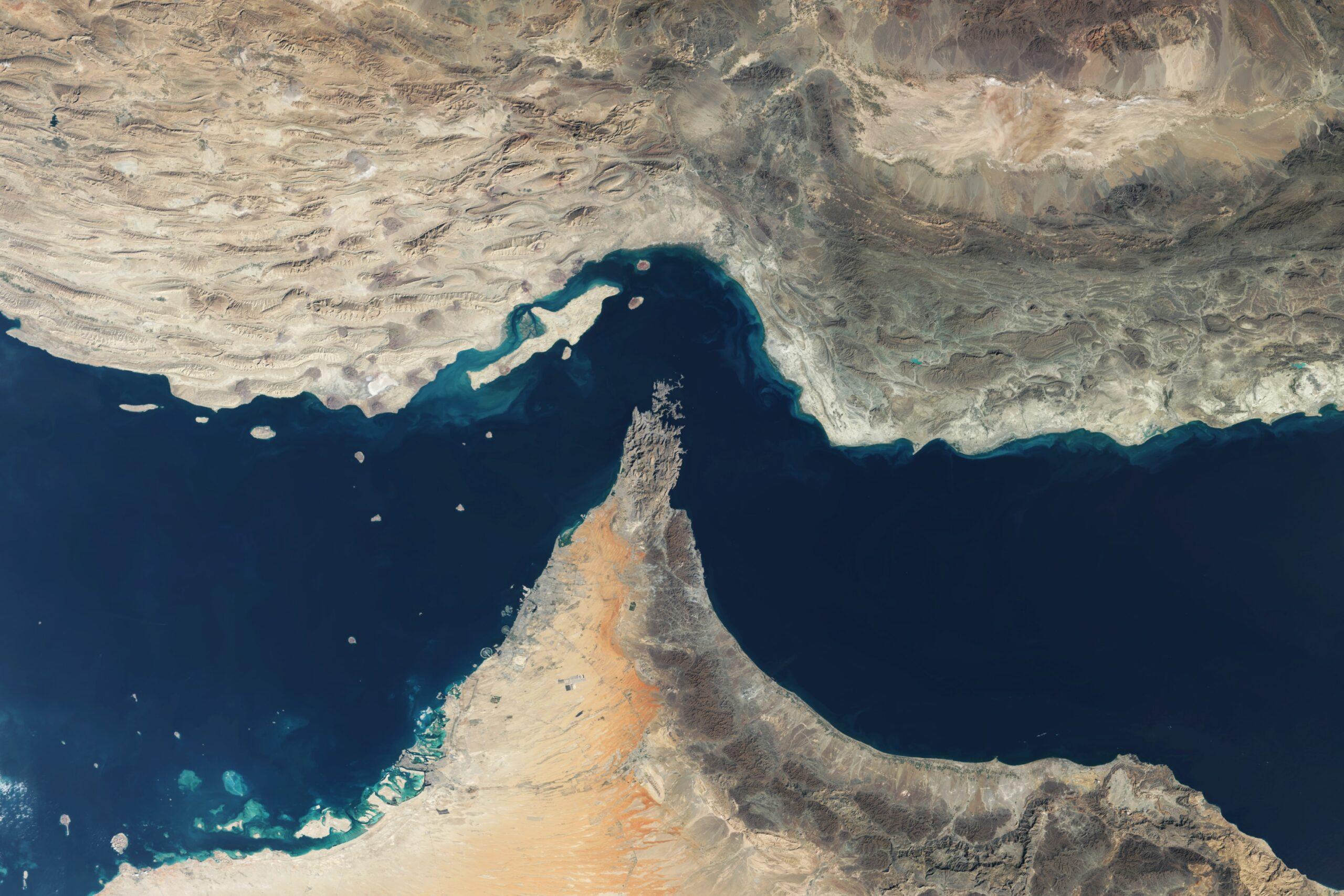
A satellite view of the Strait of Hormuz, a strategic waterway between Iran and Oman that links the Persian Gulf to the Arabian Sea
Thompson: One thing that I see some people saying is that everybody looking at this story from a sort of casual or innocent perspective says, “This is a story about oil.” And the idea is that, no, this isn’t just a story about oil. This is a story about what oil becomes. Can you begin to give us a sense of what oil becomes so that we understand how the closure of this strait could ripple into parts of the global economy that people might not think of necessarily as crude oil?
Ziemba: Sure. I mean, the first thing is at the end of the day, we as consumers don’t use oil. We use gasoline, we use diesel. We might get onto a flight and hope that it has jet fuel on board. We’re doing a massive build-out of electricity because of AI. We use copper. Sulfuric acid, which is a by-product of oil refining, is a major input into processing copper. And then, of course, in our daily life, we use so much plastics, even those of us who are trying to phase out microplastics use. And what do plastics come from? They come from oil via petrochemicals. So it really touches so many aspects of our lives, and oil and natural gas can be precursors for fertilizer, nitrogen-based fertilizer in particular, which then can add to the cost that we face in our food supplies.
And then think about, I just placed an Amazon order this morning, and the sort of car that’s going to get it that last mile, the flight it’s on, all of those factors involve companies who are thinking and scrambling about do their costs increase. And even the very ships that the oil [is] being carried on, they themselves are having to pay more for their fuel. So it really has quite a number of ripple effects in the global economy. And of course, there are other goods as well that are also trapped. It’s just that the global linkages are much more through oil and its downstream channels.
This excerpt has been edited and condensed.
Host: Derek Thompson
Guest: Rachel Ziemba
Producer: Devon Baroldi