
Plain English With Derek Thompson
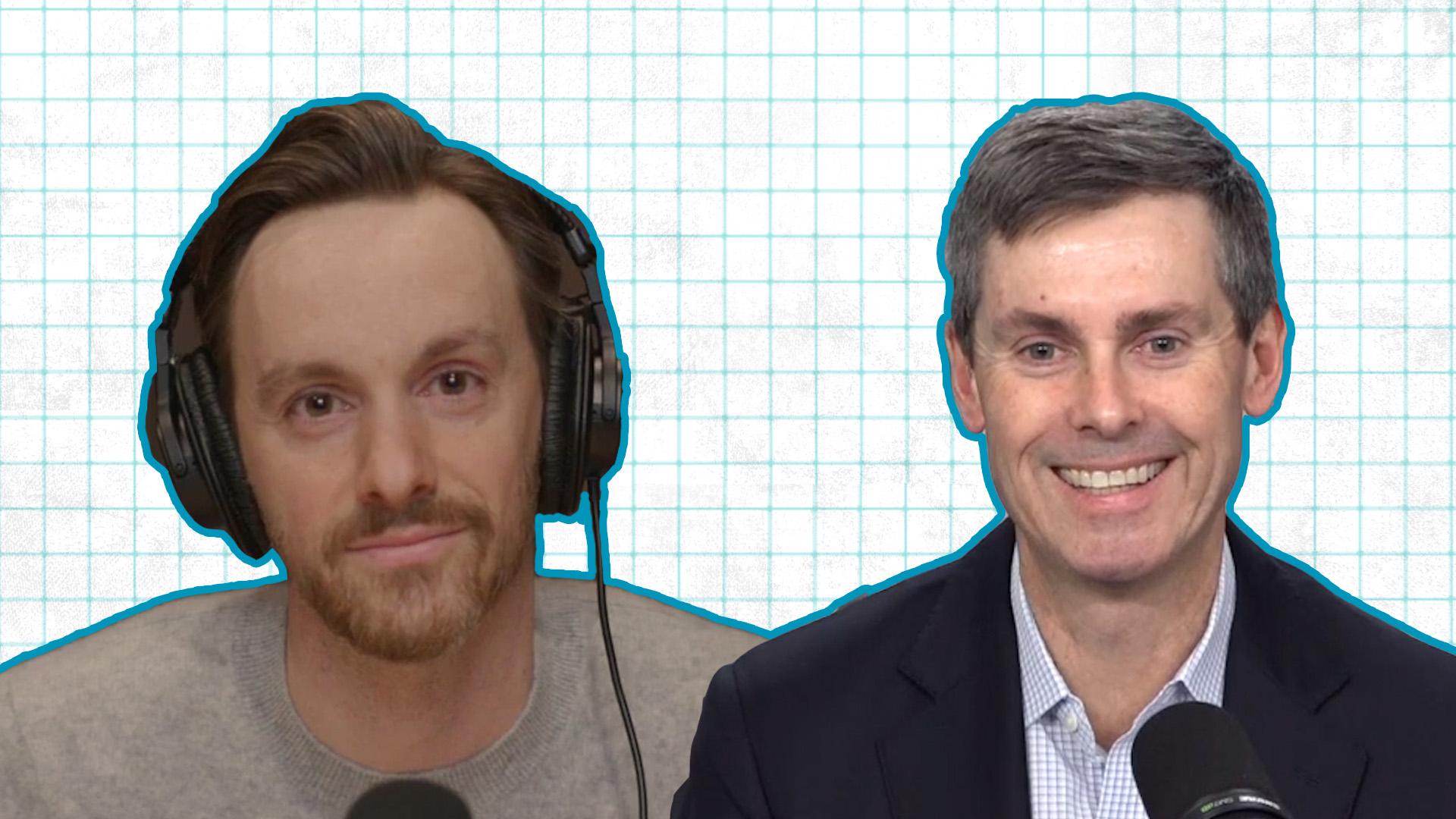
The Future of GLP-1 Drugs and AI Medicine, With Eli Lilly CEO David Ricks
Hosts
 Derek Thompson
 Derek Thompson
About the episode
The GLP-1 drug revolution has taken the medicine world by storm. I’ve done several episodes on the science of GLP-1s. But we’ve never done an episode like this before, where we talk to one of the most important people in charge of guiding the GLP-1 drug revolution.
Our guest is Dave Ricks, the CEO of Eli Lilly, the largest pharmaceutical company in the world. First, we talk about what makes the GLP-1 drug category special and the science that Lilly is doing to improve these drugs. Then, we talk about the pharmaceutical industry more broadly. How it works. How it could work better. And I don’t shy away from the question that I think pharma CEOs need to take much more seriously: If the pharmaceutical industry is theoretically more devoted than any other economic category to saving people’s lives, why do Americans distrust it more than any other industry in the entire economy?
Subscribe to our YouTube channel here.
If you have questions, observations, or ideas for future episodes, email us at PlainEnglish@Spotify.com.
In the following excerpt, Derek talks to David Ricks about the genesis and evolution of GLP-1 drugs.
Derek Thompson: So today you are the largest pharmaceutical company in the world, in significant part because of your GLP-1 drug. Twenty years ago, Lilly helped launch the first approved GLP-1 drug. I’m fascinated by the history here, and I’d like you to start wherever you think this story should start—2005, 1970s, dawn of man. Truly, it’s up to you. How did this drug category get kicked off through the lens of Eli Lilly?
David Ricks: Yeah. Well, I think this is a great cocktail party intro because I get this question all the time, and everyone knows the story. And I think you’ve even told the story of the Gila monsters, and we’ll get to that in a second. But the real first scientific breakthrough that happened was in the early ’70s. There were actually two papers that looked at something that was called, at that point, the incretin effect. And now incretin is what we call this class of hormones or proteins that your gut excretes, like GLP-1. And what was noticed was that if you ingested food or calories of any kind orally through your GI tract versus intravenously, there were very different amounts of that nutrient that would spike in your blood and would be absorbed or not absorbed effectively by the GI tract more effectively. So blood glucose was less, where if you took it intravenously, it would spike and stay up.
So it was hypothesized there were some suite of mechanisms by which your gut actually signaled the rest of your body that you had eaten something. And then that work led to identification of what those things were. The first one identified was actually called GIP, which is actually the backbone of tirzepatide or Zepbound, our best-selling drug. But of course, GLP was another one early identified as well. And that’s the point of origin for this. The companies that worked on this, then, in the ’70s, the ’80s, included Lilly and Novo, actually, but it wasn’t until the Gila monster story kicked in in the late ’80s—I think this guy named John Eng in the Bronx was interested in why certain animals didn’t need to eat very often and identified this mimic of the human peptide, but used for this lizard’s own purposes, exendin, which mimics GLP-1. And this was useful because you could ask, “Well, why in the ’70s didn’t you just make this drug then if you knew about this?”
And the answer is that peptide chemistry wasn’t very mature. And if you give humans a native sequence of GLP-1 or GIP, they both have a half-life in your body of seven or eight minutes, so it wouldn’t be a very convenient drug. You’d have to walk around having an IV bag infusing it all day long to mimic what we have with the drugs we have today. The Gila monster one was interesting because you could get it to go about eight to 10 hours. So it was a twice-a-day shot, which barely cleared the hurdle of good enough to be a drug, but we made it into a drug along with our partner Amylin and launched that in 2006. So it’s been going on for a while. The effect is really the insight into the natural system by which we regulate calories, which is core to our existence. And drugging this target has proven hard. It took a lot of advancements in peptide chemistry and drug making to get to where we are today, with pretty convenient, long-acting, and now dual-acting versions of this pathway, the incretin.
Derek Thompson: Your story stopped off with exenatide, which is the drug that was derived from the Gila monster incretin. That was a type 2 diabetes drug.
David Ricks: Yeah.
Derek Thompson: How long did it take Lilly to recognize that what had begun as a type 2 diabetes drug was in fact an incredibly powerful weight-loss drug? Because now here we are, 21 years later, which is not a short amount of time, so how long did it take for you to realize this underlying mechanism, which is now what the drug is more famous for?
David Ricks: Yeah. It’s interesting because when we go back and look on the cover of our annual report from that year, there’s a patient, Maria, and she’s talking about her experience with Byetta, the brand name for exendin. And she says it’s controlling her blood sugar, and that her friends notice she’s losing some weight. So there it was sitting there in 2007 in April, when we put out that annual report. We were doing studies, but we had a problem. The problem was the side effects associated, particularly with GLP-1, are what we call peak to trough: so the difference between the highest amount of drug and the lowest and then going back up again to the highest caused by this twice-a-day dosing—which you can imagine someone bouncing around maybe two to three times, the drug at peak, then trough, causes a lot of GI distress.
So we’ve read about those feelings of nausea, sometimes diarrhea, sometimes vomiting. So the more we pushed the dose up, the more we ran into these things with that particular drug. And so we stopped because it was very unpleasant to take, and the weight-loss effects were there but more modest. What happened that started the weight-loss part was to be able to get the dosing levels up. So here we’re taking a system, the incretin system, GLP-1 or GIP, or coming soon glucagon, and we’re boosting it in people who have regular levels. So it’s not that people are deficient necessarily in these hormones; it’s that we’re boosting them to a super-normal level, and it suppresses appetite, kicks in the metabolism, et cetera. So to do that, you need to get to higher levels than we were originally to see the weight-loss effects, whereas it did have some blood-sugar control levels.
We produced a once-weekly GLP-1 launched in 2014 called Trulicity. Anyone who was in the diabetes world would know that. Very few people in the lay media would remember that drug, although it was our best-selling drug at one time. And it was a weekly, we did a trick of protein engineering, we made it last a week, and people lost more weight. Our competitor, Novo, then did a similar trick and made a weekly. They launched that in 2017. It was called Ozempic. Oh, we know that word. And that really only got so famous when they took the chance to study that at an even higher dose in people who didn’t have diabetes but had dysmetabolism and obesity. And that came out in ’21, I think. And then this whole thing started running. But even while they were doing that, we had switched away from the single-acting GLP.
We invented this drug called tirzepatide, which happened in 2014. And we started doing studies, and by, I would say, 2018, 2019, we knew this was going to be the most effective obesity drug we’ve ever seen. And of course, since then we’ve been improving upon that. So it’s a case of leapfrogging and iterative improvement. And the story—interesting here, people think about the long-acting as convenience, but actually the long-acting gave us a flatter, steadier drug profile so that the side effects were less bothersome. You could dose up without having that peak-trough kind of saw-toothing, which causes GI distress and made the drugs intolerable without a very flat profile.
This excerpt has been edited and condensed.
Host: Derek Thompson
Guest: David Ricks
Producer: Devon Baroldi
More Plain English Episodes on GLP-1s