Hosts
 Derek Thompson
 Derek Thompson
About the episode
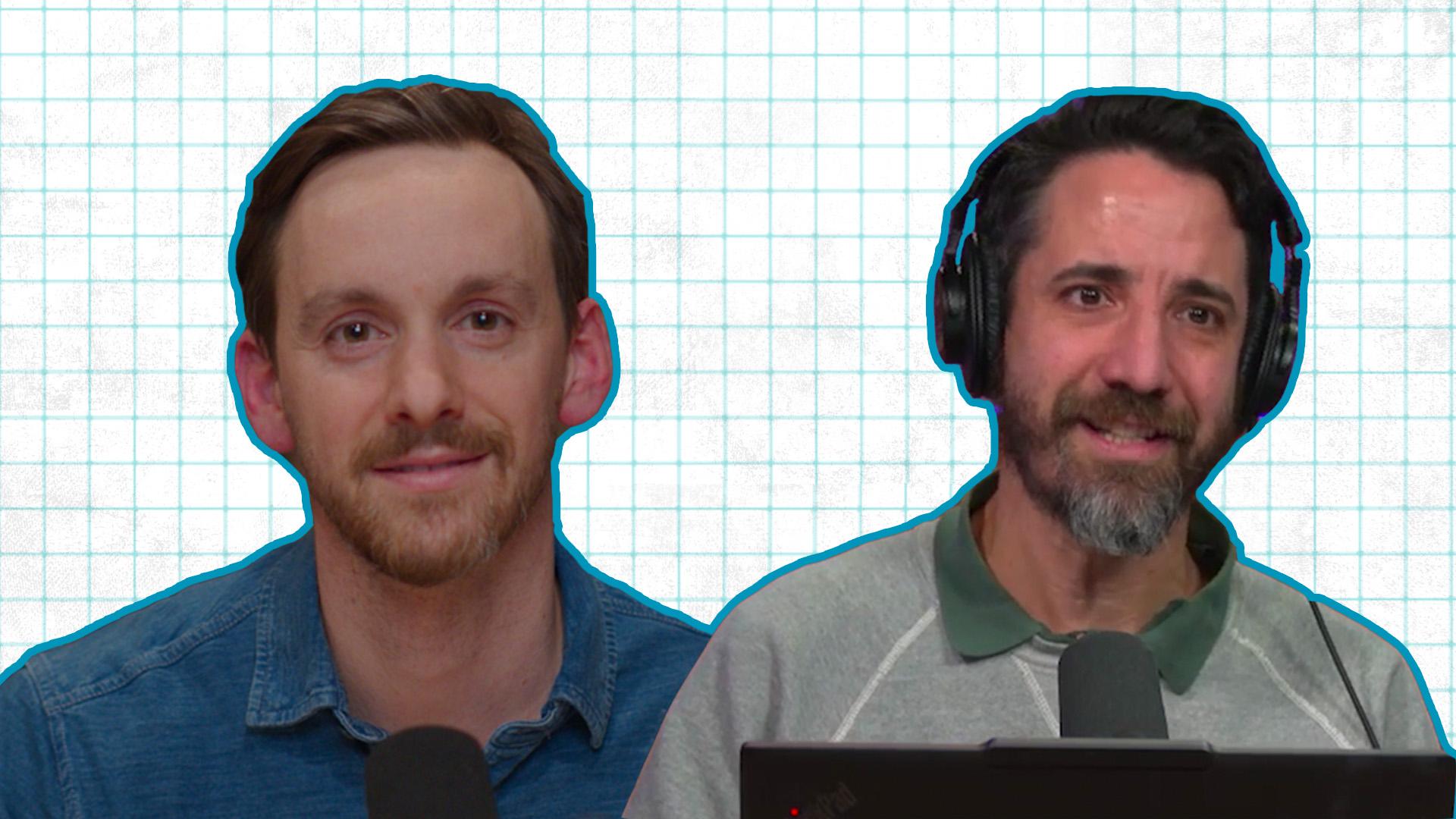
In the mid-20th century, a group of media and communications scholars proposed that the shift from spoken to written language—from orality to literacy—transformed our politics, our media, our social relations, and even our sense of consciousness. Today we’re undergoing another shift: from a literate culture to something stranger—a postliterate world awash in social media and digital communications in which oral traditions are making a comeback. Bloomberg’s Joe Weisenthal, the cohost of the Odd Lots podcast, has called this one of the most important trends in the world. Today he explains how he got hooked on orality theory and why it’s the skeleton key that unlocks so many oddities of the modern world.
Subscribe to our YouTube channel here.
If you have questions, observations, or ideas for future episodes, email us at PlainEnglish@Spotify.com.
In the following excerpt, Derek talks to Joe Weisenthal about his theory of orality.
Derek Thompson: Joe, sometimes I like to slowly walk up to the thesis statement of a show, set the table, forks and knives and plates, go really, really slow. With this, I want to dispense with all of that and just set the stage for you to make your biggest, boldest, most ambitious proclamation. What is your orality thesis? Why do you think it explains everything? Why is it the most important idea of our time?
Joe Weisenthal: I don’t think it explains everything. I think it only explains 99 percent of what’s going on. I imagine AI is probably also an important trend. It’s a minor thing compared to the really big picture, which I think has been underway for some time and that I’ve been thinking about for a long time, which is I believe that human communication is becoming more oral. By that I don’t mean that people are talking more with their mouths, per se, although I do think that is the case. We’re talking. I talk professionally on the podcast.
It’s more that communication in general, whether in the spoken form or in the digital form, particularly online, has the characteristics of conversation. That is, there’s a certain aspect of conversation that is fundamentally different from the written word, that people in conversation think differently than when they’re writing.
It truly hearkens back to a time before, really, the written word or certainly mass literacy. About 10 years ago, it was actually in 2016, I think during that presidential election, I started reading the work of Walter Ong. He was a Jesuit priest. He studied with Marshall McLuhan. He was at Saint Louis University. He wrote this really incredible book called Orality and Literacy.
The basic gist is that humans really fundamentally think different when they’re in this world, that you can’t write anything down, that you can’t look anything up. This is, I think, a really good place to start, which is that for most of human history, there was no way to look up anything at all. There was no reference material and so forth. As such, people had to optimize their communication for the conditions of that time. It was almost a certain linguistic economy, so to speak.
So through a lot of study of Homer and other ancient epics, people realized that there were certain patterns. So people spoke with rhythm because rhythm helps people memorize things. People speak with rhyme and musicality, again because that helps people memorize things. There’s certain phrases that just get repeated over and over again. Repetition, communication, information is optimized for memorability and packets and what we would call going viral.
I’ve been addicted to social media, particularly Twitter, for well over 15 years at this point. When I started reading this book, I was like, look, this has a lot of explanatory power. These things that characterize the Homeric times, the way society prioritized and packaged information, greatly resembles what we see today. I would say that’s my big thesis, which is that as communication becomes more of this back-and-forthness, that that’s changing the way we communicate and fundamentally changing the way we think.
Thompson: So when researchers like Ong say the most significant shift that they’re looking at was this shift from the age of orality that you just described to the age of literacy, when did that shift happen? Are we talking about the development of the Greek alphabet? Are we talking about the development of the printing press, which happened 1,500 years later? Are we talking about the era of mass education, mass literacy, which was hundreds of years after Gutenberg and his printing press and his Bible? How would you time this shift from the age of orality to the age of the written word, the recorded piece of knowledge?
Weisenthal: Yeah, I mean, I think the way you put it is very apt, which is that there’s no switch that’s flipped from the age of orality to the age of literacy. What you have are various developments over time. I think a good place to start is around Plato and Aristotle and the great Greek philosophers. At that point, the written word was starting to become a thing. This was the first rise of what people would call recognizably what we call reason or rational thinking and so forth.
If you go on the Plato subreddit, which I’ve done before, there is this frustration that many people are fans of Plato’s republican philosophy. There is this question that comes up multiple times on the subreddit. They’re like, “Why did Plato spend a chapter of his book The Republic calling out poetry?” People think, “I love poetry, and I love Plato. I don’t understand. Plato said that poets had to be banned from the republic. I don’t understand this. Why can’t I have Plato and poetry?”
There’s this scholar, Eric Havelock, who wrote a book about this essentially trying to answer this exact one question. The gist is, Plato is not really calling out the artistic form of poetry that we think of today, where people are being very creative. He was talking about a mode of thinking, the Homeric, what they might’ve called the tribal encyclopedia, where all knowledge is contained in these epic poems. That is how values were transmitted over time.
I think Plato, according to Eric Havelock, found that lacking. There was a certain lack of rationality. There was a lack of reason. There was a lack of abstract thinking associated with the old ancient bards, the epic poets, et cetera. Plato and Aristotle, they understood there was this new thinking, that the written word enabled new kinds of thoughts, enabled us to tackle problems with a certain remove, with a certain understanding that the characteristic of the thing was different than the thing itself, which we could get into.
So there was this early period where they realized that they had to shed the oral thinking because this new technology of the written word and the Greek alphabet was emerging. That opened up new possibilities for understanding the world. Then, as you said, there’s a long process. I mean, we didn’t go from the world of ancient, epic poetry to modern, literate human beings overnight. There was this long trend of hundreds, thousands of years. Then you get the printing press, then you get the age of mass literacy and so forth.
So you get these stages. Obviously, mass literacy is a very novel invention, basically nothing in human history, in the grand scheme of how long human beings have been around. It’s fairly recent, but it begins to build, I would say, yeah, with the Greek alphabet, and then accelerates over time as books and the printing press and so forth are established.
This excerpt has been edited and condensed.
Host: Derek Thompson
Guest: Joe Weisenthal
Producer: Devon Baroldi