
Hosts
 Derek Thompson
 Derek Thompson
About the episode
Throughout December and January, we’re going to be re-airing some of our favorite episodes of the past year and beyond. This list includes interviews that really stuck with me and some others that you guys had tons of feedback and thoughts on … including this one!
“How Gen Z Sees the World” originally aired March 12, 2025.
If you have questions, observations, or ideas for future episodes, email us at PlainEnglish@Spotify.com.
In the following excerpt, Derek talks to Kyla Scanlon about the generational divisions within Gen Z and each group’s relationship with technology.
Derek Thompson: You have published several essays recently on how Gen Z thinks about the world that I think are pretty exceptional. And they really cover just about everything: young people’s relationship to finance, media, politics, romance, dating, work, psychology. And we’re going to try to run through all of that with the up-front proviso that every time somebody says, “This generation is like X,” they’re engaging in some massive, unforgivable overgeneralization. So let’s start, actually, by addressing that generalization problem head-on. Let’s get specific. When we say Gen Z today, that means everybody born between the late 1990s and early 2010s—that is to say, all teenagers 13 and up and most 20-somethings today are in this category of Gen Z. You write that the best way to see Gen Z clearly is to divide this generation into three subgroups that you call Gen Z 1.0, 1.5, and 2.0. Break that down for us.
Kyla Scanlon: Yes. So this list was inspired by a graphic that I saw from Rachel Janfaza, and she broke Gen Z down into Gen Z 1.0 and Gen Z 2.0—so basically graduating high school pre-COVID and then graduating high school post-COVID. And I was like, OK, I think COVID definitely has something to do with the splitting of the generations, but I also think technology had a really big part to do with it, like the digital reality. And so in the piece, I talk about Gen Z 1.0 being this bridge generation, and so I’m part of that generation. I’m an ancient Gen Z; I just turned 27. And for me, I grew up in a world where I remember when there were flip phones, but I graduated into the pandemic. And so my first interaction with work was entirely online, and it’s kind of been that way ever since.
And so in summarizing that segment of the population, I talk a little bit about how they view technology as a tool rather than an environment because they’re able to navigate digital spaces fluently, but it doesn’t dictate their whole reality. And then there’s Gen Z 1.5, which is the COVID cohort. And that was the group that was in maybe high school or college during COVID, and that completely shaped how they think about technology because they had to do learning online. For a lot of them, it created a pretty complex relationship with institutions, but they were able to see the powerful nature of digital infrastructure and how that kept society functioning.
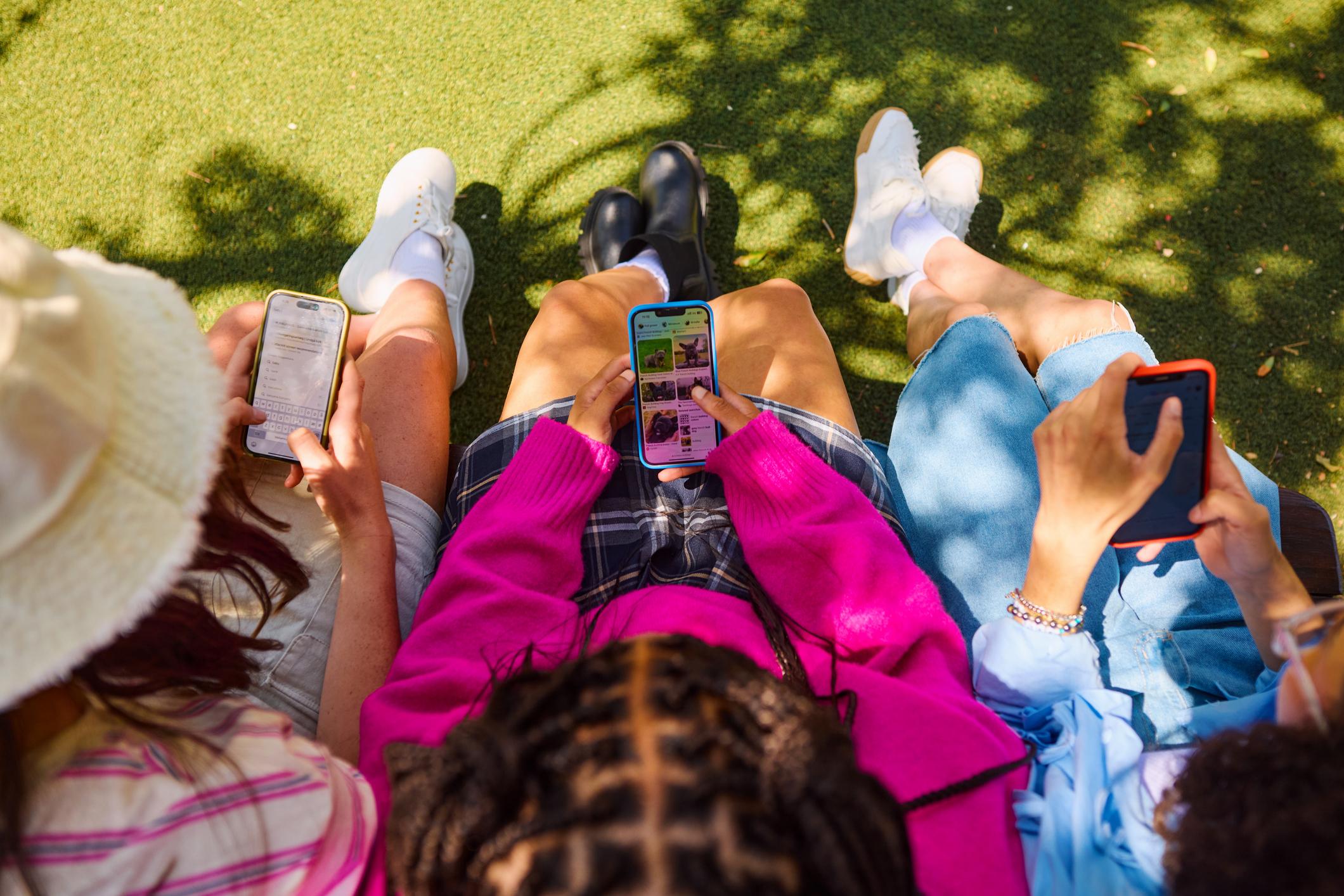
And then the final generation is Gen Z 2.0, which is the first group that will graduate into this new digital economy—like how AI is going to shape them, and they’ve never really known a world without smartphones. And social media to them could just be another layer of reality. It is really difficult, I think, for that group, just based on my travels and talking with them, for them to separate—it’s not their fault—but for them to separate what happens on the internet versus what happens in real life.
Thompson: I love this distinction between the smartphone as a tool and the smartphone as an environment, the air you breathe, something as invisible and boring as oxygen. How does that distinction, even within Gen Z, shift the relationship they have to their phones? One observation that you’ve made in some of your essays is that even young people have a very complicated relationship with, say, TikTok and Twitter. About half of young people wish those social media apps didn’t even exist. Is there a way in which we can look inside this generation and say, “The group that sees smartphones as a tool think this way about technology, and the group that sees smartphones as the oxygen they breathe see it as a different force in their life”?
Scanlon: Yeah, I think it comes down to optionality. So I think for a lot of younger people, like the specific Gen Z 2.0 cohort, what I’ve noticed in talking with them is it just feels like the technology is all-consuming. When I was growing up, in middle school, there wasn’t really Instagram quite yet. It was there, but a lot of people weren’t on it. But when you’re this age right now, when you’re young and social media is the forcing function, and it was the forcing function for your social life during the entirety of COVID, I think for them it just feels almost inescapable.
There’s a news segment interviewing this group of students who are no phones, they’re anti-phones. And there are these young people who are so sick of having to swim in this water of technology all the time. And a lot of researchers have written about this: The phones are really hurting the kids. But I definitely think it feels like there’s just no optionality to the technology, and they’re really able to see the negative consequences of it.
This excerpt has been edited and condensed.
Host: Derek Thompson
Guest: Kyla Scanlon
Producer: Devon Baroldi