Hosts
 Larry Wilmore
 Larry Wilmore
About the episode
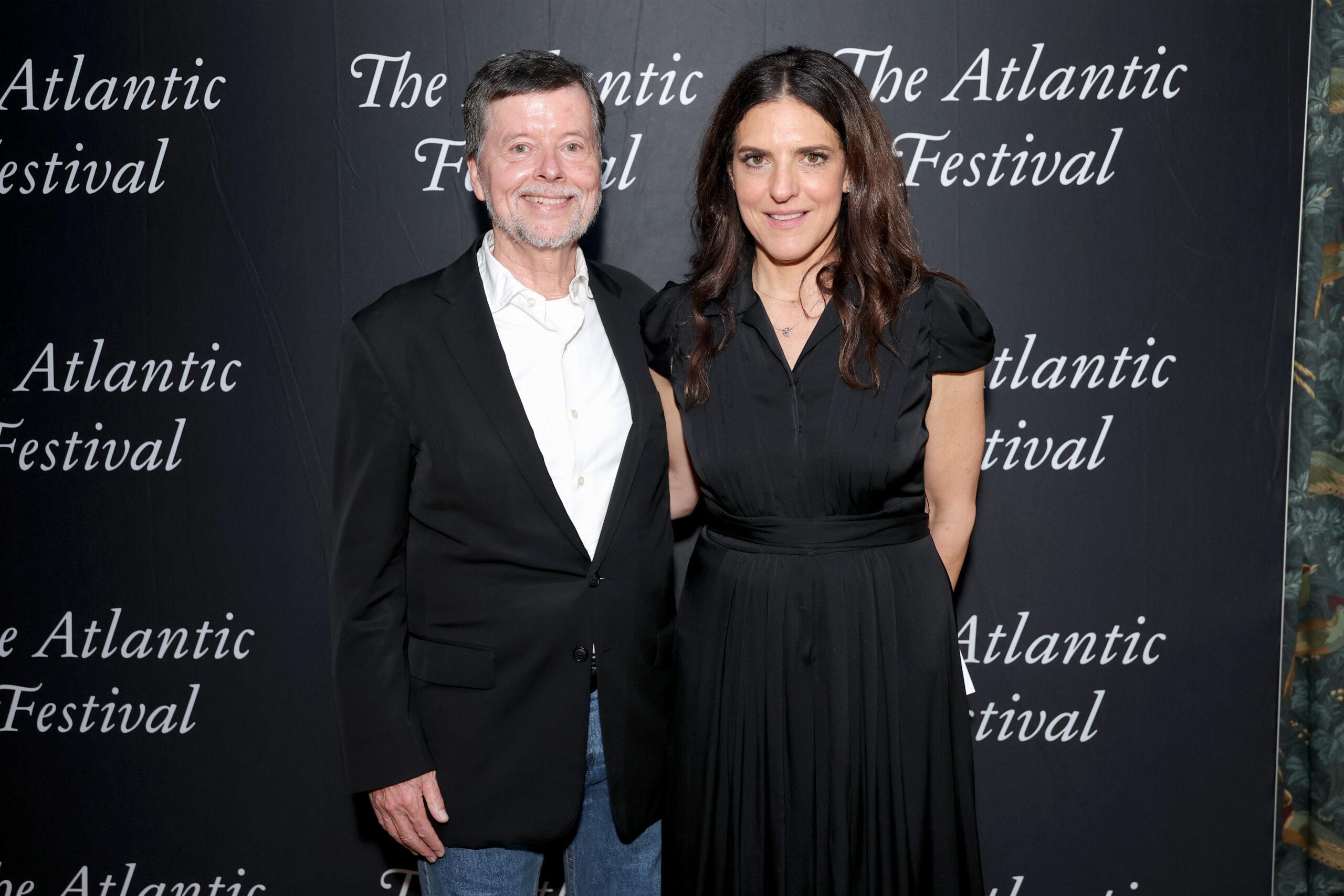
Ahead of their latest PBS documentary, Larry sits down with Ken Burns and Sarah Botstein to explore The American Revolution. They discuss the making of the project, the surprises they encountered, and the deeper truths they discovered about the people, ideals, and contradictions that shaped the founding of our nation.
Host: Larry Wilmore
Guests: Ken Burns and Sarah Botstein
Producers: Devon Renaldo and Brandy LaPlante
In the following excerpt, Larry talks to Ken Burns and Sarah Botstein about why they chose the American Revolution for their newest documentary and how they approached this period in American history.
Larry Wilmore: I’ve always loved this country, and I’ve always felt, as a Black person, our love for the country wasn’t always seen because we were in the unfortunate position of critiquing. But we critiqued it because we loved it. We just wanted to be a part of it like everybody else, right?
But I want to thank you guys for allowing us to embrace the complexities of this country, in all its glory and gory, to really appreciate what is special about it. Because I do feel America is special. That’s my opening statement of congratulations—
Ken Burns: Thank you.
Wilmore: … on this project.
Burns: Thank you.
Wilmore: It’s in first place of my favorite of your projects already.
Burns: Oh, wow. That’s great. Thank you.
Sarah Botstein: OK.
Wilmore: It beat Baseball—which I never thought anybody could do a nine-part series on baseball. But anyhow, I don’t want to do all this talking. How did you know that this had to be done? Was it almost like, “Oh, wait, we never told this story.” Was it one of those type of moments?
Burns: It’s a little bit of that, to be honest. I think we were daunted a little bit by the absence of photographs and newsreels, so that it means that for the general audience, the revolution always gets smothered in gallant, bloodless myth, because they all look cartoony. They had buckles on their shoes. They have breeches and waistcoats and powdered wigs. I mean, how could this possibly be anything like us? Well, it’s exactly like us.
And you’ve got a picture of Lincoln, and he’s in a tent with McClellan at Antietam. He’s about to fire him. You go, “Yeah, OK. That’s it.” But you don’t really know. You put four or five paintings of George Washington together, and all of a sudden, it feels cartoonish. They don’t look like this person exactly. So how you make that come alive was always, perhaps in the back of our mind, unarticulated, a resistance. We also needed to get under our belt the Civil War, World War II, and Vietnam. And it was during Vietnam—we broadcast that in September of 2017—but in December of 2015, we were in the process of finishing some of the episodes, and I remember just looking up and saying, “We’re doing the revolution next.”
I got some guts from looking at a map we had that was a kind of 3D map of the Central Highlands. And I thought, “Well, this could be the British moving west in Long Island towards Brooklyn in the biggest battle of the revolution.” This was, Larry—Barack Obama had 13 months to go in his presidency. So we had been working assiduously, not with blinders on, but in a way trying to remain like Odysseus lashed to the mast, oblivious to the siren calls of any particular moment along the way. Like there’s this great thing in our fourth episode about the wife of a German general who’s coming to join her husband to what she thinks is going to be the triumphant victory at Saratoga—doesn’t work out that way—and the French come in as a result of the surrender. But she’s worried in the ocean crossing with her three young daughters, infant daughters, that Americans eat cats. So if the film had come out last year—
Wilmore: Right.
Burns: … they’d go, “Oh, man, you see what you’re doing?”
Wilmore: Right.
Burns: So we have had to essentially have that restraint to just say, “Yep, that’s echoing. Yep, that’s rhyming. Yep, that’s a faint echo of everything that we know about what’s going on now.” Because it’s going to change. And I think when the film comes out, nobody’s going to hear the cats. It’ll just be—
Wilmore: Right, no.
Burns: … a German woman’s anxiety about coming to a foreign land. So that means there’ll be something else that rhymes. We want to make a film for the ages.
Wilmore: Yes.
Burns: And so I think for us, it was just how to strip away the sentimentality and nostalgia, how to invest those people with real lives, how to say, “Those guys in Philadelphia aren’t the only people.” … Let’s put a human dimension on those boldface names, but let’s reintroduce you to scores and scores—
Wilmore: That’s right.
Burns: … literally, of people who didn’t have their portrait painted, who were real and central to this story in every imaginable way … and then dive into the complexity of it and revel in it. This is a revolution.
Wilmore: Yes.
Burns: It’s a bloody civil war and it’s a world war superimposed on top of each other.
This excerpt has been edited and condensed.