
Caleb Banks

Experience
POSITION STATS LAST SEASON

Position-Specific Grades
COMBINE RESULTS
The Takeaway
The Player
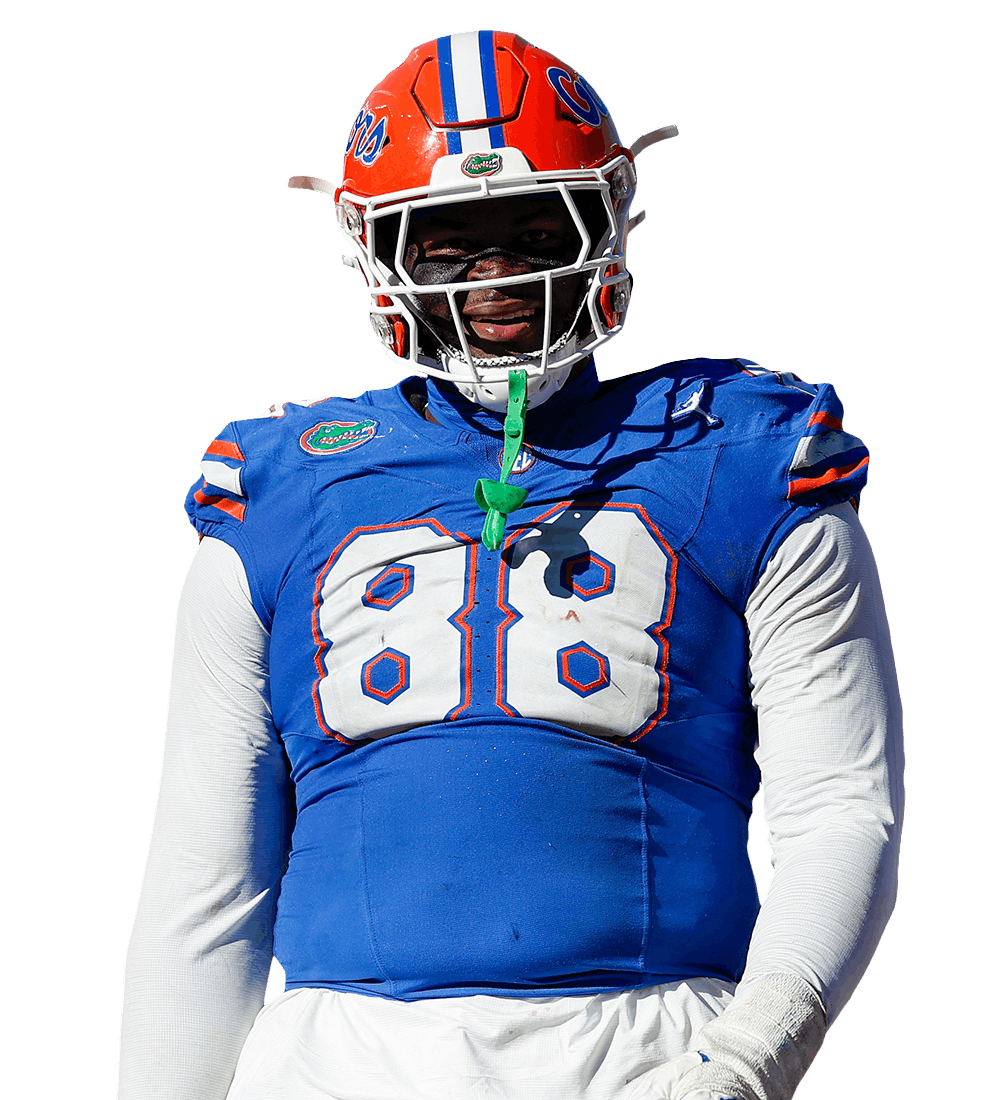
Foot injuries have raised concerns about his long-term durability, but Banks possesses a rare blend of size, length, and lower-body explosiveness. He had the longest arms of any defensive tackle at the combine (and the rest of his testing numbers were equally impressive), and he uses that length to press blockers off his frame. He can track the ball and disengage in time to make plays. He’s also quick, he slips blocks, and he disrupts plays in the backfield. He does play high, but he’s big and strong enough to get away with it most of the time.
He has some upside as a pass rusher. He gets a good initial push, and he can get off the blocks at the top of his rush. He’s also smooth when changing directions, can beat blockers to the inside, and flashed an effective spin move in the LSU game. But Banks’s pad level can be an issue when he’s rushing the passer, too, and he stalls out at times. He has room to grow as a hand fighter and counterpuncher.
He primarily played on the inside, but he lined up at defensive end at times in college, and he can play defensive end in a base three-man front. His performance could have been more consistent, but he showed teams at the Senior Bowl that he can be dominant.
The Draft
Banks is one of the most talented players and one of the top defensive tackle prospects in this class. Concerns about his durability will hurt his draft stock, but he still has a chance to be the first Florida defensive lineman drafted in the first round since Taven Bryan in 2018.
The Projection
Banks has All-Pro potential whether he’s playing on the inside in a four-man front or as defensive end in a base three-man front. There are no obvious comps here. Jordan Davis is bigger and even more explosive. Calais Campbell and DeForest Buckner were lighter coming out of college. That said, I do see shades of Chris Jones when he was coming out of Mississippi State in 2016.